
Fact-checked by the onlinepaydaynews.com editorial team
Quick Answer
A short-term loan for an emergency vet bill can cover urgent pet care costs, but APRs on payday-style products can exceed 400%. Personal installment loans from online lenders typically range from 6% to 36% APR, making them the safer alternative. Always compare at least three lenders before signing.
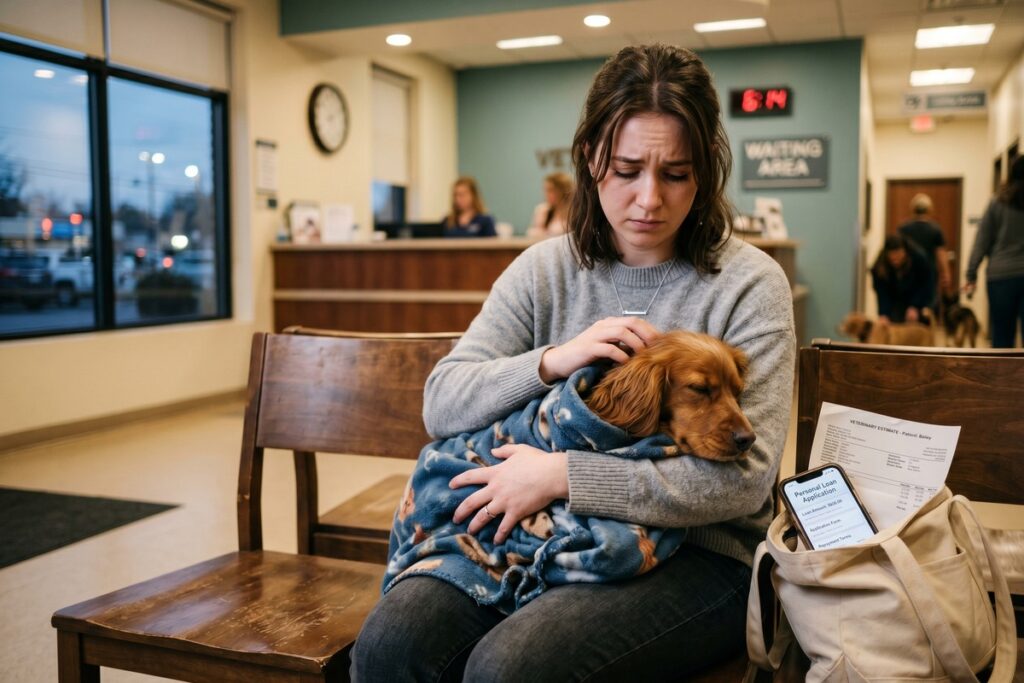
A short-term loan emergency vet bill situation can strike without warning, a dog swallows a foreign object, a cat develops a urinary blockage, and suddenly you’re facing a $3,000 invoice before midnight. According to the American Veterinary Medical Association’s pet ownership data, more than 70% of U.S. households own a pet, yet most lack dedicated funds to cover emergency veterinary costs averaging $800 to $1,500 per incident.
The borrowing decision you make in that waiting room can cost you hundreds, or thousands, more than the vet bill itself. Understanding your options before you apply is not optional; it is essential.
Key Takeaways
- More than 70% of U.S. households own a pet, yet most lack savings to cover emergency vet costs averaging $800 to $1,500 per incident, according to the American Veterinary Medical Association.
- Personal installment loans carry APRs of 6% to 36%, compared to the 400%+ typical of payday loans, according to the Consumer Financial Protection Bureau.
- Most online lenders require a minimum FICO score of 580 to 620; rate-shopping within a 45-day window counts as a single hard inquiry under FICO scoring models.
- A single missed payment can drop your FICO score by 60 to 110 points and remain on your credit report for up to seven years.
- , 18 states and the District of Columbia have rate caps at or below 36% APR on consumer loans, per the Center for Responsible Lending.
- NCUA-regulated Payday Alternative Loans cap APR at 28% and are available to credit union members, often a cheaper first option than any online lender.
What Types of Short-Term Loans Cover Emergency Vet Bills?
Three main products are used to cover emergency veterinary expenses: personal installment loans, payday loans, and veterinary-specific financing. Personal installment loans are the most cost-effective for most borrowers, offering fixed repayment schedules and APRs between 6% and 36% depending on creditworthiness.
Payday loans advance cash against your next paycheck, typically in amounts of $100 to $1,000. The Consumer Financial Protection Bureau (CFPB) reports that the typical payday loan carries an APR of roughly 400%, making them a high-risk choice for any bill above a few hundred dollars. Rollovers compound that cost rapidly, a subject covered in detail in our guide to payday loan rollover rules and lender disclosure requirements.
CareCredit and Scratchpay are veterinary-specific financing platforms accepted at thousands of clinics nationwide. CareCredit offers deferred-interest promotional periods (typically 6–24 months), but the deferred interest model can backfire if the full balance is not paid before the promotional period ends, potentially adding the accumulated interest retroactively.
Secured vs. Unsecured Options
Unsecured personal loans require no collateral and fund quickly, sometimes same-day, through lenders like LightStream, Upstart, and Marcus by Goldman Sachs. Secured loans (backed by a car title or savings account) may offer lower rates but put an asset at risk. For most pet owners facing an emergency, unsecured installment loans strike the best balance of speed and cost.
One honest caveat here: “best balance of speed and cost” applies primarily to borrowers with credit scores above 620. Below that threshold, the installment loan rates you actually qualify for may be closer to 30% to 36% APR, still better than a payday loan, but not cheap. If your credit is damaged, the alternatives listed later in this article deserve serious consideration before you accept any loan offer.
Bottom line on loan types: Personal installment loans with APRs between 6% and 36% are the most cost-effective short-term loan option for an emergency vet bill. The CFPB warns that payday loans average 400% APR, making them a last resort, not a first move.
How Do Lenders Evaluate a Short-Term Loan Application for a Vet Emergency?
Lenders assess four core factors: credit score, debt-to-income (DTI) ratio, employment verification, and monthly income. Most online personal loan lenders require a minimum FICO score of 580 to 620 for approval, though rates improve significantly above 680.
Your debt-to-income ratio, total monthly debt payments divided by gross monthly income, should ideally fall below 36% according to guidelines from Fannie Mae and most conventional lenders. A DTI above 43% disqualifies applicants at many mainstream lenders. If yours is high, a same-day cash alternative beyond payday loans may be a better fit than a traditional personal loan.
Credit bureaus, Experian, Equifax, and TransUnion, supply the credit reports lenders pull during underwriting. A hard inquiry from a loan application temporarily reduces your score by 5 to 10 points on average. Rate-shopping multiple lenders within a 14–45 day window counts as a single inquiry under FICO scoring models, so apply strategically.
What If You Have Poor or No Credit?
Borrowers with thin or damaged credit files can explore lenders that use alternative data, such as bank account cash flow or employment history, rather than relying solely on FICO scores. Upstart and OppFi are two platforms known for this approach, though OppFi’s rates can reach 160% APR in some states, so read the full loan agreement before accepting any offer. If rebuilding credit is a parallel goal, review common credit building mistakes that may be hurting your score before applying.
Most lenders require a minimum FICO score of 580 and a DTI below 36%. Rate-shop within a 45-day window to limit hard inquiry damage, FICO treats multiple loan inquiries in that window as one, protecting your score.
| Loan Type | Typical APR Range | Funding Speed | Min. Credit Score | Max. Amount |
|---|---|---|---|---|
| Personal Installment Loan | 6% – 36% | 1–3 business days | 580–620 | $50,000 |
| Payday Loan | 200% – 400%+ | Same day | None (income-based) | $1,000 |
| CareCredit (Vet Financing) | 0% promo / 26.99% deferred | Instant (at clinic) | ~620 | $25,000 |
| Scratchpay | 0% – 29.99% | Instant (at clinic) | ~580 | $10,000 |
| Credit Union PAL (Payday Alternative Loan) | Up to 28% | 1–2 business days | Membership required | $2,000 |
What Red Flags Signal a Predatory Lender When You’re Desperate?
Predatory lenders deliberately target borrowers in crisis. The most reliable warning sign is an APR above 36% on an installment loan, a threshold the National Consumer Law Center (NCLC) identifies as the upper boundary of affordable credit for consumers.
Other red flags include demands for upfront fees before loan disbursement, pressure to borrow more than you need, lack of a clear repayment schedule, and auto-renewal clauses buried in the fine print. The Federal Trade Commission (FTC) actively pursues lenders that use deceptive practices, and you have the right to file a complaint with the CFPB if you believe a lender violated disclosure laws. Our breakdown of predatory versus fair lending practices walks through the exact contract clauses to scrutinize before signing.
State-level protections also apply., 18 states and the District of Columbia have rate caps at or below 36% APR on consumer loans, according to the Center for Responsible Lending. If you live in a state without a cap, online lenders may attempt to export higher rates through bank partnerships, a model regulators are increasingly challenging.
The CFPB and the National Consumer Law Center have consistently documented that borrowers in financial distress face a narrowed ability to scrutinize loan terms carefully. When a pet owner is sitting in an emergency clinic at midnight facing a $2,000 bill, that pressure is real. The only reliable defense is deciding in advance the maximum APR you will accept, and treating any offer above that number as a non-starter, regardless of how urgent the situation feels.
Reject any installment loan with an APR above 36%, the threshold the National Consumer Law Center defines as the ceiling for affordable lending. Auto-renewal clauses and upfront fees are the two contract terms most likely to trap borrowers in a debt cycle.
Are There Alternatives to a Short-Term Loan for an Emergency Vet Bill?
Yes, and several alternatives are cheaper than any loan product. Exhaust these options before applying for a short-term loan emergency vet bill to avoid unnecessary debt.
- Payment plans directly from the vet: Many veterinary practices offer in-house installment plans with zero or low interest. Ask before the clinic processes any financing.
- Nonprofit veterinary assistance funds: Organizations like the RedRover Relief fund and the Pet Fund provide grants for owners who cannot afford critical care.
- Veterinary school teaching hospitals: Accredited programs at universities like Cornell and UC Davis provide specialist-level care at significantly reduced rates.
- Employer-based emergency loans or payroll advances: Some employers offer interest-free payroll advances through platforms like DailyPay or Even.
- Credit union Payday Alternative Loans (PALs): NCUA-regulated PALs cap APR at 28% and are available to credit union members.
These alternatives are not without their own limitations. Nonprofit grants are limited in funding and can take days to process, too slow for a same-night emergency. Veterinary school hospitals may not be geographically accessible or may have intake restrictions for certain cases. In-house clinic payment plans depend entirely on the individual practice; not every vet offers them, and those that do may cap the plan at a few hundred dollars. Knowing these gaps ahead of time means you can combine options rather than counting on a single one.
If you have already exhausted liquid savings, the comparison between raiding retirement funds and borrowing is worth analyzing. Our article on whether to use a 401k or take an emergency loan covers the tax and penalty implications of each path.
Payment plans, nonprofit grants, and credit union PALs capped at 28% APR are all cheaper than a short-term loan for an emergency vet bill. Ask the clinic about in-house financing first, before opening any loan application.
How Do You Protect Yourself After Taking a Short-Term Loan for a Vet Bill?
Signing the loan agreement is not the end of your financial exposure, it is the beginning of a new risk window. Three actions taken within the first 72 hours of borrowing significantly reduce long-term cost.
First, verify that the lender reported accurate loan terms to the credit bureaus. A reporting error that inflates your balance or misclassifies a payment can suppress your score for years. You are entitled to a free credit report from each of the three bureaus annually through AnnualCreditReport.com, the only federally authorized source.
Second, set up autopay immediately. A single missed payment on an installment loan can drop your FICO score by 60 to 110 points, according to FICO’s published impact estimates. Payment history accounts for 35% of your FICO score, the single largest factor.
Third, review your loan agreement for any auto-renewal or “loan flipping” provisions that could re-extend your debt without explicit consent. If you discover an unauthorized charge, the CFPB complaint process is your primary enforcement tool. Mistakes borrowers make when filing those complaints are documented in our guide on 5 errors borrowers make when filing a CFPB complaint.
Set up autopay within 72 hours of funding, a single missed payment can reduce your FICO score by up to 110 points. Monitor your credit report via AnnualCreditReport.com to catch any lender reporting errors before they compound.
Frequently Asked Questions
Can I get a same-day short-term loan for an emergency vet bill?
Yes, in many cases. Several online lenders, including LightStream and Marcus by Goldman Sachs, advertise same-day or next-business-day funding for approved applicants. Payday lenders also disburse same-day cash, but their APRs routinely exceed 300%. If even a one-day delay is workable, a personal installment loan is the better choice by a significant margin.
What credit score do I need for a short-term loan to pay a vet bill?
Most mainstream online lenders set a minimum FICO score of 580 to 620. Borrowers above 680 access the best rates, often under 15% APR. If your score is below 580, veterinary-specific financing platforms like Scratchpay or a credit union PAL may be more accessible than a standard personal loan.
Is CareCredit a good option for an emergency vet bill?
CareCredit is a strong option if, and only if, you can pay the full balance before the promotional period ends. If any balance remains after the promo period, deferred interest at up to 26.99% APR is applied retroactively to the original purchase amount. Confirm the exact promotional terms with the clinic before accepting the card.
Will taking a short-term loan for a vet bill hurt my credit score?
The initial hard inquiry will reduce your score by roughly 5 to 10 points temporarily. On-time payments rebuild that loss quickly and can improve your score over time. Missing a payment, however, can cause a drop of 60 to 110 points that persists for up to seven years on your credit report.
What happens if I cannot repay a short-term loan I took for a vet bill?
Missed payments trigger late fees, credit reporting, and potential collection activity. If the loan enters default, the lender may sell the debt to a collection agency. You retain legal rights under the Fair Debt Collection Practices Act (FDCPA), including the right to dispute the debt and to restrict how collectors contact you.
Are there short-term loans specifically for pet owners with bad credit?
Yes. Platforms including OppFi and certain credit unions offer emergency financing to borrowers with credit scores as low as 500, though APRs can be high. Scratchpay also approves some applicants with lower credit scores. Always calculate the total repayment cost, not just the monthly payment, before accepting any offer.
Who should NOT take a short-term loan for an emergency vet bill?
A short-term loan is a poor fit if your DTI is already above 43%, you have an active payday loan, or you cannot realistically cover the monthly payment without missing other bills. In those situations, a loan adds financial risk without solving the underlying cash problem. Nonprofit grants, clinic payment plans, and veterinary school hospitals are the more appropriate starting points.
How do I know if a lender is legitimate and not a scam?
Legitimate lenders are licensed in your state, disclose their APR upfront, and never require payment before disbursing funds. Verify a lender’s license through your state banking regulator’s website. Any lender that asks for a fee before you receive money is a scam, regardless of how professional the website looks.
Can I negotiate the vet bill itself to reduce how much I need to borrow?
Yes, and this is often overlooked. Ask the clinic for an itemized estimate and inquire whether any non-emergency line items can be deferred. Some practices also offer a cash-pay discount if you pay a portion upfront. Even reducing the bill by $300 to $500 can meaningfully lower the loan amount, and therefore the total interest you pay.
Does applying for CareCredit or Scratchpay count as a hard inquiry?
CareCredit applications typically involve a hard credit pull, which can temporarily reduce your score by 5 to 10 points. Scratchpay uses a soft pull for its initial approval check, meaning it does not affect your credit score at the application stage. Confirm the inquiry type with each platform before applying if protecting your score is a priority.