
Fact-checked by the onlinepaydaynews.com editorial team
Quick Answer
An illegal loan auto-renewal charge occurs when a lender rolls over or extends a loan without the borrower’s explicit written consent, violating federal and state consumer protection laws., the CFPB has recovered over $1.6 billion in refunds from predatory lenders since 2011, and borrowers who document unauthorized charges and file formal complaints can often recover full refunds within 60–90 days.
An illegal loan auto-renewal charge is any fee or interest extension applied to a loan without the borrower’s clear, documented authorization, a practice explicitly prohibited under the Truth in Lending Act (TILA) and enforced by the Consumer Financial Protection Bureau (CFPB). According to CFPB research on payday lending, more than 80% of payday loans are rolled over or renewed within 14 days, making unauthorized renewals one of the most common forms of predatory lending abuse.
A single unauthorized renewal can spiral into months of debt, particularly for gig workers operating without employer benefits or traditional banking support. This case study shows exactly how one gig worker identified, documented, and successfully disputed an illegal charge, and what every borrower can replicate.
Key Takeaways
- The CFPB has recovered over $1.6 billion in refunds from predatory lenders since 2011, per CFPB complaint process data.
- More than 80% of payday loans are rolled over or renewed within 14 days, according to CFPB payday lending research, making unauthorized renewals the most common form of predatory lending abuse.
- Under the Electronic Fund Transfer Act, lenders cannot legally require ACH authorization to roll over a loan. Any renewal without explicit written consent is an unauthorized transaction eligible for a full refund, per CFPB final rulemaking on high-cost loans.
- A Regulation E bank dispute forces a provisional credit within 10 business days; combined with a CFPB complaint requiring a lender response within 15 days, most cases resolve in 30 to 60 days, per the CFPB Consumer Complaint Database.
- Under TILA, borrowers can sue for actual damages, statutory damages up to $1,000 per violation, plus attorney fees, giving lenders a strong financial incentive to resolve complaints quickly.
- Blanket ACH authorizations covering “future transactions” are the most reliable contract red flag for auto-renewal abuse. The NMLS Consumer Access database lets borrowers verify lender licensing in under two minutes.
What Counts as an Illegal Loan Auto-Renewal Charge?
A renewal charge becomes illegal the moment a lender extends your loan term or applies additional fees without your affirmative, written consent. This is not a gray area. It is a clear violation of federal disclosure requirements under TILA and, in many states, additional short-term lending statutes.
Common forms of an illegal loan auto-renewal charge include pre-checked renewal boxes on digital loan agreements, lenders rolling over balances without sending any notice, and automatic ACH debits labeled as “renewal fees” rather than principal payments. If you did not sign a separate renewal authorization after your original loan closed, the charge is likely unauthorized.
Federal and State Protections That Apply
TILA requires lenders to disclose all fees before any transaction. The Electronic Fund Transfer Act (EFTA) prohibits lenders from requiring ACH authorization as a condition of a loan, a rule frequently broken during auto-renewals. Many states, including California, Illinois, and New York, have layered additional restrictions, including mandatory cooling-off periods between loan renewals. Review our guide on payday loan rollover rules and what lenders are required to tell you before signing any renewal paperwork.
State attorneys general also have independent enforcement authority. In practice, a borrower can trigger scrutiny from both a federal agency and a state regulator at the same time, which substantially increases pressure on lenders to resolve disputes rather than contest them.
Key Takeaway: Under the Electronic Fund Transfer Act, lenders cannot legally require ACH authorization to roll over a loan. According to CFPB final rulemaking on high-cost loans, any renewal without explicit written consent is an unauthorized transaction and eligible for full dispute and refund.
How Did the Gig Worker Identify the Unauthorized Charge?
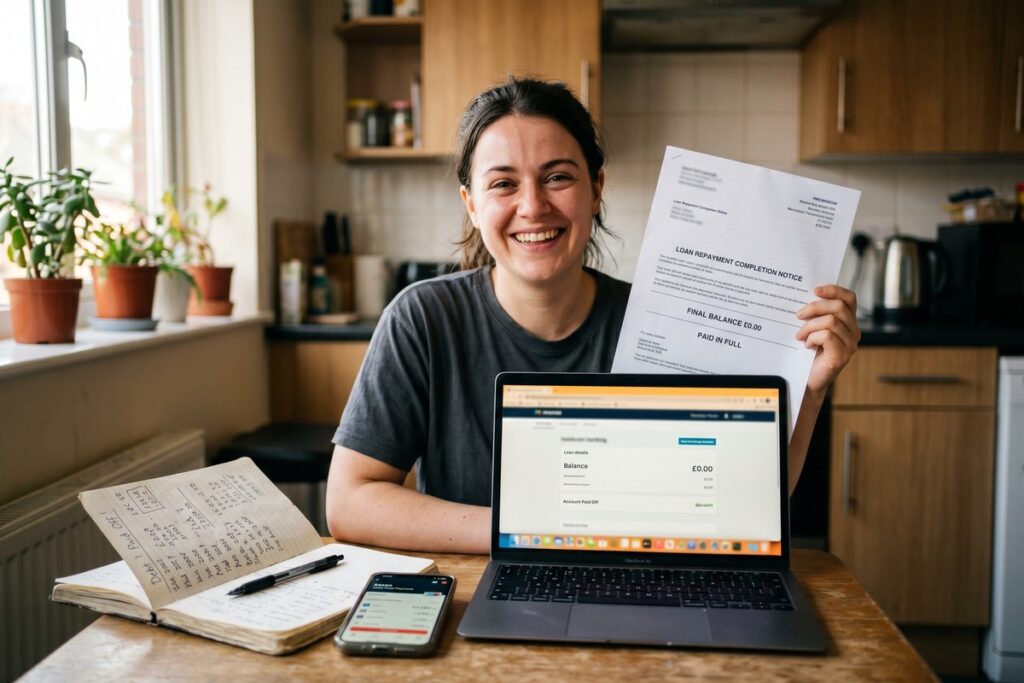
She was a rideshare driver and TaskRabbit contractor. Three weeks after her original payday loan was supposed to close, a $94 renewal fee appeared in her bank account. She had made no request to extend the loan and had received no written notice from the lender, QuickFund Direct (a third-party online lender).
Her first step was pulling her original loan agreement and comparing the signed terms against the lender’s stated renewal policy. The agreement contained a single sentence in paragraph 11 stating that “the lender reserves the right to renew the loan if full repayment is not received.” No separate consent form had been signed, and no renewal disclosure had been provided at the time of the ACH debit.
That single buried sentence is a textbook example of what consumer attorneys call a unilateral renewal clause. It gives the appearance of contractual authority while actually failing the TILA standard, because TILA requires affirmative borrower consent, not a passive clause the borrower may not have noticed.
Documentation She Collected
- Original signed loan agreement (PDF from her email)
- Bank statement showing the unauthorized $94 ACH debit
- Lender’s email correspondence (none mentioning renewal)
- Screenshot of the lender’s own renewal policy page stating “borrower consent required”
- Her repayment confirmation from the original due date
Documentation is the single most important factor in winning an illegal loan auto-renewal charge dispute. Without bank records and the original loan agreement side by side, a complaint is difficult to substantiate.
Keeping digital records of every loan transaction is especially critical when you lack traditional pay stubs. See our piece on what lenders won’t tell gig workers about short-term loans for documentation tips specific to this income type.
Practical note: Borrowers who collect at least 5 documents, including the original agreement, bank statement, and lender’s own policy language, before filing a complaint significantly strengthen their case, according to CFPB complaint guidance. Matching the lender’s own stated policy against their conduct is often the decisive evidence.
Why Are Gig Workers Disproportionately Targeted for Auto-Renewal Abuse?
The short answer is irregular income cycles and limited banking relationships.
Gig workers are more likely to carry short-term loans across multiple pay periods because their income arrives unevenly. A rideshare driver who had a slow week may not clear the full loan balance on the original due date, which is precisely the trigger condition that unscrupulous lenders use to justify auto-renewals. The renewal appears on a bank statement as a modest fee, easily overlooked in a busy month.
There is also a documentation gap. Salaried employees typically receive pay stubs, employer benefit statements, and W-2s that create a clean financial paper trail. People relying on 1099 income, platform deposits, and variable tips often have messier records, which can make it harder to reconstruct exactly when a loan should have closed and what the remaining balance was. Lenders know this.
The Income Verification Problem at the Application Stage
Predatory lenders frequently offer independent workers loan terms that are deliberately structured around income volatility. High fees, short repayment windows, and broad ACH authorization language are common features of these agreements. The combination creates conditions where a renewal can seem almost inevitable from the moment the loan is signed.
Borrowers can push back at the application stage by insisting on itemized ACH authorization that specifies exact amounts and dates, rather than blanket language covering “future transactions.” Most legitimate lenders will agree to this. A lender that refuses should be treated as a warning sign. Federal consumer protection laws apply equally to independent contractors and salaried employees, so the legal footing for a dispute is identical regardless of income type.
That said, this process has real limits. Borrowers in urgent financial situations, the exact circumstances that drive most short-term loan applications, often feel they cannot afford to walk away from a lender over contract language. When time pressure is high, the negotiating leverage that exists on paper can be difficult to exercise in practice. This is one reason prevention is talked about more than it is actually used.
What Are the Exact Steps to Fight an Illegal Auto-Renewal Charge?
Fighting an illegal loan auto-renewal charge follows a precise sequence. Skipping steps, especially the bank dispute, is the most common reason borrowers fail to recover funds.
| Step | Action | Typical Timeline |
|---|---|---|
| Step 1 | Contact lender in writing to dispute the charge | Within 24–48 hours of discovery |
| Step 2 | File a Regulation E dispute with your bank or credit union | Within 60 days of the statement date |
| Step 3 | File a CFPB complaint at consumerfinance.gov | Within 1–3 days of bank dispute |
| Step 4 | File a complaint with your state Attorney General’s office | Concurrent with or after CFPB filing |
| Step 5 | Consult a consumer law attorney if refund denied | Within 30 days if no resolution |
She filed a Regulation E dispute with her credit union within 48 hours. Under Regulation E, banks must investigate unauthorized electronic fund transfers within 10 business days and provisionally credit the disputed amount within that window. Her credit union credited the $94 within seven business days while the investigation continued.
At the same time, she filed a CFPB complaint through the CFPB’s official complaint portal. The CFPB forwards complaints to the lender and requires a response within 15 days. Her complaint was resolved in 22 days, with QuickFund Direct issuing a full refund and a written apology acknowledging the error.
Why the CFPB Complaint Mattered
CFPB complaints create a formal paper trail that regulators monitor. When a lender receives multiple complaints about the same practice, the CFPB may open an investigation or take enforcement action.
The complaint also changes the lender’s calculus. A company facing a $94 refund demand has little financial incentive to settle quickly. A company facing that same demand plus a regulatory file, a potential investigation, and possible statutory damages under TILA has every incentive to resolve the matter fast. That asymmetry is what makes the CFPB filing so effective for small-dollar disputes.
Understanding common mistakes borrowers make when filing a CFPB complaint can be the difference between a resolved case and a dismissed one.
On timelines: Filing a Regulation E dispute forces your bank to provisionally credit a disputed amount within 10 business days. Combined with a CFPB complaint, which requires a lender response within 15 days, most illegal loan auto-renewal charge cases resolve within 30 to 60 days according to CFPB Consumer Complaint Database data.
What TILA Actually Requires Lenders to Disclose
The Truth in Lending Act is more specific than most borrowers realize. It does not simply require that fees be mentioned somewhere in the loan agreement. It requires that all costs be disclosed clearly, conspicuously, and before the transaction occurs.
For renewal transactions, this means a lender must provide a new disclosure at the time of the renewal, not just reference language buried in the original agreement. A single paragraph in the original contract authorizing future renewals at the lender’s discretion does not satisfy this standard. The disclosure must be transaction-specific.
What Counts as Affirmative Written Consent
Affirmative written consent means a separate, signed document authorizing the specific renewal, with the fee amount and new repayment date stated explicitly. A pre-checked box in a digital form does not qualify. Silence following an emailed renewal notice does not qualify. An original ACH authorization that was broad enough to cover “any future amounts” does not qualify under a strict EFTA reading, particularly when the CFPB has stated that such authorizations cannot be used as a condition of the loan itself.
This is why matching the lender’s own stated policy against their actual conduct is so effective. When a lender’s public-facing renewal page says “borrower consent required” while their internal process involves automatic debits with no separate authorization step, the contradiction is both visible and damning.
TILA Statutory Damages: The Number Lenders Notice
Under TILA, borrowers who sue successfully can recover actual damages, statutory damages up to $1,000 per violation, and attorney fees. For a $94 unauthorized fee, that exposure is roughly ten times the disputed amount before legal costs are factored in. Class action exposure, if the lender engaged in systematic unauthorized renewals, is a multiple of that again. Lenders who contest small-dollar TILA violations are often making a strategically poor decision, which is why documented complaints tend to resolve quickly.
What Was the Financial Outcome and Long-Term Impact?
She recovered the full $94 unauthorized fee within 22 days of filing her CFPB complaint. Beyond the refund, the lender agreed in writing to remove any negative payment notation they had reported, protecting her credit file from damage she had not caused.
She also contacted the Illinois Department of Financial and Professional Regulation (IDFPR), the state regulator overseeing her lender’s license. The IDFPR subsequently issued QuickFund Direct a compliance warning, and the lender revised its ACH authorization language within 60 days. One complaint can trigger regulatory action that protects future borrowers.
Credit Impact and Next Steps
If a lender has already reported a late payment tied to an unauthorized renewal, borrowers can dispute that entry directly with Equifax, Experian, and TransUnion under the Fair Credit Reporting Act (FCRA). The dispute must include a copy of the CFPB complaint and the lender’s refund confirmation as supporting evidence. Results can appear on your credit report within 30–45 days of the bureau’s investigation completion.
Credit bureau disputes are often treated as a secondary step, but for borrowers whose credit scores affect their ability to access affordable financing, removing an inaccurate delinquency notation can matter as much as the refund itself. The FCRA dispute process is free and does not require an attorney.
After a predatory lending experience, exploring verified same-day cash alternatives beyond payday loans is a practical next step to avoid repeat exposure to high-cost lenders.
Beyond the refund: Borrowers can force credit bureau corrections under the FCRA within 30–45 days using their CFPB complaint as evidence. One successful dispute of an illegal loan auto-renewal charge can also trigger lender-level regulatory action, per FTC guidance on FCRA dispute rights.
What Happens If the Lender Refuses to Refund?
Refusal is uncommon when a borrower has documented the violation clearly, but it does happen. When it does, the options expand rather than close off.
The Regulation E provisional credit from your bank remains in place during the investigation. If the bank rules in the lender’s favor and reverses the credit, you have five business days’ notice and the right to request the documents the bank relied on. Banks that conduct sloppy Regulation E investigations can themselves face CFPB scrutiny, which gives credit unions and community banks an incentive to investigate carefully.
Escalating Through State Regulators
State attorneys general have independent authority to pursue lenders who violate state short-term lending statutes. Illinois, California, and New York all have consumer protection divisions that accept complaints online and can initiate investigations carrying civil penalty exposure for the lender. Filing with both the CFPB and the relevant state agency creates two parallel paper trails and doubles the regulatory attention on the lender’s conduct.
If a lender is unlicensed in the borrower’s state, the situation improves considerably for the borrower. An unlicensed lender has no enforceable standing to collect renewal fees under most state laws. Borrowers can verify licensing through the NMLS Consumer Access database in under two minutes. Discovering that a lender was unlicensed changes an unauthorized renewal dispute into a potentially broader fraud claim.
When an Attorney Makes Sense
Most unauthorized renewal disputes under a few hundred dollars resolve without legal counsel. When they do not, or when the disputed amount is larger, a consumer law attorney can file a TILA claim in small claims court or federal court with minimal upfront cost to the borrower, since TILA allows fee-shifting. The National Consumer Law Center and state legal aid offices can provide referrals. Consulting an attorney within 30 days of a denial preserves the strongest version of any claim.
One honest caveat: if the amount disputed is small and the lender is licensed and operating in good faith, a formal legal process may cost more in time and stress than the dollar value recovered. For charges under $50, the Regulation E route and CFPB complaint are almost always sufficient, and adding legal counsel is rarely worth it unless a pattern of violations is clear.
How Can Borrowers Spot an Illegal Auto-Renewal Risk Before Signing?
Prevention is faster and cheaper than dispute resolution. Certain contract red flags reliably predict whether a lender is likely to attempt an illegal loan auto-renewal charge down the line.
Review every loan agreement for these specific warning signs before signing:
- Blanket ACH authorization that covers “future transactions” without itemizing amounts
- Language stating the lender may renew at its own discretion
- No explicit opt-out mechanism for auto-renewal
- Annual Percentage Rates (APRs) above 300%, a marker common in predatory structures
- No state license number listed in the agreement
Learning to distinguish predatory lending from fair lending before you sign is the most reliable way to avoid needing a dispute process entirely. If a lender cannot clearly explain its renewal policy in plain language before you sign, treat that as a disqualifying factor.
Borrowers who are uncertain about a lender’s legitimacy can verify their license through the NMLS Consumer Access database, which lists all federally and state-licensed lenders. An unlicensed lender operating illegally has no enforceable claim to renewal fees at all.
Watch for this specific language: Blanket ACH authorizations covering “future transactions” are the most reliable contract red flag for auto-renewal abuse. The NMLS Consumer Access database allows borrowers to verify lender licensing in under 2 minutes, unlicensed lenders have no legal standing to collect renewal fees in most states.
How CFPB Enforcement Data Reveals the Scale of the Problem
The $94 fee in this case was small. The pattern it represents is not.
The CFPB Consumer Complaint Database contains tens of thousands of complaints about unauthorized loan-related charges, with payday and installment lenders consistently ranking among the most complained-about categories. The CFPB’s own payday lending research found that more than 80% of payday loans are rolled over or renewed within 14 days, a figure that reflects both borrower financial strain and deliberate lender structuring designed to generate repeat fees.
When the CFPB aggregates complaints showing the same practice across multiple borrowers, it can trigger formal enforcement action. The bureau has recovered over $1.6 billion in consumer refunds since 2011, a substantial portion of which came from exactly this type of pattern: small unauthorized charges applied systematically across large borrower populations. Each individual complaint contributes to that enforcement picture, which is one reason filing formally matters even when a refund arrives quickly through other channels.
State Enforcement as a Parallel Track
State regulators have moved aggressively on unauthorized renewal practices in recent years. Illinois, where the gig worker in this case was located, has strengthened its Predatory Loan Prevention Act to cap rates and impose stricter renewal disclosure requirements. California’s Department of Financial Protection and Innovation has similarly increased oversight of online lenders operating in the state. These state-level protections layer on top of federal law and, in some cases, provide stronger remedies.
Borrowers in states with strong short-term lending statutes often have faster resolution paths through state regulators than through federal channels, simply because state agencies are smaller and can act on individual complaints more directly. Filing both routes costs nothing and takes less than an hour.
Frequently Asked Questions
Is an auto-renewal loan charge always illegal?
Not always. If your loan agreement contained clear, standalone renewal authorization language that you signed separately, the charge may be legal. The key test is whether you provided affirmative, documented consent specifically for the renewal transaction, not whether renewal was mentioned somewhere in the original contract.
How do I get a refund for an unauthorized loan renewal fee?
File a Regulation E dispute with your bank within 60 days of the charge appearing on your statement. This triggers a mandatory 10-business-day investigation window with provisional credit. At the same time, file a complaint through the CFPB’s official portal at consumerfinance.gov/complaint. Most unauthorized charges are refunded within 22 to 45 days when both steps are taken together.
Can a lender report me to credit bureaus for refusing to pay an unauthorized renewal?
A lender can attempt to report a delinquency, but you can dispute any inaccurate entry with Equifax, Experian, and TransUnion under the Fair Credit Reporting Act. Include your CFPB complaint number and the bank dispute confirmation as supporting evidence. Bureaus must complete their investigation within 30 days of receiving your dispute.
What is the CFPB complaint process timeline for illegal loan charges?
After submission, the CFPB forwards your complaint to the lender within approximately 1 to 2 business days. The lender must respond within 15 calendar days and resolve or provide a final response within 60 days. Most straightforward unauthorized-renewal cases receive a substantive lender response within 15 to 22 days.
Do gig workers have fewer legal protections against predatory lending than employees?
No. Federal consumer protection laws apply equally regardless of employment type. TILA, EFTA, and FCRA protect all borrowers. The practical challenge for gig workers is income documentation during the loan application process, not reduced legal rights during disputes.
Can I sue a lender for an illegal auto-renewal charge?
Yes. Under TILA, borrowers may sue for actual damages, statutory damages up to $1,000 per violation, plus attorney fees in individual cases. Class actions are also possible if the lender engaged in a pattern of unauthorized renewals. Consult a consumer law attorney at the National Consumer Law Center or your state’s legal aid office for case-specific advice.
How long do I have to dispute an unauthorized ACH debit under Regulation E?
You have 60 days from the date the unauthorized charge appeared on your bank statement to file a Regulation E dispute. Missing this window does not eliminate your options, you can still file a CFPB complaint and pursue a TILA claim, but it removes the fastest and most reliable path to a provisional credit. File as soon as you spot the charge.
What if the lender is not licensed in my state?
An unlicensed lender has no legal standing to collect renewal fees in most states, which changes the nature of the dispute considerably. Report the lender to your state attorney general’s office and your state banking regulator immediately. Verify licensing at the NMLS Consumer Access database before taking any other steps, this single check can determine whether you are dealing with an unauthorized renewal or an outright illegal lending operation.
Will filing a CFPB complaint hurt my credit score?
No. Filing a complaint with the CFPB has no effect on your credit score. The complaint is between you, the CFPB, and the lender. If a lender has already reported a negative notation tied to the disputed charge, you address that separately through a credit bureau dispute under the FCRA, and a resolved CFPB complaint strengthens that secondary dispute considerably.
Does this process work if the lender is an online-only or tribal lender?
It works, but with more friction. Some tribal lenders claim sovereign immunity from state regulations, which can complicate state attorney general enforcement. Federal law, TILA and EFTA, still applies, and the CFPB has pursued tribal lenders in past enforcement actions. Your bank’s Regulation E dispute process also remains fully available regardless of the lender’s structure. These cases can take longer and may benefit from attorney involvement earlier than a typical dispute.