
Fact-checked by the onlinepaydaynews.com editorial team
Your car breaks down on a Tuesday morning, the repair shop wants $800 before they’ll release the vehicle, and your next paycheck is nine days away. You search for same day emergency cash and get back a wall of lender ads, each one promising instant funding. The question is not whether money exists out there. The question is which of those options will actually put dollars in your account today and which will send you a confirmation email while your bank makes you wait until Friday.
The need for fast cash is not a fringe problem. According to the Federal Reserve’s 2024 Survey of Household Economics and Decisionmaking, only 55% of U.S. adults had saved enough to cover three months of expenses in 2024, edging up only slightly from 2023. That leaves a very large share of the population one bad week away from needing an outside source of funds. The emergency cash space is full of legitimate options, some mediocre ones, and a handful of outright scams, all using nearly identical marketing language.
By the time you finish this guide, you will be able to tell apart funding sources that are structurally capable of delivering cash the same day from those that use “same-day” as a marketing label rather than a functional promise. You will also know the specific variables that determine whether any given option actually works for you, and how to protect yourself from lenders who prey on time pressure.
Key Takeaways
- Same-day funding is conditional: even Upstart’s own data shows only 66% of borrowers who signed before 11 AM PT had a transfer initiated the same day in September 2025, and initiation is not the same as funds posting to your account.
- ACH delays are systemic: standard ACH disbursements run in batch windows and take 1–3 business days to settle, meaning many “same-day” lenders are not actually delivering same-day cash in your account.
- The Friday trap is real: an application approved after the last ACH batch window on a Friday can mean a four-day wait that was advertised as same-day.
- Credit card cash advances and storefront lenders move fastest in most real-world situations, but credit card advances carry no grace period and interest starts accruing immediately at rates often above 25% APR.
- Payday Alternative Loans (PALs) from federal credit unions cap interest at 28% APR with application fees no higher than $20, making them one of the most cost-effective emergency options most people have never heard of.
- Payday loans can carry APRs of 390% or more, according to the FTC, and the CFPB reports that more than four out of five payday loans are re-borrowed within a month.
In This Guide
- Why So Many People Need Same-Day Emergency Cash
- What “Same-Day” Actually Means and Why It Often Doesn’t
- Sources That Can Genuinely Deliver Cash the Same Day
- Sources That Promise Same-Day Cash but Routinely Don’t
- The Real Cost of Speed: Fees, APRs, and Debt Trap Risk
- How to Maximize Your Odds of Actual Same-Day Funding
- Alternatives to Borrowing That Can Move Just as Fast
- How to Avoid Scams Disguised as Same-Day Emergency Lenders
Why So Many People Need Same-Day Emergency Cash
Nearly one in four Americans currently has no emergency savings at all, according to Bankrate’s 2025 Emergency Savings Report. That is not a rounding error. It means tens of millions of households are operating without any financial cushion, where a single car repair, medical copay, or missed shift can trigger a genuine cash crisis. The Federal Reserve’s 2024 SHED data showing only 55% of adults had three months of savings reinforces the picture: a large portion of working Americans are not being irresponsible. They simply do not have the margin.
When a crisis hits, the emotional context matters. People searching for emergency cash at 9 PM are not in a comparison-shopping mindset. They are worried, distracted, and willing to accept the first option that sounds plausible. Predatory lenders understand this. They design their marketing, their application flows, and their fee structures around exactly this state of mind. A guide that just lists “good lenders” without explaining how the system actually works is not much help to someone in that situation.
Who Gets Hit Hardest
The burden of thin emergency savings does not fall evenly. Research consistently shows women are more likely than men to have no emergency fund, and younger adults face especially precarious conditions. Gen Z’s median emergency savings hovers around $400, which covers the average emergency expense in perhaps one out of three scenarios. This is not a character failing. It reflects wage stagnation, student debt loads, and housing costs that have outpaced income growth for a generation.
Knowing the audience for this type of content matters because it shapes what advice is actually useful versus what sounds good in theory.
What “Same-Day” Actually Means and Why It Often Doesn’t
Here is the distinction that almost no lender marketing explains clearly: there is a significant difference between a lender initiating a same-day transfer and you actually having funds available in your account. A lender can truthfully say it sent money the same day you applied while you spend the next two business days waiting for your bank to process the incoming ACH credit. Both statements are accurate. The experience from your side is nothing like same-day funding.
The ACH network, which handles the majority of direct electronic bank transfers in the United States, was built for scale and reliability rather than speed. Standard ACH runs in batch windows, typically three per business day, and takes one to three business days to settle fully. Same-day ACH exists and costs more to use, but it also has its own cutoff constraints and does not guarantee immediate posting on the receiving bank’s end. Even a lender that uses same-day ACH is not necessarily putting money in your account within hours.
The Cutoff-Time Trap and the Friday Problem
Most online lenders that offer same-day funding have a hard processing cutoff, commonly somewhere between 11 AM and 2 PM Eastern Time on weekdays. Apply at 3 PM and your “same-day” funding becomes next-day at best. Apply at 4 PM on a Friday and you have stumbled into the worst-case scenario: the last ACH batch window of the week has already closed, and funds will not post until Monday. If Monday is a federal holiday, add another day. That four-day gap is sold under a same-day marketing label.
Three specific factors kill same-day delivery more than any others. First, applying after the lender’s processing cutoff. Second, needing to provide additional verification documents after the initial application, which pauses the clock. Third, having a bank with slower ACH posting schedules. Some banks post incoming transfers immediately when they arrive; others hold them overnight or until the following business day. If you bank with an institution that holds transfers, even a lender doing everything right will appear to have failed you.
Same-day ACH transfers in the U.S. have their own cutoff deadlines. The last same-day ACH window typically closes in the early afternoon Eastern Time, meaning any transfer submitted after that window defaults to the next business day’s processing schedule regardless of what the lender promises.
Sources That Can Genuinely Deliver Cash the Same Day
A few categories of funding genuinely move faster than the rest, and understanding why they move fast helps you pick the right one for your specific situation.
Credit Card Cash Advances
If you already have a credit card with available credit, a cash advance is the fastest funding option for most people. Walk to any ATM, enter your PIN, and the cash is in your hands in minutes. There is no application, no approval process, no ACH delay. The limitation is access: you need an existing card with available credit, and cash advance limits are often lower than your overall credit limit.
The cost, though, is significant. Cash advances typically carry a fee of 3% to 5% of the amount withdrawn, and interest begins accruing immediately with no grace period. Rates on cash advances frequently run above 25% APR, separate from your card’s standard purchase rate. For a short-term need where you can repay quickly, this might be acceptable. Carrying a cash advance balance for weeks or months gets expensive fast. Our detailed comparison of cash advance apps versus emergency personal loans breaks down the cost math in more depth.
Storefront Payday Lenders
This option surprises people: a storefront payday lender can hand you cash or a check on the spot, with zero ACH delay. The speed is real because no electronic bank transfer is involved. Walk in with your ID, a recent pay stub, and an active checking account, and you can leave with cash in hand within an hour in most states. That is genuinely same-day in every meaningful sense.
The cost is where the tradeoff hits hard. The Federal Trade Commission warns that payday loans typically carry APRs of 390% or more, and the CFPB’s Payday Lending Rule, which took effect in March 2025, was specifically designed to curb the debt cycle these products create. Storefront payday loans are the fastest delivery mechanism available. They are also among the most expensive short-term borrowing options in existence.
Cash Advance Apps
Cash advance apps like EarnIn, Dave, and Brigit offer small advances, typically $25 to $500, with an express or instant transfer option that can deposit funds to your debit card within minutes for an additional fee. The standard “free” transfer through these apps usually takes one to three business days via ACH. That is not same-day. The instant transfer option is the actual same-day product, and it costs extra, typically $1.99 to $5.99 per transfer or bundled into a monthly subscription fee.
It is worth noting that the FTC took action against cash advance app Dave in November 2024 for deceiving consumers and charging undisclosed fees, a reminder that even well-known apps in this space require scrutiny. For small emergency amounts, this category is genuinely useful. For anything over a few hundred dollars, the advance limits make it impractical.
Debit Card Disbursement from Online Lenders
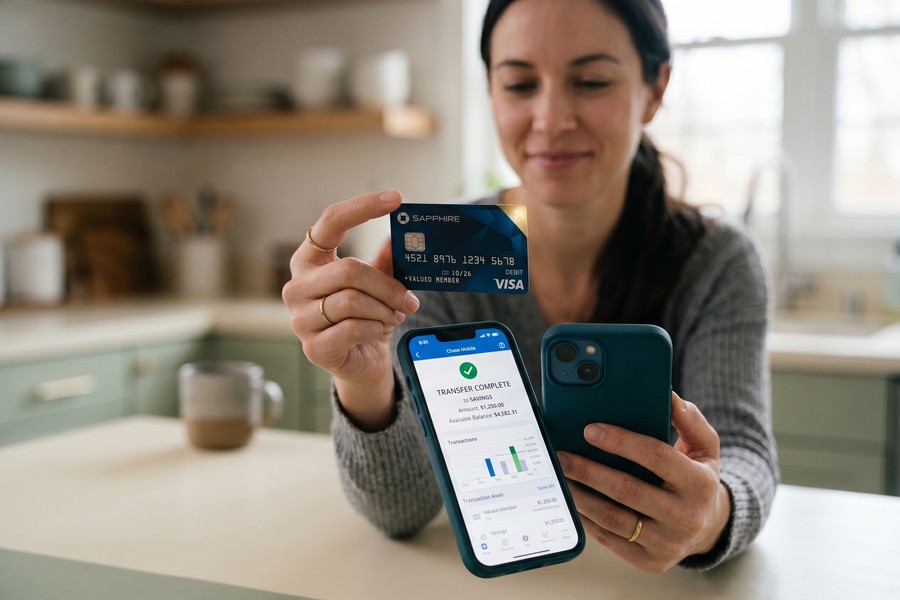
Some online personal loan lenders offer debit card disbursement as an alternative to ACH. When a lender pushes funds directly to your debit card, the transfer can settle within minutes to a few hours rather than days. OneMain Financial is a commonly cited example that uses this approach in some cases. The conditions still apply: you need to sign your loan agreement before the lender’s cutoff time on a weekday, have your debit card details ready, and select the card disbursement option explicitly. Not all lenders offer this, and those that do may charge an express disbursement fee.
According to Upstart’s own disclosures, only 66% of borrowers who signed their loan agreement before 11 AM Pacific Time in September 2025 had a funds transfer initiated the same day. That figure refers to transfer initiation, not funds available in the account. For borrowers applying later in the day, the rate drops further.
Sources That Promise Same-Day Cash but Routinely Don’t
Not every lender that uses “same-day” in its marketing is being dishonest. But several categories of funding sources routinely fail to meet same-day expectations in practice, and the gap between the promise and the reality is wide enough to matter in an emergency.
Traditional Banks
Traditional bank personal loans are rarely funded the same day. Banks have longer underwriting processes, may require in-branch visits or physical document submission, and are built for credit relationships rather than crisis response. If you apply to your bank for a personal loan on Monday morning, expecting funding by Monday afternoon is unrealistic in most cases. Bank products are better for planned borrowing than genuine emergencies.
“Emergency” Online Lenders with Fine-Print Conditions
Many online lenders branded as emergency or same-day lenders actually take one to three business days after approval to fund, and their same-day claims apply only to applicants with excellent credit, complete documentation, who apply early on a weekday. The marketing language covers the best-case scenario. The standard experience for most borrowers lands in the next-day to three-day range. This is not fraud, but it is a meaningful gap between expectation and reality when you need funds urgently.
If you want to understand how funding timelines actually compare across lender categories, our breakdown of how fast emergency funding actually arrives by source is a useful reference.
Cash Advance Apps on the Free Tier
This point deserves specific attention because it catches a lot of people off guard. The standard, no-fee transfer offered by most cash advance apps is not same-day. It moves by standard ACH and typically takes one to three business days. The same-day option exists but requires paying an express fee. Apps that advertise “instant cash advances” are advertising their paid tier. The free tier is a delayed deposit, and that distinction is rarely prominent in the app’s marketing materials.
The CFPB’s Payday Lending Rule, effective March 30, 2025, prohibits lenders from making additional payment withdrawal attempts after two consecutive failures. But the CFPB also found that more than four out of five payday loans are re-borrowed within a month. Speed of access does not prevent the debt cycle; it just makes it easier to enter one.
| Funding Source | Realistic Speed | Typical APR Range | Max Amount |
|---|---|---|---|
| Credit Card Cash Advance | Minutes (ATM) | 25%–30% + fee | Up to credit limit |
| Storefront Payday Loan | Under 1 hour | 300%–400%+ | Typically $500–$1,000 |
| Cash Advance App (Express) | Minutes to 1 hour | Varies (fees apply) | $25–$500 |
| Online Personal Loan (Debit Card) | Same day if signed by cutoff | 6%–36%+ (credit-dependent) | $1,000–$50,000 |
| Online Personal Loan (ACH) | 1–3 business days | 6%–36%+ | $1,000–$50,000 |
| Credit Union PAL | Same day to 1 business day | Up to 28% (capped) | Up to $2,000 |
| Traditional Bank Loan | 2–5 business days | 7%–25% | $1,000–$50,000+ |
The Real Cost of Speed: Fees, APRs, and Debt Trap Risk
Speed costs money. That is the honest framing for every fast-funding option. The faster the delivery mechanism, the more you are paying for it, either through higher interest rates, origination fees, express transfer fees, or some combination of all three. Understanding where that cost comes from lets you make a more deliberate choice about whether the speed is worth it.
The APR Spectrum, Honestly Stated
Payday loans sit at the extreme end: the FTC confirms APRs of 390% or more are typical. Bad-credit emergency loans from alternative online lenders commonly run between 100% and 300% APR. Many financial professionals draw the line at 35.99% APR as the upper boundary of what could reasonably be called an acceptable short-term rate. Below that threshold, the product looks more like a priced service. Above it, the math starts working against the borrower faster than most people expect.
Origination fees add another layer that marketing materials tend to downplay. Some lenders deduct origination fees of 5% to 12% directly from your loan proceeds, meaning if you borrow $1,000 with a 10% origination fee, $900 hits your account while you repay the full $1,000 plus interest. For a borrower in crisis mode who needs exactly $800 to cover a repair, receiving $720 after fees creates an immediate shortfall that leads to borrowing more. Understanding this before you sign matters.
The Hidden Cost of Express and Debit Card Transfers
Lenders offering debit card disbursement for true same-day speed typically charge an express or instant transfer fee on top of their standard loan costs. Cash advance apps charge per-transfer express fees or monthly subscription fees for access to instant advances. These fees may seem small in dollar terms, $3 here, $8 there, but on a $100 advance repaid in two weeks, a $5 express fee alone represents a 130% annualized rate. The total cost including the express fee and any subscription can easily exceed what the APR disclosure shows, especially for small, short-term advances.
The FTC’s action against Dave made clear that regulators treat undisclosed fees in this space as a serious enforcement priority, not a minor compliance matter. Whether a product is called a cash advance, payday loan, or something else, the FTC has stated it will take action to protect consumers from unauthorized charges and deceptive claims.
If you have ever wondered whether an emergency lender you found online is charging fees you did not agree to, our guide on what borrowers get wrong about their right to dispute a loan covers exactly that situation.
How to Maximize Your Odds of Actual Same-Day Funding
Given all the structural constraints, the question becomes: what can you actually control? Several variables are entirely in your hands, and getting them right significantly improves your odds of walking away with funds the same day you apply.
Timing and Document Preparation
Apply as early as possible in the morning, ideally before 11 AM Eastern Time on a weekday. This single action has more impact on whether you see same-day funding than almost anything else. Have every document ready before you begin any application: a government-issued ID, your most recent pay stub or proof of income, your bank account number and routing number, and your debit card number if you plan to use card disbursement. Starting an application and then hunting for a pay stub burns time that can push you past the lender’s cutoff.
Choose direct debit card disbursement over standard ACH wherever the lender offers it. Yes, this may cost an express fee. But if same-day access to the funds is actually what you need, the fee is the price of the service you are buying. Pre-qualifying with multiple lenders through soft-pull tools before formally applying protects your credit score from hard inquiry damage while you comparison-shop.
Before applying to any lender, check whether they offer debit card disbursement specifically. This is often buried in the FAQ or loan terms rather than featured in the headline offer. Call customer service directly and ask: “If I sign my agreement by noon today, can funds be in my account by end of business today via debit card disbursement?” A lender that cannot answer that question clearly is unlikely to deliver same-day.
Avoiding the Weekend Trap
Friday afternoon applications are the most misunderstood timing error in emergency borrowing. Even lenders with excellent same-day pipelines cannot override the fact that ACH batch windows close on Friday afternoon and do not reopen until Monday morning. If you apply Friday at 2 PM for a loan that funds via ACH, Monday is the realistic best case. If Monday is a federal holiday, Tuesday.
A “same-day” product applied to on a Friday is a three-to-four-day product in practice. If you find yourself in a Friday afternoon cash crisis, the fastest realistic options are a credit card cash advance at an ATM, a storefront lender you can visit in person, or a cash advance app with an express debit transfer. All three bypass the ACH network entirely.

Alternatives to Borrowing That Can Move Just as Fast
Not every same-day cash solution requires taking on debt. Several non-loan options can move just as fast as a lender, sometimes faster, and without the cost of interest.
Employer Paycheck Advances and Direct Negotiations
An employer paycheck advance asks your HR or payroll department to advance a portion of wages you have already earned. Processing time varies by employer, but many can initiate a same-day or next-day direct deposit. The cost is zero. This option requires having the relationship and the willingness to make the ask, which is not nothing, but for many workers it is the best emergency option available.
Negotiating directly with whoever you owe is also underrated. Medical providers routinely set up payment plans, utilities can extend due dates, and landlords sometimes allow split payments in a documented hardship situation. None of these put cash in your account, but they reduce or eliminate the need for cash by delaying the obligation. That outcome is often better than borrowing at high cost to pay immediately.
Peer-to-Peer Transfers and Credit Union PALs
Borrowing from a family member or friend via Zelle or Venmo arrives in minutes and costs nothing in interest. The social and relational costs are real, and not everyone has that option in a crisis. Acknowledge the limitation without dismissing the option: if you can make it work, it is structurally the best outcome available.
Payday Alternative Loans (PALs), offered through federal credit unions, are one of the most overlooked emergency options in existence. The National Credit Union Administration caps PAL interest at 28% APR with application fees no higher than $20, and allows loan amounts up to $2,000 with no rollovers permitted. Many credit unions can fund a PAL the same business day for existing members. Compare that 28% cap to the 390% APR common on payday loans and the difference is not marginal.
The limitation is membership: you need to already belong to a federal credit union, or be willing to join one that offers same-day membership and lending. Some do both.
Federal credit union Payday Alternative Loans are explicitly regulated by the NCUA to protect borrowers. Interest is capped at 28% APR, application fees cannot exceed $20, and rollovers are prohibited. These are not soft guidelines. They are federal regulations that lenders in this category are legally required to follow.
If selling personal items sounds implausible as an emergency strategy, consider that local marketplace apps like Facebook Marketplace or OfferUp can generate same-day cash for electronics, tools, or furniture when the buyer picks up locally. It is not elegant, but it is interest-free and immediate.
How to Avoid Scams Disguised as Same-Day Emergency Lenders
The emergency cash space attracts fraudulent operators because the audience is time-pressured and emotionally distressed. Scam lenders do not look obviously different from legitimate ones at first glance. The red flags tend to be subtle until you know what to look for.
The Specific Signals That Should Stop You
Guaranteed approval claims are the clearest single red flag. The FTC explicitly warns that no legitimate lender guarantees approval without reviewing your credit history or financial situation. Any lender promising guaranteed same-day approval to everyone, regardless of credit or income, is either running a scam or a product so predatory that approval is not actually the problem.
Upfront fees before receiving funds are a near-certain indicator of fraud. A legitimate lender deducts origination fees from loan proceeds; it does not ask you to wire money or buy gift cards to “secure” your loan. Pressure to sign before reading terms is another signal worth taking seriously. Legitimate lenders provide clear documentation and allow review time.
Finding lenders that are difficult to verify before you apply is worth the extra ten minutes. Checking state licensing databases (most state banking regulators maintain public online registries), searching the CFPB complaint database before you borrow, and verifying a physical business address all take minimal time and eliminate most fraudulent operators. Unlicensed lenders are common in the emergency cash space precisely because desperate borrowers skip due diligence when they are stressed and short on time.
The FDIC’s guidance on payday lending has long cautioned that providing high-cost, short-term credit on a recurring basis to customers with long-term credit needs “is not responsible lending” and can create serious financial hardship. The FDIC advises that institutions limit borrower indebtedness in short-term products to no more than 90 days in any 12-month period.
If you have already encountered a lender that charged unauthorized fees or misrepresented its terms, the process of identifying and disputing those charges is more accessible than most people realize. Our piece on how one borrower caught illegal lending fees and got a full refund walks through that process in practical detail. And if your emergency loan application has already been denied, our guide on what to do after an emergency loan denial covers every next step available to you.
According to FDIC supervisory guidance on deposit advance products, providing high-cost, short-term credit on a recurring basis to customers with long-term credit needs “is not responsible lending” and can create serious financial hardship. The FDIC advises that institutions limit borrower indebtedness in short-term products to no more than 90 days in any 12-month period.

Your Action Plan
-
Assess exactly what you need and when
Before applying anywhere, pin down the actual amount you need and the real deadline. “I need money today” is too vague. “I need $600 in my account by 3 PM to cover a car repair” is actionable. The specific amount and timing determine which funding source is even capable of meeting your need, and prevents you from borrowing more than necessary from a higher-cost source than you actually need.
-
Check your existing options first
Look at your credit card available balance (cash advance option), call your HR department about a paycheck advance, and consider whether a family member or friend could provide a short-term bridge via Zelle or Venmo. These options cost less than any external lender, move as fast or faster, and should be exhausted before you look at external debt.
-
If you belong to a federal credit union, call them now
Ask specifically about Payday Alternative Loans. The NCUA caps these at 28% APR with minimal fees, and many credit unions fund them the same business day for existing members. This is the single most cost-effective external borrowing option available, and it is underused almost entirely because it is under-marketed.
-
For online personal loans, apply before 11 AM ET on a weekday
Timing is the most controllable factor in same-day funding. Have your ID, proof of income, bank routing number, account number, and debit card details ready before you start the application. Select debit card disbursement rather than ACH if the lender offers it. Pre-qualify through soft-pull tools at multiple lenders before choosing one to protect your credit score from unnecessary hard inquiries.
-
Verify any lender before submitting an application
Take five minutes to check the lender’s state license through your state banking regulator’s website, search the lender’s name in the CFPB complaint database, and confirm a verifiable physical address. If any of these checks fail, stop and move to the next option. The time pressure you feel is exactly what fraudulent lenders count on to make you skip this step.
-
Read the fee disclosure before you sign anything
Look specifically for origination fees deducted from proceeds, express or instant transfer fees, subscription fees for cash advance apps, and prepayment penalty terms. The APR disclosure alone does not capture all of these costs. If you cannot find a clear fee breakdown before signing, ask customer service directly and get the answer in writing.
-
Make a repayment plan before the money arrives
The debt trap risk associated with emergency borrowing is not abstract. More than four out of five payday loans are re-borrowed within a month, according to CFPB data, and the pattern starts with treating a short-term loan as a long-term solution. Before funds arrive, identify where the repayment will come from: which paycheck, which expense category you will cut, or which bill you will defer. A specific repayment plan made before the money arrives is the most practical defense against the cycle.
Frequently Asked Questions
Can I really get same-day emergency cash with bad credit?
Some options remain available with bad credit, but the set narrows. Storefront payday lenders typically require only a pay stub and active checking account, not a strong credit score. Cash advance apps based on earned wages or spending history often do not run traditional credit checks. Credit union PALs have more flexible underwriting than conventional lenders, though membership is required. Online personal loans with competitive rates generally require fair to good credit for same-day processing; with bad credit, approval may still happen but funding timelines often stretch to one to three business days and rates are significantly higher.
What is the difference between “same-day approval” and “same-day funding”?
Same-day approval means the lender has reviewed your application and offered you a loan. Same-day funding means money is available in your account. These are entirely separate events. A lender can approve you within minutes and initiate a transfer the same day while you wait two more business days for your bank to process the incoming ACH credit. Always ask specifically about when funds will be available in your account, not when the lender initiates the transfer.
Are cash advance apps worth the express fee for genuine emergencies?
For small amounts, yes, if the alternative is a payday loan. A $5 express fee on a $200 advance is expensive on an annualized basis but manageable in dollar terms if you repay quickly. The key is knowing upfront that you are paying for the speed, not getting it free as the marketing sometimes implies. For amounts over $500, cash advance apps hit their limits, and you will need to look at other sources.
What happens if I apply for an emergency loan on a Friday afternoon?
For any lender that uses ACH transfer, standard or same-day, Friday afternoon applications realistically mean Monday funding at earliest. ACH batch windows close Friday afternoon, and banks do not process incoming transfers over the weekend. If you face a Friday afternoon emergency, your best immediate options are a credit card cash advance at an ATM, visiting a storefront lender in person, or using a cash advance app with a paid instant debit transfer. All three bypass the weekend ACH problem entirely.
How do Payday Alternative Loans from credit unions work?
Payday Alternative Loans (PALs) are short-term small-dollar loans offered through federal credit unions, regulated by the National Credit Union Administration. Interest is capped at 28% APR, application fees cannot exceed $20, and loan amounts go up to $2,000. Rollovers are not permitted. Membership in the credit union is required, but some credit unions offer same-day membership and immediate loan access. PALs are one of the most cost-effective emergency borrowing options available and one of the least well-known.
Is a credit card cash advance better than a payday loan for emergencies?
For most people, yes. A credit card cash advance carries a high APR and immediate interest accrual, but even at 25% to 30% APR plus a 5% transaction fee, it is significantly cheaper than a payday loan at 390% APR or more, as documented by the FTC. The credit card advance also does not carry rollover risk: you repay through your regular card balance at whatever pace you can manage. The downside is that you need an existing card with available credit, which not everyone in a cash emergency has.
What should I do if my emergency loan application is denied?
A denial does not close all doors. Review the adverse action notice you receive: lenders are legally required to tell you why you were denied, and that information helps you identify what to address. Consider applying to a different lender category (credit union versus online lender, for example), asking a creditworthy cosigner to apply with you, or pursuing non-loan alternatives like employer paycheck advances or direct negotiation with whoever you owe. Our full guide on next steps after an emergency loan denial covers every available path.
How can I tell if a same-day emergency lender is a scam?
Key red flags include guaranteed approval with no credit check, upfront fees required before receiving funds, pressure to sign immediately without time to read terms, rates or fees that are deliberately hard to find before the application is complete, and no verifiable physical address or state license. Check your state banking regulator’s license database and search the lender’s name in the CFPB complaint database before submitting any personal information. For more detail on spotting fraudulent lenders, our guide on how to spot a fake loan company before you apply covers the specific patterns these operations follow.
Does using a cosigner help with same-day emergency loans?
A creditworthy cosigner can improve your approval odds and potentially lower your rate, but it does not necessarily speed up the funding timeline. If the underlying lender takes two business days to fund, adding a cosigner does not change that. Cosigners are most useful when the barrier to approval is credit score rather than processing speed. The risks to the cosigner are also real: if you miss payments, their credit is affected. For a full breakdown of when cosigning helps and when it creates problems, see our guide on emergency borrowing with a cosigner.
What is the maximum I should pay in APR for an emergency loan?
Many financial professionals use 35.99% APR as the upper boundary of what could reasonably be called an affordable short-term loan rate. Above that level, the repayment math starts working against borrowers quickly, especially on shorter loan terms. Some emergency situations may justify accepting a higher rate as a last resort, but understanding 35.99% as a benchmark helps you evaluate offers objectively. Anything at or below that threshold is worth serious consideration; anything significantly above it should prompt a careful look at alternatives before signing.
Sources
- Federal Reserve Board of Governors, Economic Well-Being of U.S. Households in 2024: Savings and Investments
- Consumer Financial Protection Bureau, New Protections for Payday and Installment Loans Take Effect March 30
- Federal Trade Commission, What to Know About Payday and Car Title Loans
- Federal Trade Commission, What to Know About Advance-Fee Loans
- Federal Trade Commission, FTC Takes Action Against Online Cash Advance App Dave for Deceiving Consumers and Charging Undisclosed Fees
- National Credit Union Administration, Payday Alternative Loans
- Federal Deposit Insurance Corporation, Guidance on Payday Lending (FIL-14-2005)
- Federal Deposit Insurance Corporation, FDIC Supervisory Guidance on Deposit Advance Products
- Bankrate, Annual Emergency Savings Report 2025
- Motley Fool Money, Buy Now Pay Later Statistics and Trends 2025