

Fact-checked by the onlinepaydaynews.com editorial team
Checking your bank account the morning after your payday loan was supposed to be paid off and finding a debit you never approved is a specific, disorienting experience. Your balance is lower, but your loan balance looks exactly the same. What happened is called an unauthorized loan rollover, and it is more common than most borrowers realize. Understanding your unauthorized loan rollover rights is the first step to stopping the bleeding and getting your money back.
The Consumer Financial Protection Bureau has found that more than four out of five payday loans are re-borrowed within a month, and nearly one in four initial loans are re-borrowed nine or more times. That pattern is not an accident. It is built into how these products are structured. As the CFPB explains in its borrower guidance, rolling over a loan means paying a fee to delay repayment without reducing your principal at all. Repeat that a few times and you can pay hundreds of dollars while your original balance sits completely untouched.
By the time you finish this guide, you will know the difference between a legal rollover and one the lender processed without your real consent, which federal and state laws apply to your situation, how to stop unauthorized debits at the bank level, and what steps to take to file a complaint or pursue a refund. This is a practical roadmap, not a lecture.
Key Takeaways
- The CFPB’s Payday Payments Rule, effective March 30, 2025, prohibits lenders from making additional debit attempts after two consecutive failures without fresh written authorization from the borrower.
- On a typical $300 loan, four months of rollovers can cost $360 in fees alone while the principal stays untouched, compared to roughly $345 total under a no-cost extended payment plan.
- An unauthorized ACH debit tied to a rollover is a violation of the Electronic Fund Transfer Act (EFTA), which entitles you to recover the transferred amount directly from your bank, and the bank cannot charge you an NSF fee on it.
- 16 states require lenders to offer a no-cost extended payment plan before a rollover can happen. A lender who skips this offer may be in violation even if you later agreed to roll over.
- Courts have awarded statutory damages of $100 to $1,000 per EFTA violation, plus attorney’s fees, meaning even a single unauthorized debit can support a viable legal claim.
- In 2024, enforcement recoveries tied to payday and small-dollar loan actions reached $63 million, up from $41.8 million in 2023, according to Goodwin Law’s Consumer Financial Services Year in Review.
In This Guide
- What an Unauthorized Loan Rollover Actually Looks Like
- The Federal Floor: What the CFPB Payday Payments Rule Guarantees You
- Your State’s Rules: Who Gets More Protection and Who Gets Almost None
- The Electronic Fund Transfer Act: Your Bank-Level Right to Stop Unauthorized Withdrawals
- How to Document the Violation and Build a Paper Trail
- How to File a Complaint and What Happens Next
- What You Still Owe and Smarter Exit Strategies
What an Unauthorized Loan Rollover Actually Looks Like
Not every rollover is legally the same, and that distinction matters enormously for which remedies you can use. There are three meaningfully different scenarios, and most articles lump them together as if they carry identical consequences. They do not.
The first scenario is a rollover you explicitly agreed to in writing before it happened. The lender presented you with a new loan document or extension agreement, you signed it, and the fee was debited. This may still be illegal depending on your state’s rollover limits, but you consented to it, which narrows your available remedies to state statutory violations rather than contract fraud or EFTA claims.
The Fine Print Trap
The second scenario is more common and more ambiguous. Buried in your original loan agreement was an ACH authorization clause that let the lender debit your account for “any amounts owed,” possibly including rollover fees. You technically signed something that covered it, but you had no meaningful understanding that you were authorizing repeat debits. Courts and regulators have treated blanket ACH authorizations as insufficient consent when the charges fall outside the scope of the original transaction, particularly under Regulation E. This sits in a legal gray zone, but it is a contestable one.
The third scenario is the clearest violation: the lender rolled over your loan and debited your account with no written authorization at all, relying only on account information you provided at the time of the original loan. This is an unauthorized electronic fund transfer under federal law, full stop. The remedies here are the strongest, and they run through both your bank and the courts.
The Back-to-Back Loan Trick
There is a fourth situation worth naming, even though lenders rarely call it a rollover. In states that ban rollovers outright, some lenders will close your existing loan on the due date and immediately issue a brand-new loan for the same or similar amount. On paper, you repaid the original loan. In practice, the debt never went away and a new round of fees just started. The Federal Register’s 2017 Payday Rule documentation specifically identified this “loan churning” practice, and at least 10 states have implemented cooling-off periods between loans precisely to prevent it. If you live in a rollover-ban state and a lender immediately re-lent you money on your due date, that transaction deserves the same scrutiny as any unauthorized rollover.
The CFPB found that nearly one in four initial payday loans is re-borrowed nine or more times. The fees paid on those repeat borrowings routinely exceed the original loan amount by a wide margin.
The Federal Floor: What the CFPB Payday Payments Rule Guarantees You
The CFPB’s Payday Payments Rule became effective on March 30, 2025. It applies to payday loans, auto title loans, and any high-cost installment loan priced above 36% APR. The core protection is sometimes called the “two strikes and you’re out” rule: after two consecutive failed debit attempts on a covered loan, the lender is prohibited from making any further withdrawal attempts until the borrower provides a new, specific written authorization. The rule also requires the lender to give you written notice before any debit attempt at an irregular interval or amount.
One thing this rule does not do is require lenders to verify that you can afford the loan in the first place. The ability-to-repay provisions were rescinded in a separate regulatory action, and what survived is strictly the payments side. The rule protects your bank account from repeated unauthorized hits once repayment starts, but it does not prevent a lender from making the loan to someone who cannot realistically repay it. That is a meaningful limitation worth keeping in mind.
The Enforcement Gap Nobody Mentions
Here is what most articles skip entirely: when the March 2025 rule took effect, the CFPB simultaneously announced it would not prioritize enforcement actions against violators at launch. The rule exists as federal law, but the agency responsible for enforcing it essentially signaled it would look the other way, at least initially.
What this means practically is that you cannot assume a federal regulator will swoop in and fix things if a lender violates the rule. You may need to invoke your rights yourself, through your bank, through a private lawsuit under the EFTA or state UDAAP statutes, or by filing complaints that build a documented record. The rule matters because it establishes the legal standard, not because it guarantees automatic enforcement. Understanding this gap is what separates a borrower who recovers from one who stays stuck. You can also learn more about how to use the CFPB’s complaint system effectively in our guide to using the CFPB Complaint Database before you borrow.
The National Consumer Law Center has been direct about this problem. In response to the CFPB’s announcement that it would not prioritize enforcement of the new payments rule, NCLC stated that allowing payday lenders to continue making repeated debit attempts subjects struggling consumers to multiple NSF and overdraft fees, and called the agency’s position outrageous. That characterization, from one of the most respected consumer law organizations in the country, reflects how significant the enforcement gap actually is. (NCLC, CFPB Allows Payday Lenders to Inflict Multiple NSF and Overdraft Fees on Struggling Consumers.)
Your State’s Rules: Who Gets More Protection and Who Gets Almost None
Federal law sets a floor, but state law determines how much protection actually sits under your feet. The variation between states is genuinely stark. The same unauthorized rollover could constitute a criminal lending violation in California and be completely legal in Nevada.
Borrowers fall into roughly three tiers based on where they live. The first tier includes states that ban rollovers outright: California, Washington, and several others have eliminated rollovers entirely or placed such tight restrictions that they function as bans. Washington goes further and requires written disclosure that any new loan is a separate transaction, making the back-to-back loan trick more visible and actionable. The second tier includes states that allow rollovers but cap the number or require principal reduction with each one. Missouri, for example, allows up to six rollovers provided the borrower reduces the principal by at least 5% each time. The third tier includes states with essentially no limits: Delaware, Nevada, Utah, and Wisconsin impose no rollover caps and no meaningful fee restrictions. Borrowers in those states depend almost entirely on federal protections and their own negotiating leverage.
The Extended Payment Plan You May Be Entitled To
Sixteen states require lenders to offer a no-cost extended payment plan (EPP) before a rollover can be processed. A lender who jumps straight to rolling over your loan, without offering you the EPP option first, may be in violation of state law, even if you later signed a rollover agreement. That sequence matters legally.
The practical reality, though, is that EPP usage rates are very low, even in the most borrower-friendly states. CFPB research found that in Washington state, which has the strongest EPP requirements, only 13.4% of eligible borrowers actually used the plan. Lenders actively steer borrowers away from this option, and the CFPB has characterized that steering as deceptive. If you were never told an EPP existed, that is worth documenting when you file a complaint.
Enforcement recoveries tied to payday and small-dollar lending actions reached $63 million in 2024, up from $41.8 million in 2023, according to Goodwin Law’s Consumer Financial Services 2024 Year in Review. Lenders do face consequences when borrowers push back.
The Electronic Fund Transfer Act: Your Bank-Level Right to Stop Unauthorized Withdrawals
The Electronic Fund Transfer Act (EFTA) and its implementing regulation, Regulation E, give you a direct remedy at the bank level when an unauthorized debit hits your account. If the rollover triggered an ACH debit without new authorization, that transfer is legally unauthorized under the EFTA, and you have the right to recover the transferred amount from your bank, not just from the lender.
The bank piece is significant. Your bank cannot charge you an NSF fee on an unauthorized transfer. If it did, you can dispute that fee as part of the same error resolution process. The bank is required to investigate and provisionally credit your account within 10 business days of receiving your written complaint. This is a federal right with a defined process, not a negotiation that depends on whether the banker you speak with is in a good mood.
How to Stop Future Debits at the Bank Level
The practical steps are specific and the timing matters. To block a scheduled debit, notify your bank in writing at least three business days before the next scheduled transfer date. You also need to send a separate written revocation letter directly to the lender. Keep copies of both. Doing one without the other leaves a gap: the bank can process a stop-payment while the lender keeps attempting from their end, or vice versa. Both notices together close the loop.
There is one nuance worth flagging here. Standard single-payment payday loans, where you borrow and repay in one lump sum, may fall into an EFTA loophole. Because a single payment is not technically a “preauthorized recurring electronic fund transfer,” EFTA protections on the original payment can be weaker. Once rollovers begin, however, you have a series of repeat transfers, and those do trigger full EFTA protections. The moment the lender starts debiting rollover fees repeatedly, you are on firmer ground under federal law.
Send both your bank dispute and your lender revocation letter via certified mail with return receipt. That postmark and signature confirmation become part of your paper trail if you later pursue a legal claim or need to prove timing.
If you have ever been in a situation where a lender’s fees seemed to appear out of nowhere, our article on how one borrower caught illegal lending fees and got a full refund walks through the documentation and dispute process in detail.
How to Document the Violation and Build a Paper Trail
You cannot pursue a complaint or a legal claim without records. The good news is that most of what you need already exists; you just need to pull it together before it becomes harder to access.
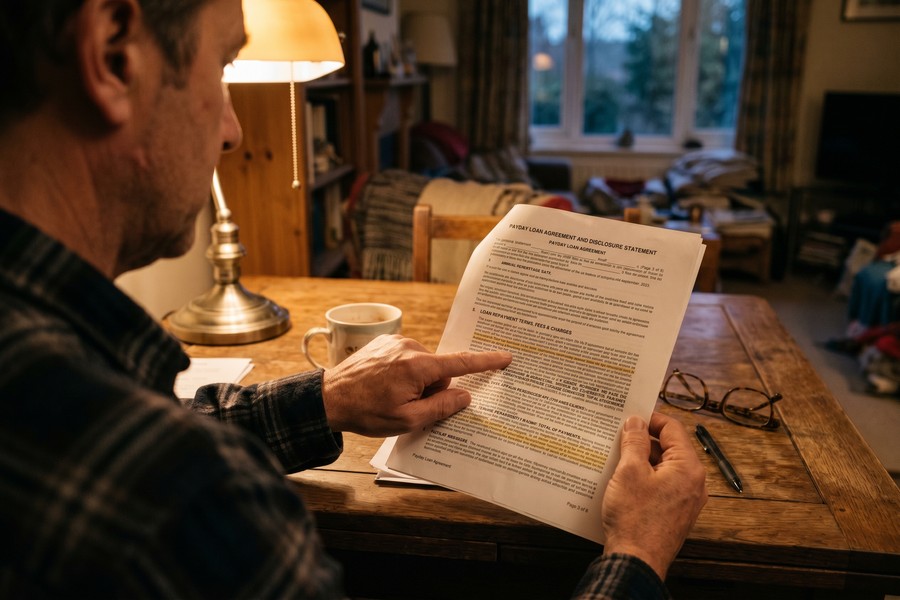
Start with your original loan agreement. You want the full document, including any fine print about ACH authorization, rollover terms, and arbitration clauses. If the lender processed a rollover, look for any written confirmation they sent you, or the absence of one. Bank statements showing the exact debit dates, amounts, and descriptions are essential. Pull at least three to six months to capture the full pattern. Screenshot or print any online account portal entries related to your loan history.
The Arbitration Clause Problem
Many payday loan agreements contain arbitration clauses that attempt to block you from suing in court. This is a real obstacle, and you should check your loan documents for one before assuming you have a clear path to litigation. That said, arbitration clauses are not universally enforceable. Some state courts have rejected them as unconscionable in the payday loan context, particularly when the clause was not prominently disclosed or when the arbitration process is so costly that it is practically inaccessible. If your agreement has an arbitration clause and you want to pursue a legal remedy, consulting a consumer law attorney is worth the time, especially since many take EFTA and UDAAP cases on contingency.
Filing a regulatory complaint does not require going to court at all. You can pursue a complaint with the CFPB, your state regulator, and your state attorney general without touching the arbitration issue. Those complaints can independently generate refunds, lender investigations, and settlements.
Approximately 2,400 payday loan complaints were submitted to the CFPB in 2024, with unexpected fees or interest charges being the most common issue cited, according to the CFPB’s 2025 Consumer Response Annual Report. Complaints do get reviewed and can trigger lender-level investigations.
How to File a Complaint and What Happens Next
Filing with just one regulator is less effective than filing with all three simultaneously. Each agency has independent enforcement authority, and a complaint that lands across three desks at once sends a different signal than one that goes to a single inbox and waits.
The three places to file are the CFPB’s online complaint portal, your state’s Department of Financial Institutions (or its equivalent), and your state Attorney General’s consumer protection office. The CFPB portal forwards complaints to the lender and requires the lender to respond within 15 days. Your state regulator can open an investigation, suspend a license, or refer the matter for prosecution. The Attorney General can pursue the lender under state consumer protection statutes, which in many states include a private right of action that lets you sue and recover attorney’s fees.
What You Can Recover Legally
The CFPB’s Payday Payments Rule itself does not carry a direct private right of action, meaning you cannot sue under the rule alone. But a documented violation supports claims under other laws that do carry private rights of action. Under the EFTA, courts have awarded statutory damages of $100 to $1,000 per violation, plus attorney’s fees. Under state UDAAP (Unfair, Deceptive, or Abusive Acts or Practices) statutes, some courts have awarded actual damages plus punitive damages. The FTC has also pursued multi-million-dollar judgments and permanent industry bans against lenders for exactly these kinds of practices.
The FTC’s enforcement record on payday lenders makes clear that unauthorized withdrawals are not just a compliance technicality. Enforcement actions have resulted in permanent bans from the industry and tens of millions in consumer restitution. In one such action, the FTC stated that lenders must not only honor the terms of their agreement, but also refrain from making a never-ending series of unexpected withdrawals from customers’ bank accounts. That framing, from the FTC’s Bureau of Consumer Protection, captures exactly the harm that unauthorized rollover debits cause. If you have already run into problems with a lender’s deceptive practices, our guide on what most borrowers get wrong about their right to dispute a loan covers the procedural mistakes that sink otherwise strong claims.
Do not close your bank account as a first response to stop unauthorized debits. Closing your account can trigger default clauses in the loan agreement and may be reported to ChexSystems, making it harder to open a new account. Use the proper EFTA stop-payment and revocation process instead.
What You Still Owe and Smarter Exit Strategies
Stopping an unauthorized rollover does not erase the underlying debt. The lender can still pursue collections on the principal you borrowed, report the account to credit bureaus, or sell the debt to a third-party collector. Borrowers who think disputing a rollover cancels the loan sometimes stop all communication with the lender and end up in worse shape than when they started. Being honest about that matters.
The goal is to stop the unauthorized fee accumulation while resolving the actual debt in a way that minimizes total cost. Those are two separate problems that need to be worked in parallel.
The Exit Ladder: From Least to Most Disruptive
The most underused option is the no-cost extended payment plan, available in 16 states and frequently not mentioned by lenders. On a $300 loan, a no-cost EPP might require four equal payments of roughly $86, for a total of $345. Compare that to four months of rollovers on the same loan at a typical $15 per $100 fee structure, which would cost $360 in fees alone before touching the $300 principal. The EPP option is almost always cheaper, and in states that require lenders to offer it, refusing to discuss it with you may itself be a violation worth documenting.
If the EPP is not available or the debt has already grown significantly, payday loan debt is unsecured. That gives it less legal bite than secured debt like a car loan, and it often settles. Debt settlement on payday loans frequently lands at 40 to 60 cents on the dollar, particularly once the debt has aged or been sold to a collector. A credit union payday alternative loan (PAL), capped at 28% APR under National Credit Union Administration rules, is another option worth checking if you need to refinance the balance into something manageable. And if the debt is one piece of a larger financial problem, Chapter 7 bankruptcy fully discharges payday loan debt, though that comes with its own long-term credit implications.
For borrowers who are weighing whether a short-term loan makes sense in the first place, our comparison of paycheck advance apps versus traditional payday loans breaks down the real cost differences in plain terms. And if you are trying to understand what protections apply when your debt situation involves multiple lenders, the article on medical debt versus personal loan legal protections is a useful comparison of how different debt types are treated under the law.
Even in the 16 states that require lenders to offer a no-cost extended payment plan, CFPB research found usage rates are extremely low. In Washington state, which has the strongest EPP rules, only 13.4% of eligible borrowers used the plan, partly because lenders actively steer borrowers toward rollovers instead.

| State Protection Tier | Rollover Policy | Examples |
|---|---|---|
| Tier 1: Full Ban | Rollovers prohibited entirely; new loans may require cooling-off period | California, Washington |
| Tier 2: Limited Rollovers | Rollovers capped by number or require principal reduction each time | Missouri (6 rollovers max, 5% principal reduction required) |
| Tier 3: No Limits | No rollover caps, no meaningful fee restrictions | Delaware, Nevada, Utah, Wisconsin |
| EPP States | Lender must offer no-cost extended payment plan before any rollover | 16 states including Washington, Florida, Michigan |
Your Action Plan
-
Pull your original loan agreement and all bank statements immediately
Gather the full loan document, including any ACH authorization language, and at least three to six months of bank statements showing every debit connected to this loan. You need this record before contacting anyone else. Without it, every conversation you have with the lender or a regulator will be your word against theirs.
-
Determine which scenario you are in
Identify whether the rollover was explicitly authorized in writing, buried in a blanket ACH clause, or done with no authorization at all. This distinction shapes which legal remedies apply. If you cannot find any document where you agreed to the specific rollover charge, that is the most actionable situation.
-
Send written revocation to the lender and stop-payment notice to your bank
Write a revocation letter to the lender stating that you withdraw authorization for any further ACH debits. Separately, notify your bank in writing at least three business days before the next scheduled debit. Send both via certified mail with return receipt. Keep copies of everything.
-
Dispute the unauthorized transfer with your bank under EFTA
File a written error resolution request with your bank citing the unauthorized electronic fund transfer. The bank is required to investigate and provisionally credit your account within 10 business days. If the bank charged you an NSF fee on the unauthorized transfer, dispute that fee in the same request.
-
Ask the lender about the no-cost extended payment plan
If you are in one of the 16 states that require lenders to offer an EPP, request it in writing and keep a record of the response. If the lender refuses to acknowledge the EPP option or steers you away from it, document that response. It can support a complaint about deceptive practices.
-
File simultaneous complaints with three agencies
Submit complaints to the CFPB’s online portal, your state Department of Financial Institutions, and your state Attorney General’s consumer protection office. Each has independent authority. A documented violation in one complaint can strengthen the others. The CFPB’s explanation of the March 2025 protections is a useful reference to include in your complaint narrative.
-
Consult a consumer law attorney if the amounts warrant it
If the unauthorized debits total more than a few hundred dollars, or if the lender has repeatedly violated the two-attempt rule, the case may be worth bringing to a consumer law attorney. Many take EFTA and UDAAP cases on contingency, meaning you pay nothing upfront. Statutory damages of $100 to $1,000 per violation plus attorney’s fees can make even modest cases financially viable for an attorney to take.
-
Resolve the underlying debt through the least costly available path
Do not let stopping the unauthorized rollover become a reason to ignore the principal you still owe. Evaluate the no-cost EPP if it is available, consider debt settlement if the balance has grown significantly, and look into a credit union PAL if you need to refinance. Payday loan debt is unsecured and often negotiable. Avoiding it entirely tends to make the eventual resolution more expensive, not less.
Frequently Asked Questions
What exactly counts as an unauthorized loan rollover?
A rollover is unauthorized when the lender extends your loan term and charges a fee without obtaining your specific written consent to that transaction. A blanket ACH authorization you signed at origination may not be sufficient consent for a rollover, particularly if it did not specifically describe future rollover debits. Any debit processed without a separate, signed authorization for the rollover itself is potentially unauthorized under the EFTA and applicable state contract law.
Does the CFPB Payday Payments Rule apply to my loan?
The rule applies to payday loans, vehicle title loans, and high-cost installment loans with an APR above 36% that are covered by the rule’s definitions. It does not apply to purchase-money mortgages, home equity products, student loans, or auto loans extended by dealers. If your loan is a traditional payday loan or a short-term high-cost loan, the rule almost certainly applies. If you are unsure, the CFPB’s Ask CFPB resource on rollovers can help clarify.
Can I get my money back from the bank if the lender took it without permission?
Yes. Under the EFTA, you have the right to file an error resolution claim with your bank for any unauthorized electronic fund transfer. The bank must investigate and provisionally credit your account within 10 business days. The key requirement is submitting a written dispute, not just calling. Your bank cannot charge you an NSF fee on a transfer it later confirms was unauthorized. This remedy runs against your bank independently of whatever happens with the lender.
What if my state allows rollovers? Does that mean the lender did nothing wrong?
Not necessarily. Even in states that permit rollovers, the lender is still required to obtain your written consent before processing one. Rollovers cannot legally happen unilaterally. If your state requires the lender to offer a no-cost extended payment plan first and the lender skipped that step, there may be a violation regardless of whether rollovers are otherwise permitted. Federal protections under the EFTA and the CFPB Payday Payments Rule apply on top of state law.
What is the “back-to-back loan” trick and is it legal?
In states that prohibit rollovers, some lenders will close your existing loan on the due date and issue a new loan immediately, effectively restarting the fee cycle without technically rolling over the original loan. This practice was documented in federal rulemaking and is sometimes called “loan churning.” Whether it is legal depends on your state: some states have implemented mandatory cooling-off periods between loans specifically to prevent it. If a lender issued you a new loan minutes after closing your old one, check whether your state has a cooling-off requirement. If it does, the lender may have violated it.
How do I stop an ACH debit before it posts?
You need to act at least three business days before the scheduled debit date. Send a written stop-payment request to your bank (in person, by mail, or by secure message, depending on your bank’s process) and a separate written revocation to the lender. Both are necessary. The stop-payment covers the current attempt, and the revocation puts the lender on notice that future debits are not authorized. If a debit posts despite these notices, you can file an error resolution claim under the EFTA.
Will disputing the rollover hurt my credit?
Disputing an unauthorized debit with your bank or filing a regulatory complaint does not directly affect your credit score. However, the underlying loan still exists, and if you stop communicating with the lender entirely, the account could go to collections or be charged off, which would appear on your credit report. Addressing the unauthorized rollover and resolving the underlying debt are two separate tasks that should happen in parallel. Stopping the harmful fee accumulation while actively working toward repayment or settlement is the path that protects your credit most effectively.
Can I sue the lender myself?
Yes, under certain conditions. The EFTA gives consumers a private right of action for unauthorized electronic fund transfers. Courts have awarded statutory damages of $100 to $1,000 per violation, plus actual damages and attorney’s fees. Many consumer protection attorneys take these cases on contingency. The main complication is whether your loan agreement contains an arbitration clause, which could require you to resolve disputes through arbitration rather than in court. Some state courts have rejected arbitration clauses in payday loan agreements as unconscionable, but outcomes vary. An initial consultation with a consumer law attorney is the fastest way to assess your specific situation.
What is a no-cost extended payment plan and how do I get one?
A no-cost extended payment plan (EPP) allows you to repay your loan principal in multiple installments without additional fees. Sixteen states legally require lenders to offer this option before processing a rollover. To request one, contact the lender in writing before your loan due date and specifically ask for their extended payment plan. Keep documentation of your request and the lender’s response. If the lender refuses to offer it in a state that requires it, include that refusal in your regulatory complaints.
Does stopping the rollover cancel what I owe?
No. Successfully disputing an unauthorized rollover fee may entitle you to a refund of that specific fee, and stopping further unauthorized debits prevents additional fees from accumulating. But it does not eliminate the principal balance you originally borrowed. The lender can still pursue repayment of the underlying loan through collections or legal action. Think of the rollover dispute as stopping the fee bleed while you work out a legitimate repayment path for the actual debt.
Sources
- Consumer Financial Protection Bureau, New Protections for Payday and Installment Loans Take Effect March 30
- Consumer Financial Protection Bureau, Ask CFPB: What Does It Mean to Roll Over a Payday Loan?
- National Consumer Law Center, Rule on Bounced Payday and High-Cost Loan Payments Now in Effect
- National Consumer Law Center, CFPB Allows Payday Lenders to Inflict Multiple NSF and Overdraft Fees on Struggling Consumers
- Federal Trade Commission, FTC Acts to Ban Payday Lender from Industry, Forgive Illegal Debt
- Federal Trade Commission, FTC Challenges Tactics of Online Payday Lender (Harvest Moon)
- Goodwin Law, Consumer Financial Services 2024 Year in Review: Payday and Small-Dollar Lending
- Self.inc, Payday Loan Statistics Citing CFPB 2025 Consumer Response Annual Report
- Federal Reserve, Consumer Credit Statistical Release
- Consumer Financial Protection Bureau, Consumer Tools: Payday Loans