
Fact-checked by the onlinepaydaynews.com editorial team
Picture this: you find a lender advertising “no credit check required,” and for a moment, it feels like a lifeline. No hard inquiry means your score stays untouched, right? The reality is more complicated, and the fine print of that protection is exactly what most borrowers never read. No credit check loans do skip the traditional bureau pull, but they often replace it with something else entirely, and the cost of that convenience can follow you for years.
Credit score anxiety is real and widespread., roughly 16.3% of Americans carry a FICO score between 300 and 599, putting them squarely in territory where mainstream lenders often say no. That pressure pushes millions of borrowers toward products that promise access without judgment, and that is precisely where the trade-offs get expensive.
After reading this guide, you will be able to tell the difference between a genuine soft-pull lender and a true no-credit-check lender, understand what each type actually does to your score in the short and long run, and decide which option fits your situation without overpaying for a protection that may not be as solid as advertised.
Key Takeaways
- A single hard inquiry typically reduces a FICO Score by fewer than five points and stops affecting your score after 12 months, making the fear driving most borrowers toward no-credit-check products larger than the actual risk.
- Payday loans, one of the most common no-credit-check products, carry an APR of nearly 400% according to CFPB data, orders of magnitude above the roughly 36% ceiling on bad-credit personal loans from reporting lenders.
- Most no-credit-check lenders do not report on-time payments to the major bureaus, meaning perfect payment history builds nothing on your credit file, but a default still reaches it through a debt collector.
- “Soft-pull lender” is not a synonym for “no credit check.” Soft-pull lenders still review your credit data, including score, collections, and payment history; they simply do it without triggering a score impact.
- Many mainstream lenders use a soft pull for prequalification but require a hard pull at formal application, a two-step process that surprises borrowers who assume they have found a purely soft-pull lender.
- Payment history drives 35% of a FICO score, so a soft-pull lender that reports on-time payments delivers lasting credit-building upside that no-credit-check lenders structurally cannot match.
In This Guide
- What “No Credit Check” Actually Means (And What Lenders Do Instead)
- How Soft-Pull Lenders Work and Why They’re a Different Animal
- The Score Impact Comparison: Hard Pulls, Soft Pulls, and the No-Check Wild Card
- The Credit-Building Trap: Which Loan Type Actually Helps Your Score
- The Real Cost Trade-Off: What You Pay to Avoid a Credit Check
- Who Should Actually Use Each Option
- Red Flags and Questions to Ask Before You Sign
- The Bottom Line: Which One Actually Protects Your Score?
What “No Credit Check” Actually Means (And What Lenders Do Instead)
“No credit check” is a marketing phrase, not a technical specification. What it usually means is that the lender will not pull your file from Equifax, Experian, or TransUnion, the three major consumer reporting agencies. It does not mean the lender skips all vetting. Most lenders in this category still verify income, require an active checking account, and check alternative data sources you may never have heard of.
One of the most common alternatives is Clarity Services, a specialty consumer reporting agency owned by Experian that tracks short-term lending behavior. If you have taken a payday loan in the past, Clarity probably has a record of it. Lenders can pull that file without touching your FICO score, which is how they manage risk while still advertising “no credit check required.”
The Three Main Loan Types in This Category
The no-credit-check label covers more ground than most borrowers realize. Payday loans are the most familiar: small-dollar, short-term loans repaid in a lump sum on your next pay date. Car title loans let you borrow against your vehicle’s equity with the title held as collateral, and they frequently carry triple-digit APRs with the added risk of repossession. High-interest installment loans are structured like traditional personal loans but priced dramatically higher, often from online lenders operating under tribal or out-of-state charters to sidestep state rate caps.
All three share the same structural feature: they accept borrowers who cannot qualify elsewhere, and they price that acceptance accordingly. The “no credit check” label describes the application process, not the risk of the product itself.
The CFPB warns that “buy here, pay here” no-credit-check auto dealers often report only negative payment information to credit bureaus. That means your on-time payments may build no positive history, while any late payment still damages your score.
That asymmetry, where the lender captures the upside of your good behavior in reduced default risk, but you capture none of it in your credit file, is one of the defining features of the no-credit-check category. It is worth keeping in mind as we compare the alternatives.
How Soft-Pull Lenders Work and Why They’re a Different Animal
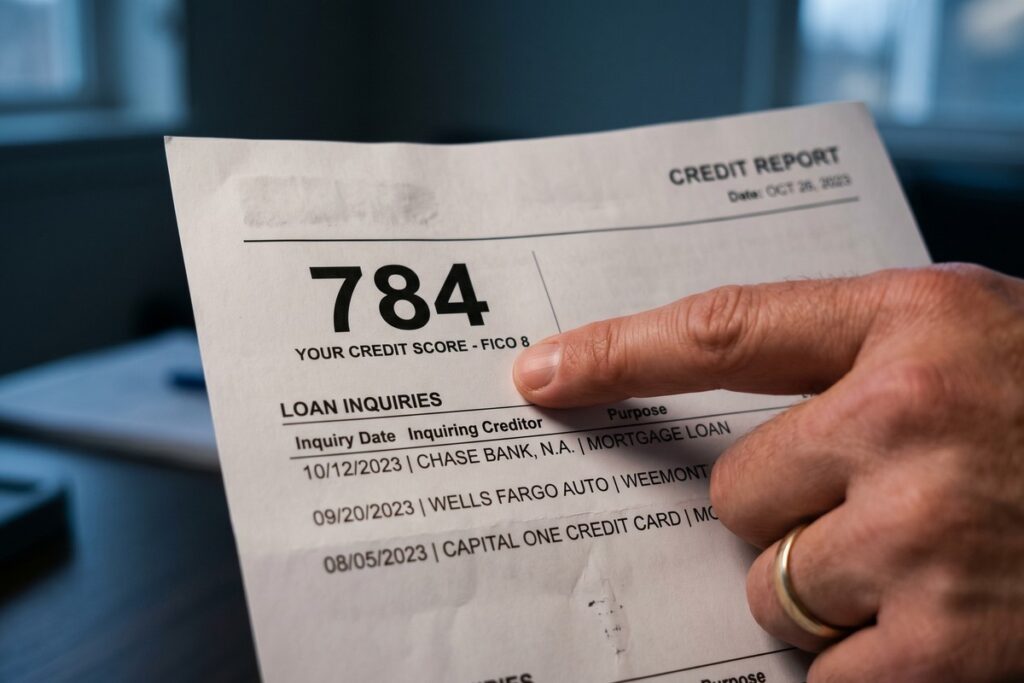
A soft inquiry (also called a soft pull) is a limited review of your credit file that does not affect your credit score. Lenders use it to assess general creditworthiness before committing to a formal application. The data they see is real, your score, account history, collections, recent inquiries, they simply access it through a channel that credit bureaus mark as non-scoring.
This is a critical distinction that many comparison articles miss. A soft-pull lender is not the same as a no-credit-check lender. The soft-pull lender is still looking at your credit. They know your score, whether you have collections, and roughly how you manage debt. That is precisely why they can offer lower rates than no-credit-check products: they have actual information to price the risk. A true no-credit-check lender lacks that data, so it charges everyone a premium to compensate for the uncertainty.
The Two-Step Reality Most Borrowers Miss
Here is where confusion about “soft-pull lenders” creates real problems. Most mainstream lenders, including well-known names like Upstart and SoFi, use a soft pull during prequalification to show you estimated rates. That phase has zero score impact. But when you formally accept a loan offer and submit a full application, those lenders typically run a hard inquiry at the final stage.
If you see “check your rate without affecting your credit score” on a lender’s website, read carefully. That promise usually applies to the rate-check step, not the full approval. If you proceed to borrow, a hard inquiry follows. This two-step process is common and not deceptive, but borrowers who do not understand it sometimes believe they have found a purely soft-pull option and are surprised when a hard inquiry shows up on their report.
That said, a niche of lenders genuinely completes the entire loan process without a hard pull on the major bureaus. OppLoans and Possible Finance are frequently cited examples. They rely on alternative data or soft pulls all the way through approval. These products are real, but they still carry higher rates than mainstream personal loans, a reminder that soft-pull lenders are not a free pass to cheap credit.
When comparing loan offers, use a prequalification marketplace that runs a single soft pull across multiple lenders. If you then formally apply to just one lender within roughly 14 days, FICO treats rate-shopping inquiries for the same loan type as a single inquiry, so the hard-pull damage stays minimal. Learn how to compare short-term loan offers without being misled by low APR claims.
The Score Impact Comparison: Hard Pulls, Soft Pulls, and the No-Check Wild Card
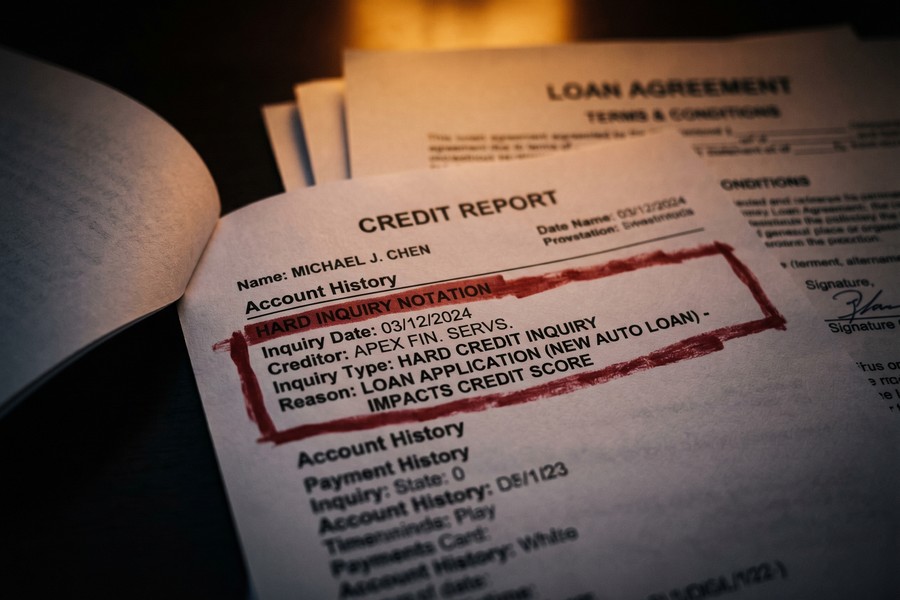
Let’s put real numbers on the fear. According to Experian, a single hard inquiry typically reduces a FICO Score by fewer than five points. It stays on your credit report for two years, but stops affecting your score after 12 months. For most borrowers, that is a rounding error compared to the factors that actually move a score: payment history (35%), amounts owed (30%), and length of credit history (15%).
Soft pulls, by definition, have no score impact at all. The NFCC confirms that soft inquiries, including when you check your own credit, have zero effect on your score, while hard pulls can cost up to four points per inquiry according to FICO. The difference between a soft and a hard pull is real, but it is measured in single digits, not double digits.
The No-Check Wild Card: Protected Entry, Risky Exit
No-credit-check loans offer what looks like the best of both worlds on the application side: no hard pull, no score dip. The problem is what happens if things go sideways. If you default on a no-credit-check payday loan or installment loan, the lender will typically sell the debt to a collection agency. That collection agency reports to the major bureaus. Suddenly, the loan that “never touched your credit” has left a derogatory mark that can drop a score by 100 points or more and stay on your report for seven years.
This is the asymmetric risk that most comparisons ignore. With no-credit-check loans, you can only lose on the credit side, never gain. On-time payments are invisible. Default is permanent. That is not a protection; it is a one-way door.
A typical two-week payday loan charging a $15 fee per $100 borrowed carries an APR of nearly 400%, according to CFPB data. The score “protection” at application comes at a cost that can create the very financial stress that leads to default.
The Credit-Building Trap: Which Loan Type Actually Helps Your Score
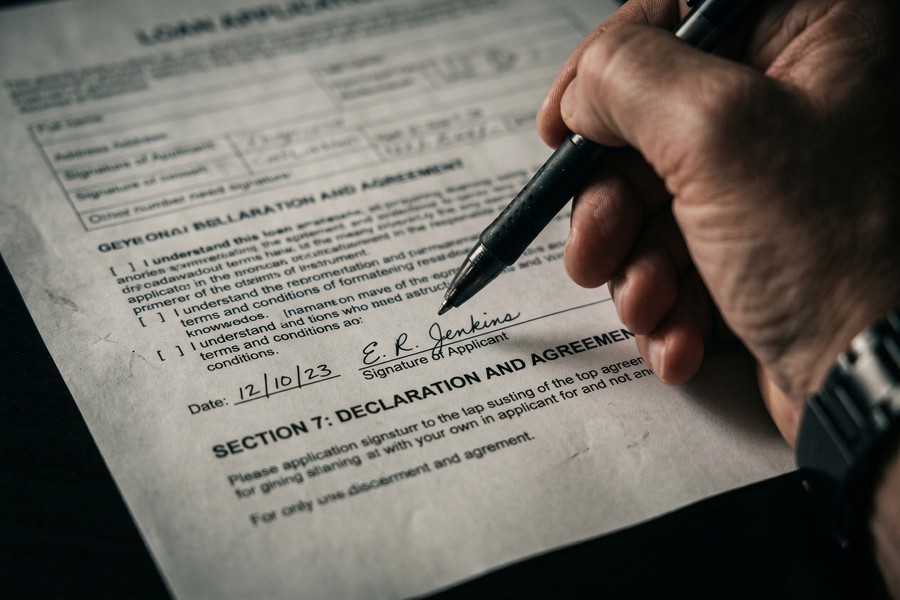
Payment history drives 35% of a FICO score, more than any other factor. A loan that does not report on-time payments to the major bureaus cannot help you on that dimension, no matter how faithfully you pay. Most true no-credit-check lenders fall into this category. You pay perfectly, you avoid default, and your credit file looks exactly the same as it did before you borrowed.
This is the credit-building trap: borrowers in poor credit situations take no-credit-check loans because they cannot qualify elsewhere. They pay on time for months. They assume they are building credit. They apply for a mainstream product six months later and discover nothing changed. The missed opportunity compounds over time.
Soft-Pull Lenders That Actually Report
Some lenders in the alternative space, including OppLoans and Possible Finance, do report to at least two of the three major bureaus (typically TransUnion and Experian). That reporting changes the math significantly. Yes, a hard inquiry costs a few points upfront. But a borrower who takes a reported installment loan, pays on time for 12 months, and then applies for a mainstream card will typically find their score higher than when they started. The initial hard-pull dip recovers, and the positive payment history stays.
Contrast that with 12 months of on-time payments on a non-reporting payday product. The borrower has spent significantly more money in fees and has nothing to show on their credit file. If you are trying to escape the cycle of high-cost borrowing, a non-reporting loan is a treadmill: effort without progress.
For readers actively working on their credit health, it is worth understanding how credit builder loans and secured cards compare for building credit from a thin file, both are reporting products designed specifically for this purpose and priced far below what no-credit-check products charge.
BNPL (Buy Now, Pay Later) products sit in a gray zone on credit reporting. Most “Pay in 4” plans do not report on-time payments to the major bureaus, creating the same asymmetric risk as payday products. However, credit bureaus including Experian and TransUnion have been actively integrating BNPL data, meaning the reporting picture for these products may look different by the end of 2026.
The Real Cost Trade-Off: What You Pay to Avoid a Credit Check
The price gap between loan categories is not subtle. A mainstream personal loan from a bank or credit union might carry an APR of around 12% for a borrower with good credit. A bad-credit personal loan from a reporting online lender might run up to 36% APR. That is high, but it is a number a borrower can calculate, plan for, and realistically repay.
No-credit-check installment loans routinely carry triple-digit APRs. Payday loan fees translate to roughly 400% APR on an annualized basis, as documented by the CFPB. The difference between 36% and 400% is not a rounding error, on a $500 loan held for three months, the gap in fees can exceed $300.
The Score-Protection Paradox
Here is the uncomfortable truth: no-credit-check loans “protect” your score at the application stage by avoiding a hard pull. But the rates they charge are so high that the debt itself becomes a credit risk. Borrowers who cannot afford the fees roll over the loan, extend the term, or default outright. Every one of those outcomes does far more damage to a score than a five-point hard-pull dip ever could.
The borrower who takes a soft-pull personal loan at 28% APR, absorbs a four-point inquiry hit, and pays it off on time will have a better score 12 months later than the borrower who took a 300% installment loan to protect those same four points. The math is not close.
Before signing any short-term loan agreement, take the time to check the CFPB complaint database for the lender’s name. A history of complaints about hidden fees or aggressive collection practices is a signal worth acting on.
| Loan Type | Typical APR Range | Hard Inquiry? | Reports On-Time Payments? | Default Risk to Score |
|---|---|---|---|---|
| Mainstream Personal Loan | 7%–36% | Yes (after soft prequalification) | Yes, all three bureaus | Moderate (derogatory mark) |
| Soft-Pull Reporting Lender (e.g., OppLoans) | 59%–160% | No (soft or alternative data only) | Yes, typically 2–3 bureaus | Moderate (derogatory mark) |
| Payday Loan (No Credit Check) | ~400% APR equivalent | No | Rarely | High (collections report) |
| Car Title Loan (No Credit Check) | 100%–300%+ | No | Rarely | High + vehicle repossession risk |
| Credit Union PAL | Up to 28% (capped) | Typically yes | Yes | Low to moderate |
Who Should Actually Use Each Option
There is no single answer that fits every borrower. The honest approach is to map the product to the situation, not to assume one option is always superior.
If you have no credit history, a soft-pull lender that reports payments is almost always a better starting point than a no-credit-check product. The hard inquiry costs you almost nothing because there is not much score to protect, and the reporting builds the file you need to qualify for better products later. Pairing this with a credit-building strategy after clearing any existing collections can accelerate progress meaningfully.
When a No-Credit-Check Product Might Be the Only Option
Borrowers whose scores are so damaged that even alternative lenders decline them may find that a no-credit-check product is genuinely the only available tool. That is a real situation, not a hypothetical. If you are in it, use the smallest amount possible, for the shortest term possible, and treat the loan as a bridge to something better rather than a recurring solution.
Federal credit union Payday Alternative Loans (PALs) are worth exploring before reaching for any triple-digit-APR product. Capped at 28% APR by the National Credit Union Administration, PALs are available to credit union members in amounts up to $2,000 and terms up to 12 months. They require membership, but many credit unions have broad community eligibility requirements. If you have been denied elsewhere and need emergency funds quickly, it is also worth reading about what steps are available immediately after an emergency loan denial.
Secured personal loans, where you pledge a savings account or CD as collateral, are another underused option. The lender’s risk drops, and rates come down accordingly. For borrowers with a thin file or damaged credit, this path often unlocks access to reporting credit products without the triple-digit pricing.
State law matters more than most borrowers realize. Some states cap payday loan APRs aggressively, for example, Colorado caps payday loan costs at roughly 36% effective APR for longer-term loans, while states like Texas and Utah impose minimal restrictions and allow rates well above 400%. If you are considering a no-credit-check product, check your state’s specific rules before signing. A loan legal in one state may be illegal, or subject to rate caps, in yours.
Red Flags and Questions to Ask Before You Sign
The single most useful habit before applying to any lender is asking direct questions and comparing the answers against what the lender actually puts in writing. Verbal assurances mean nothing; the loan agreement governs.
Ask the lender specifically: “Is this inquiry hard or soft?” Then ask: “Do you report payment history to all three major bureaus, Equifax, Experian, and TransUnion?” A lender who hedges, cannot answer, or reports to only one bureau is telling you something important about the credit-building value of the product.
The “Guaranteed Approval” Warning Sign
This one deserves its own paragraph. The Federal Trade Commission explicitly warns that any lender advertising guaranteed approval “regardless of your credit history” is a hallmark of a scam. Legitimate lenders, even soft-pull ones, even those using only alternative data, evaluate ability to repay. No responsible lender approves everyone unconditionally. When you see that phrase, stop.
Other questions worth asking before you sign:
- What is the total cost in dollars, not just the fee or interest rate?
- Is there a prepayment penalty if you pay off early?
- Are rollover or loan extension options available, and what do they cost? (Rollovers compound fees dramatically.)
- What is the lender’s collection process if you miss a payment?
- Is the lender licensed in your state?
If you are not sure how to evaluate a lender’s legitimacy from the outside, the guide on spotting fake loan companies before you apply covers the red flags most borrowers miss until it is too late.
Multiple hard inquiries for the same loan type, submitted within roughly a 14-day window, are treated as a single inquiry by both FICO and VantageScore. This means you can shop a soft-pull marketplace, compare rates from multiple lenders, and then formally apply to one, taking only a single hard-inquiry hit. The responsible path is far less damaging to your score than most borrowers assume.
The Bottom Line: Which One Actually Protects Your Score?
When the evidence is laid out in full, a soft-pull lender that reports on-time payments to the major bureaus is the objectively better choice for credit health. The score dip from a hard pull is small, fewer than five points, and temporary, fading within a year. The credit-building upside from a year of reported on-time payments is real, lasting, and tied directly to the factor that counts most in a FICO score.
No-credit-check loans, by contrast, offer score protection at the entry point only. They charge dramatically more for the privilege, rarely report positive behavior, and leave a borrower in exactly the same credit position they started in, unless they default, at which point the debt collector does the reporting for them.
The honest concession: if your credit is damaged enough that even alternative soft-pull lenders decline you, a no-credit-check product may be the only accessible option in a genuine emergency. That is a real circumstance, and pretending otherwise helps no one. But treat it as a short-term bridge, not a long-term strategy. The priority should be paying it off quickly, avoiding rollovers at all costs, and moving to a reporting lender as soon as your profile allows.
For borrowers looking to rebuild after a difficult stretch, the comparison of credit repair companies versus DIY approaches is a practical next read, because the fastest path out of high-cost lending starts with getting your credit file in order.
Your Action Plan
-
Pull your own credit report before you apply anywhere
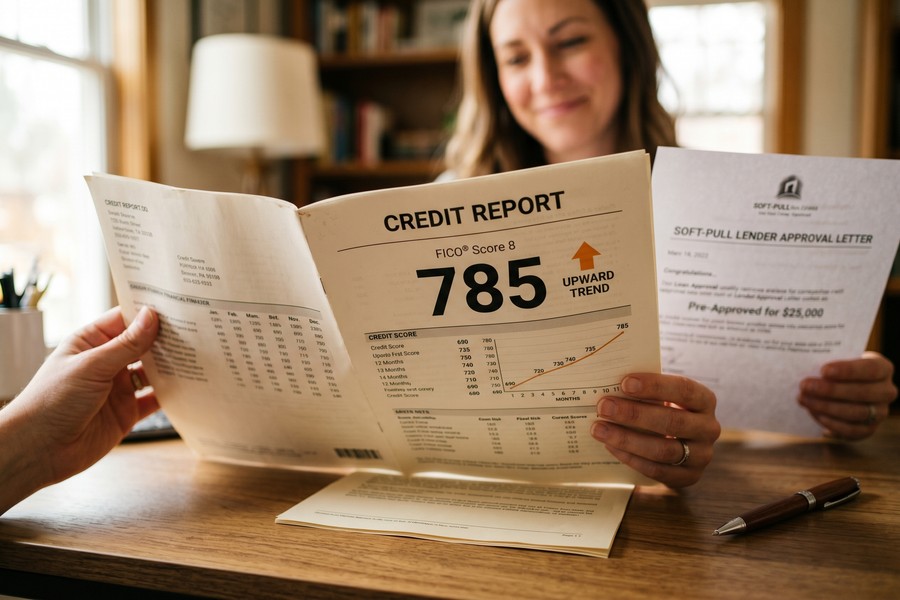
Checking your own credit is a soft pull, it has zero effect on your score. Go to AnnualCreditReport.com to get free reports from all three bureaus. Knowing your actual score and what is on your file tells you which lenders are realistic options and whether there are errors worth disputing before you borrow.
-
Identify whether you need prequalification or a full application
If a lender offers a rate check or prequalification, use it. This step uses a soft pull and shows you estimated terms without affecting your score. Only move to a formal application after you have compared at least two or three offers and selected the best one.
-
Ask every lender two direct questions before you proceed
Ask whether the inquiry at final application is hard or soft, and ask whether they report payment history to all three major bureaus. Put those questions in writing if possible. A lender who cannot answer clearly or who reports to only one bureau is telling you something important about the product’s value for your credit.
-
Check your state’s APR cap for short-term loans
State law varies significantly. Some states cap payday and installment loan rates at 36% APR or below; others have no cap at all. Your state attorney general’s office or consumer protection bureau website should have current rate limit information. If you are in a state with strong protections, a lender quoting triple-digit APRs may not even be operating legally.
-
Exhaust lower-cost alternatives before accepting triple-digit APR terms
Before signing any no-credit-check loan, check whether your local credit union offers a Payday Alternative Loan (PAL), capped at 28% APR. Consider a secured personal loan against savings. Ask your utility provider, landlord, or medical biller whether a hardship plan or payment deferment is available. These options are underused and often faster than people expect.
-
If you must use a no-credit-check lender, borrow the minimum and pay it off first
If no other option is available, borrow the smallest amount that solves the immediate problem and choose the shortest repayment term you can afford. Decline any rollover or extension offer, the fee structure on rolled-over payday loans is where the real debt trap lives. Paying off the loan in its original term limits your total cost exposure.
-
Move to a reporting lender as soon as your profile qualifies
Once you have paid off a high-cost product, use that payment history (even if it was not reported) plus your improved financial position to apply to a lender who does report. A credit builder loan or secured card is a lower-risk way to start generating positive payment history on your file. The goal is to make your next borrowing experience cheaper by building the record that justifies a better rate.
-
Monitor your credit file for the 12 months after any formal application
Hard inquiries stay on your report for two years but stop affecting the score after 12 months. Check your file quarterly using free tools from any of the three major bureaus. If you see inquiries you did not authorize, dispute them, unauthorized hard pulls are a known tactic in predatory lending scams.
Frequently Asked Questions
Does “no credit check” mean the lender looks at nothing?
No. “No credit check” typically means no hard pull from the three major bureaus, Equifax, Experian, and TransUnion. Most lenders in this category still verify income, check an active bank account, and may consult alternative reporting agencies like Clarity Services from Experian, which tracks short-term lending activity specifically. The “no check” label applies to a narrow slice of the vetting process.
How many points does a hard inquiry actually cost?
According to Experian’s official guidance, a single hard inquiry typically reduces a FICO Score by fewer than five points. The inquiry remains on your credit report for two years but stops affecting your score after 12 months. For most borrowers, this is a meaningfully smaller penalty than the score damage caused by a missed payment or a collection account.
Can a soft-pull lender still deny my application?
Yes, absolutely. Soft-pull lenders still review your credit data, they just access it through a channel that does not trigger a score impact. They see your score, your payment history, your collections, and your recent inquiries. A borrower with a deeply damaged credit file can be denied by a soft-pull lender just as they can be denied by any other lender. The soft pull reduces the score cost of being evaluated; it does not guarantee approval.
What happens to my credit if I default on a no-credit-check loan?
Even though the original lender did not report to the major bureaus, a defaulted balance will almost certainly get sold to a debt collection agency. Collection agencies do report to the bureaus. That collection account can drop a score by 100 points or more and remain on your credit report for seven years from the date of the original delinquency. The “no credit check” entry protection does not extend to default.
Are there legitimate soft-pull lenders who never run a hard inquiry?
Yes, though they are a niche. OppLoans and Possible Finance are two commonly cited examples that complete the approval process without a hard pull on the major bureaus. They typically use alternative data or a soft pull through the full process. The trade-off is that their rates are higher than mainstream personal loans, often significantly so, because they are working with less credit information and serving higher-risk borrowers.
Does BNPL affect my credit score?
It depends on the product and the lender. Most “Pay in 4” BNPL plans (Afterpay, Klarna’s short-term plans) do not report on-time payments to the major bureaus, but missed payments can still surface through collections, the same asymmetric risk as payday products. Longer-term BNPL installment plans are more likely to report. Credit bureaus including Experian and TransUnion are actively integrating BNPL data, so the reporting landscape for these products is evolving and may be more consequential for borrowers than it was even a year ago.
What is a Payday Alternative Loan (PAL), and who can get one?
PALs are small-dollar loans offered by federally chartered credit unions and regulated by the National Credit Union Administration. They are capped at 28% APR, a fraction of what payday lenders charge, and are available in amounts up to $2,000 for terms up to 12 months. To qualify, you must be a member of a credit union that offers PALs, which typically requires meeting a geographic, employer, or community affiliation. Many credit unions have broad eligibility, so it is worth checking even if you have never used a credit union before.
If I use a prequalification marketplace, does each lender run a separate inquiry?
During the prequalification phase, the marketplace typically runs a single soft inquiry and uses that data to match you with offers from multiple lenders. No individual hard inquiry is triggered at that stage. If you select an offer and formally apply, the selected lender then runs its own hard inquiry. Under FICO’s rate-shopping rules, multiple hard inquiries for the same loan type within approximately 14 days count as a single inquiry, so comparing options and then applying to your top choice is a score-neutral process for practical purposes.
Do all three major bureaus receive the same information from lenders?
Not necessarily. Lenders choose which bureaus to report to, and not all report to all three. Some alternative lenders report to only two bureaus. This matters because a credit score pulled from a bureau that lacks positive payment history will look worse than one from a bureau where your payments are on record. Before taking a loan from any lender marketing itself as a credit-building option, confirm which bureaus receive the payment data.
What should I do if I suspect a lender’s “soft pull” was actually a hard inquiry?
Pull your credit report immediately and check the inquiries section. Each inquiry is labeled as either a hard or soft pull. If you see a hard inquiry from a lender who told you it would be soft, you have grounds to dispute it with the credit bureau and with the lender directly. You also have the option to file a complaint with the CFPB. Unauthorized or misrepresented hard inquiries are a known tactic in predatory lending, and you do have the right to challenge them formally. For a detailed walkthrough of your dispute rights, read through what most borrowers get wrong about their right to dispute a loan.
Sources
- Consumer Financial Protection Bureau, What is a payday loan?
- Consumer Financial Protection Bureau, What is a no-credit-check or buy here, pay here auto loan?
- Federal Trade Commission, What To Know About Advance-Fee Loans
- Experian, Hard Inquiry vs. Soft Inquiry: What’s the Difference?
- National Foundation for Credit Counseling, Soft vs. Hard Credit Inquiry
- BadCredit.org, How Many Americans Have Bad Credit? (FICO 2024 data)
- Experian, What Is the Average Credit Score in the U.S.?
- MyCreditUnion.gov, How Is a Credit Union Different From a Bank?
- myFICO, Credit Checks and Inquiries: What You Need to Know