
Fact-checked by the onlinepaydaynews.com editorial team
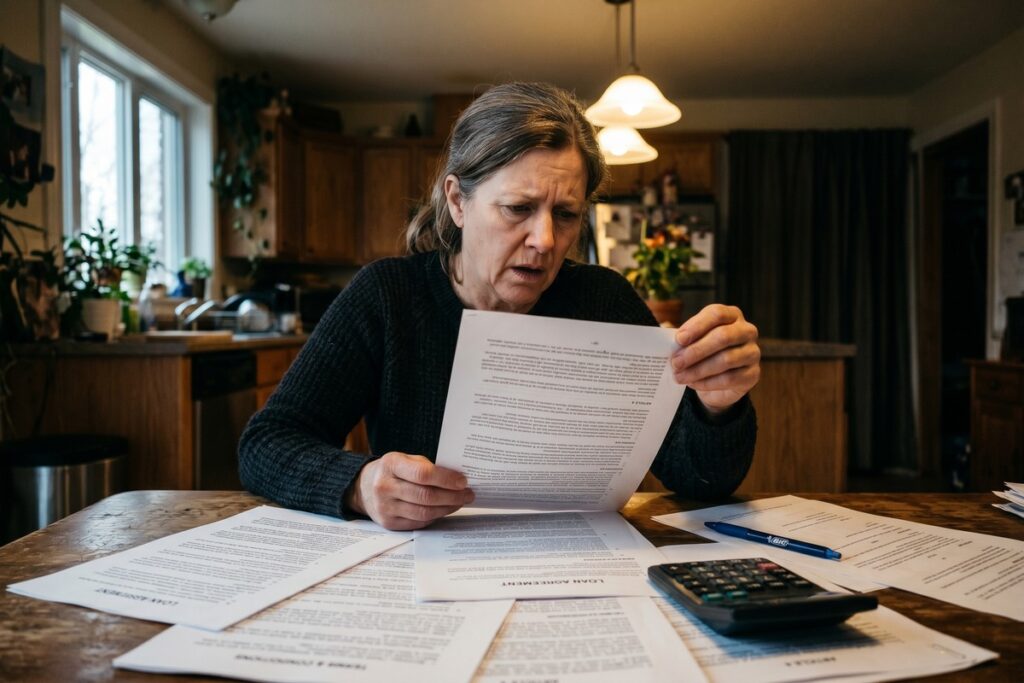
Most people sign loan paperwork feeling confident they understand what they owe. They checked the interest rate, maybe glanced at the monthly payment, and figured that was enough. But that sense of confidence is exactly what lenders are counting on — because hidden loan fees often live in the pages nobody reads, buried under dense legal language designed to confuse rather than clarify.
According to the Consumer Financial Protection Bureau, consumers pay billions of dollars annually in unexpected fees tied to financial products they believed were straightforward. That number doesn’t include the compounding financial damage — the late penalties that trigger more penalties, the prepayment charges that punish responsible borrowers, or the administrative costs quietly rolled into loan balances.
This guide breaks down exactly which fees to look for, where they hide in your loan documents, and how to push back before you sign. You’ll walk away with a clear checklist of charges to challenge, specific questions to ask your lender, and the confidence to negotiate terms most borrowers never think to question.
Key Takeaways
- Origination fees can add 1% to 8% to the total cost of a personal loan — often deducted upfront before you receive the funds.
- Prepayment penalties exist in roughly 36% of personal loan contracts, charging borrowers for paying off debt early.
- The CFPB received more than 100,000 complaints about personal loan and consumer credit fees in a single recent year.
- Administrative and “processing” fees are largely unregulated in many states, giving lenders wide latitude to charge what they choose.
- A single missed payment can trigger a late fee plus a penalty APR increase — sometimes jumping your rate by 10 or more percentage points.
- Borrowers who compare loan offers side-by-side using the APR (Annual Percentage Rate) rather than just the interest rate catch more hidden costs before signing.
In This Guide
- Origination Fees: The First Bite Out of Your Loan
- Prepayment Penalties: Punished for Being Responsible
- Late Fees and Penalty Rates: The Double Hit
- Administrative and Processing Fees: Vague Names, Real Costs
- Credit Insurance and Add-On Products: Extras You Didn’t Ask For
- Balloon Payments and Deferred Interest: The Delayed Disaster
- Hidden Fees by Loan Type: What Varies and Why
- How to Spot and Negotiate Hidden Fees Before You Sign
Origination Fees: The First Bite Out of Your Loan
An origination fee is what a lender charges simply for processing your loan application and disbursing your funds. On paper, it sounds reasonable. In practice, it can cost you hundreds or thousands of dollars before you spend a single cent of what you borrowed.
These fees typically range from 1% to 8% of the total loan amount. Some lenders deduct them from the funds you receive, so a $10,000 loan might land in your bank account as $9,200 after an 8% origination charge.
How Origination Fees Are Disclosed
Lenders are required to disclose origination fees in your loan agreement, but the presentation can be misleading. Some bury it in an itemized fee table on page four, while others combine it with other charges under a single line item called “finance charges.”
Always check whether the origination fee is reflected in the APR. A loan with a 12% interest rate and a 5% origination fee has an effective APR much higher than 12%. If the numbers don’t add up, ask the lender to break it down in writing.
Some lenders offer “no origination fee” loans but charge higher interest rates to compensate. Over a long loan term, the rate difference often costs more than the upfront fee would have.
Negotiating or Avoiding the Origination Fee
Origination fees are more negotiable than most borrowers realize. Credit unions and community banks are especially likely to reduce or waive them for members with strong credit histories. Online lenders compete aggressively, and some genuinely charge zero origination fees.
If you’re comparing multiple offers, our guide on how to compare short-term loan offers without getting fooled by low APR claims walks through exactly how to calculate the true cost of each option side by side.

Prepayment Penalties: Punished for Being Responsible
Few hidden loan fees feel as counterintuitive as the prepayment penalty. You pay off your loan early — a financially responsible move — and the lender charges you for it. The reason is simple: when you pay early, they lose the interest income they were expecting.
Prepayment penalties appear most often in auto loans, mortgages, and personal loans from certain non-bank lenders. They can be calculated as a flat fee, a percentage of the remaining balance, or as a set number of months’ worth of interest.
Where Prepayment Penalties Hide
Look for language like “early termination fee,” “prepayment charge,” or “interest rebate formula” in your loan documents. Some contracts use the Rule of 78s, a calculation method that front-loads interest so heavily that paying early saves you almost nothing.
Lenders are not always required to volunteer this information upfront. You have to ask directly: “Does this loan carry any prepayment penalty?” Get the answer in writing, not just verbally.
Research from the Pew Charitable Trusts found that installment loan contracts frequently contain prepayment penalties and other costly add-ons that significantly increase the total amount repaid by borrowers.
States That Restrict Prepayment Penalties
Several states have enacted laws limiting or banning prepayment penalties on certain loan types. For example, federal law prohibits prepayment penalties on most mortgages originated after 2014. But personal loans and auto loans remain largely unprotected in many jurisdictions.
If you’re unsure about your state’s rules, the National Conference of State Legislatures maintains a database of consumer credit statutes that’s free to search.
Late Fees and Penalty Rates: The Double Hit
Missing a payment by even one day can trigger a chain reaction of costs that far exceeds the original missed amount. Most borrowers know late fees exist. Few realize that a single missed payment can also activate a penalty APR — a higher interest rate that kicks in and may stay in effect for months.
This combination — a flat late fee plus a permanently elevated rate — is one of the most financially damaging hidden loan fees in the industry.
How Penalty APRs Work
A penalty APR is a punitive interest rate triggered by a missed or late payment. On credit cards, penalty APRs can reach 29.99% or higher. On personal loans, they vary widely by lender and state law.
What makes penalty APRs especially costly is persistence. Some lenders apply them to your entire outstanding balance — not just future charges — and keep them in place until you demonstrate several consecutive on-time payments.
“The combination of a late fee and a penalty rate can effectively double the cost of a loan for borrowers who experience even a single financial disruption. These terms are rarely explained clearly at the point of sale.”
Grace Periods and Payment Timing
Most loans include a grace period — typically 10 to 15 days — during which you can pay without triggering a late fee. But grace periods aren’t guaranteed. Some lenders, particularly short-term and payday-adjacent lenders, have none at all.
If you’re already dealing with financial stress and worried about a loan going sideways, the piece on short-term loans after medical bills for borrowers with existing debt covers how to structure repayment in ways that reduce this exact risk.

Administrative and Processing Fees: Vague Names, Real Costs
This is where hidden loan fees get truly creative. Lenders sometimes attach a range of charges with names generic enough to avoid scrutiny: “administrative fee,” “processing fee,” “document preparation fee,” or “underwriting fee.”
These costs can be legitimate, covering real overhead. But they can also be near-pure profit padded onto a loan with little transparency. The challenge is that there’s no universal standard for what these fees should cost.
Common Fee Names to Watch For
- Application fee — Charged just for applying, sometimes nonrefundable even if denied
- Underwriting fee — Separate from origination, covers credit analysis
- Document preparation fee — For generating standard paperwork
- Wire transfer fee — For receiving funds electronically
- Monthly maintenance fee — Recurring charge simply for holding the loan open
Each of these may be small individually — $25 here, $50 there. But across a multi-year loan, they accumulate fast.
Request a full itemized fee schedule in writing before you agree to any loan terms. Reputable lenders will provide one without hesitation. Reluctance to do so is itself a warning signal.
Are These Fees Regulated?
Regulation varies dramatically by loan type and state. Mortgage lenders face the strictest requirements under the Truth in Lending Act (Regulation Z), which mandates standardized disclosure of fees in the APR. Personal loan and payday lenders operate under far looser oversight in many states.
If you’ve encountered fees that seem excessive or weren’t disclosed, the CFPB complaint database is a practical starting point — you can research whether other borrowers have reported the same lender before you commit.
Credit Insurance and Add-On Products: Extras You Didn’t Ask For
Credit insurance is sold alongside loans as protection — if you lose your job, get sick, or die, the policy covers your payments. It sounds helpful. But consumer advocates have long criticized these products as overpriced, underperforming, and often added to loans without borrowers fully understanding what they’re agreeing to.
Common add-ons include credit life insurance, credit disability insurance, involuntary unemployment insurance, and debt suspension agreements. These products are typically optional — but lenders don’t always make that clear.
How Add-Ons Inflate Your Loan Balance
The premium for these products is usually added directly to your loan principal. That means you’re financing the cost of the insurance itself and paying interest on it over the full loan term.
On a $5,000 personal loan, adding a credit insurance product can tack on several hundred dollars to your balance — sometimes more. If the policy’s payout conditions are narrow, you may never actually qualify to use it.
Some lenders imply that purchasing credit insurance will improve your chances of loan approval. This is almost never true, and in many cases it’s an illegal lending practice. You have the right to decline any add-on product without affecting your loan eligibility.
Spotting Unwanted Add-Ons in Your Paperwork
Before signing, scan your loan agreement for any line items you didn’t explicitly request. Look for terms like “optional protection plan,” “debt cancellation addendum,” or “payment protection program.” If you see one you don’t want, say so clearly and ask for a revised agreement without it.
If you want to go deeper on spotting predatory terms before they cost you money, the guide on predatory vs fair lending — how to tell the difference is essential reading before any loan signing.
Balloon Payments and Deferred Interest: The Delayed Disaster
Some loan structures are designed to look affordable in the short term while hiding a massive financial obligation at the end. The two most common versions are balloon payments and deferred interest arrangements.
Both can trap borrowers who plan poorly or who misunderstand what they’ve agreed to. These are arguably the most dangerous hidden loan fees because they aren’t labeled as “fees” at all.
What Is a Balloon Payment?
A balloon payment is a large lump-sum payment due at the end of a loan term, after a series of smaller monthly payments. Borrowers often qualify based on the low monthly amounts, without full appreciation of what’s coming at the end.
For example, a loan might require $150 monthly payments for 24 months, then demand a $4,000 final payment. If you’re not prepared — or can’t refinance — that balloon can force you into default.
Deferred Interest vs. Zero Interest
Deferred interest is not the same as zero interest, though it’s often marketed similarly. With deferred interest, your interest accrues throughout the promotional period. If you don’t pay the full balance before the period ends, all that accumulated interest is charged retroactively — in one hit.
This is common with retail financing and some medical payment plans. The CFPB has published consumer warnings about this practice, noting that borrowers who make consistent payments but don’t pay in full by the deadline often end up owing far more than expected.
Deferred interest plans are legal in most states and widely used in retail financing. The key distinction to look for in any contract is whether unpaid interest is “waived” or merely “deferred” — only the former disappears permanently.
Hidden Fees by Loan Type: What Varies and Why
Not all loans carry the same hidden cost profile. Where you borrow matters as much as how much you borrow. The fee structure for a mortgage is nothing like the one for a payday loan — and each loan type has its own category of charges to watch closely.
Fee Comparison by Loan Type
| Loan Type | Most Common Hidden Fees | Risk Level |
|---|---|---|
| Personal Loan | Origination fee, prepayment penalty, insurance add-ons | Medium |
| Payday / Short-Term | Rollover fees, verification fees, high APR disguised as flat fees | High |
| Auto Loan | Dealer markup, GAP insurance add-on, prepayment penalty | Medium |
| Mortgage | Discount points, title insurance markup, escrow pad | Medium-High |
| BNPL / Retail Finance | Deferred interest, late fees, early payoff restrictions | Medium |
| Student Loan | Loan origination fee, capitalized interest, deferment fees | Medium |
Payday and Short-Term Loans: The Highest Fee Risk
Short-term and payday loans carry some of the most aggressive hidden loan fees in the consumer lending market. The fee structure is often framed as a flat charge per $100 borrowed rather than an interest rate — which obscures the true APR, which can exceed 300% or even 400%.
Rollover fees deserve special attention. When borrowers can’t repay on time, some lenders allow “rolling over” the loan — extending the term in exchange for another fee. This cycle can trap borrowers in escalating debt quickly. Our comparison of BNPL vs short-term loans — which actually costs less breaks down these cost structures in plain language.
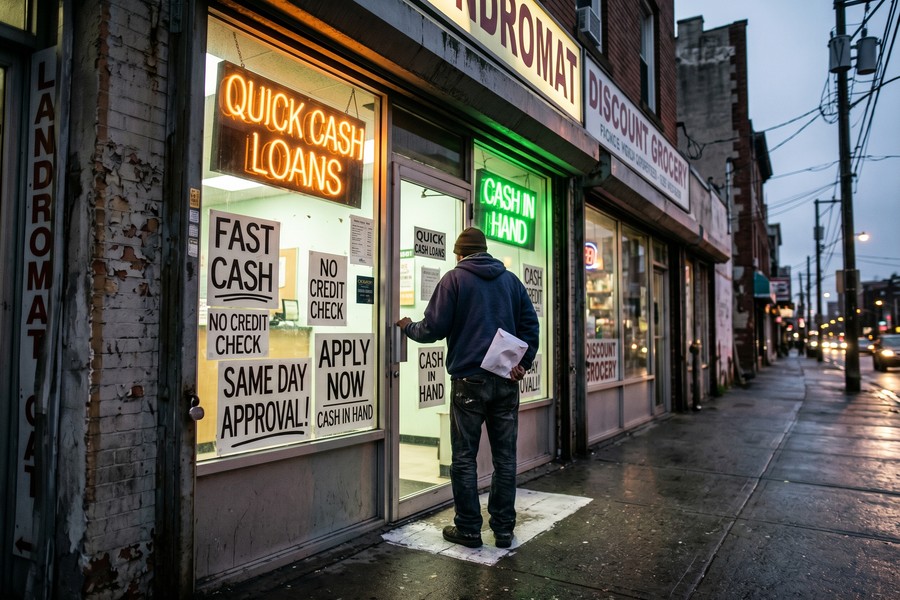
The CFPB reports that the average payday loan borrower is in debt for five months of the year, paying $520 in fees to repeatedly borrow $375 — more in fees than the original loan amount.
How to Spot and Negotiate Hidden Fees Before You Sign
Knowing which hidden loan fees exist is only half the battle. The other half is building a practical system for catching them before you’re locked in. This is where preparation, the right questions, and a willingness to negotiate can save you real money.
Reading the Loan Estimate and Truth in Lending Disclosure
For mortgages, federal law requires a standardized Loan Estimate form that itemizes all fees. For personal loans, the Truth in Lending disclosure must show the APR, finance charge, and total of payments. These documents are your primary tools — read every line.
Pay particular attention to Section A (lender fees) and Section B (services) on the Loan Estimate. Section A fees are often negotiable. Section B fees sometimes are too, especially if you’re allowed to shop for your own providers.
Questions Every Borrower Should Ask
- What fees are included in the APR, and which are not?
- Is there a prepayment penalty, and under what conditions does it apply?
- Are any insurance or protection products included in this agreement?
- What happens if I miss a payment — what fees are charged and does my rate change?
- Is the origination fee negotiable?
- Are there any monthly maintenance or servicing fees?
Ask for the full fee schedule in writing before submitting a formal application. This protects you from fee increases between pre-qualification and closing, a practice sometimes called “fee creep.”
When and How to Push Back
Many fees are negotiable — lenders just don’t volunteer that. If you have good credit, multiple loan offers, or existing banking relationships, you have leverage. Use it by saying: “I have another offer without this fee. Can you match or remove it?”
If you believe a lender has already charged you fees that weren’t disclosed, you have formal options. Understanding the mistakes borrowers make when filing a CFPB complaint can help you build a stronger case and avoid procedural errors that weaken your claim.
“Most borrowers don’t realize that loan fees — especially origination and processing charges — are negotiated every day by borrowers who simply ask. The worst a lender can say is no.”
Some lenders participate in state-level consumer protection programs that cap total fees for borrowers below certain income thresholds. Your state banking regulator’s website is the best place to find out if such programs exist where you live.
Your Action Plan
-
Request a full itemized fee list before applying
Before submitting any application, ask the lender for a complete written list of all fees — including origination, processing, prepayment, and any optional add-ons. This sets a paper trail from the start.
-
Calculate the total cost of the loan, not just the monthly payment
Multiply your monthly payment by the number of months in the loan term. Add all upfront fees. Compare that total against the amount you’re actually receiving. The gap is your true borrowing cost.
-
Compare APRs across at least three lenders
The APR is the most standardized measure of loan cost because it incorporates most fees. Pull offers from at least three lenders — including a credit union — and compare APRs side by side before choosing.
-
Read the Truth in Lending Disclosure in full
This document is required by federal law and must disclose your APR, finance charge, and total repayment amount. Read it before signing anything. If the numbers don’t match what you were told verbally, stop and ask for an explanation.
-
Decline any add-on products you didn’t request
Scan your loan agreement for credit insurance, payment protection, or similar products. If you see one you didn’t ask for, tell the lender you want it removed and request a revised agreement. You cannot legally be denied the loan for refusing optional products.
-
Ask directly about prepayment penalties
Ask the lender: “If I pay this loan off early, what happens?” Get the answer in writing. If a prepayment penalty exists, calculate whether a competing offer without one is cheaper over your expected payoff timeline.
-
Check the lender’s complaint history before you borrow
Search the lender’s name in the CFPB complaint database before committing. A pattern of fee-related complaints is a clear red flag that hidden costs may be part of their standard practice.
-
Know your rights and report violations
If a lender charges fees that weren’t disclosed or adds products without your consent, file a complaint with the CFPB and your state’s banking regulator. These agencies have real enforcement power, and documented complaints sometimes result in refunds.
Frequently Asked Questions
What are the most common hidden loan fees borrowers overlook?
The most commonly missed fees include origination fees deducted from disbursed funds, prepayment penalties that punish early payoff, and monthly maintenance or servicing charges. Credit insurance add-ons are also frequently added without clear borrower awareness.
Is an origination fee the same as a processing fee?
Not always. Some lenders use these terms interchangeably, while others charge both as separate line items. An origination fee typically covers underwriting and loan setup. A processing fee may cover administrative tasks like document preparation. Always ask for a breakdown of what each charge covers.
Can I negotiate hidden fees with my lender?
Yes, more often than borrowers expect. Origination fees, documentation fees, and some processing charges are negotiable — especially if you have strong credit or competing loan offers. The key is to ask before you sign, not after.
Are hidden loan fees illegal?
Not if they’re disclosed in your loan agreement — even if buried in fine print. What’s illegal is charging fees that weren’t disclosed at all, or adding products to a loan without borrower consent. The Truth in Lending Act requires fee disclosure, but enforcement depends on the loan type and lender category.
How do I know if a lender is charging excessive fees?
Compare the total APR (which includes most fees) across multiple lenders offering similar loan amounts and terms. If one lender’s APR is significantly higher despite a similar stated interest rate, excessive fees are likely the cause. You can also search the lender in the CFPB database for prior complaints.
Do online lenders charge more hidden fees than banks?
Not necessarily — some online lenders charge fewer fees because they have lower overhead. However, the short-term and payday lending segments (which operate heavily online) tend to carry the highest hidden fee risk. Credit unions generally offer the most transparent and borrower-friendly fee structures.
What is a penalty APR and how long does it last?
A penalty APR is an elevated interest rate triggered by a missed or late payment. It can last anywhere from a few months to the remainder of the loan term, depending on the lender’s policy and your state’s laws. Some lenders will restore your original rate after a set number of consecutive on-time payments.
Does deferred interest mean I pay no interest?
No. Deferred interest means the interest is still accruing — it’s just not billed until the promotional period ends. If you don’t pay the full balance before that deadline, all the accumulated interest is added to your balance at once. This is different from a true zero-interest promotion where the interest is genuinely waived.
Can I get a refund if I was charged an undisclosed fee?
Possibly. If a lender charged a fee that wasn’t in your written loan agreement, you may be entitled to a refund. Start by contacting the lender directly in writing. If that fails, file a complaint with the CFPB and your state banking regulator. In some cases, these agencies have compelled lenders to issue refunds.
How do hidden loan fees affect my credit score?
Hidden fees don’t directly affect your credit score — but their consequences can. If undisclosed fees push your balance higher than expected and you miss a payment as a result, that missed payment hits your credit report. Understanding all the costs that affect your financial health is part of a broader strategy; our piece on the quiet credit score killers most people have never heard of covers the overlooked factors that damage scores in similar ways.
Sources
- Consumer Financial Protection Bureau — CFPB Finds Fees Cost Consumers Billions
- Consumer Financial Protection Bureau — Submit a Consumer Complaint
- Consumer Financial Protection Bureau — Regulation Z (Truth in Lending)
- Pew Charitable Trusts — Consumer Finance Protections Report
- National Conference of State Legislatures — Consumer Credit Statutes Database
- National Consumer Law Center — Truth in Lending Resources
- Federal Reserve — Consumer Protection Information
- Federal Trade Commission — Consumer Finance Topics
- Consumer Financial Protection Bureau — What Is a Prepayment Penalty?
- Consumer Financial Protection Bureau — Debt Cancellation and Suspension Agreements Explained