
Fact-checked by the onlinepaydaynews.com editorial team
Quick Answer
As an emergency cash part-time worker facing a sudden medical bill, you can cover a large expense by combining a payment plan negotiation with the hospital, a personal installment loan or credit union emergency loan, and community assistance programs. As of July 2025, most credit union emergency loans fund within 24–48 hours, and medical financial assistance programs can reduce bills by 30–100% for qualifying low-income earners.
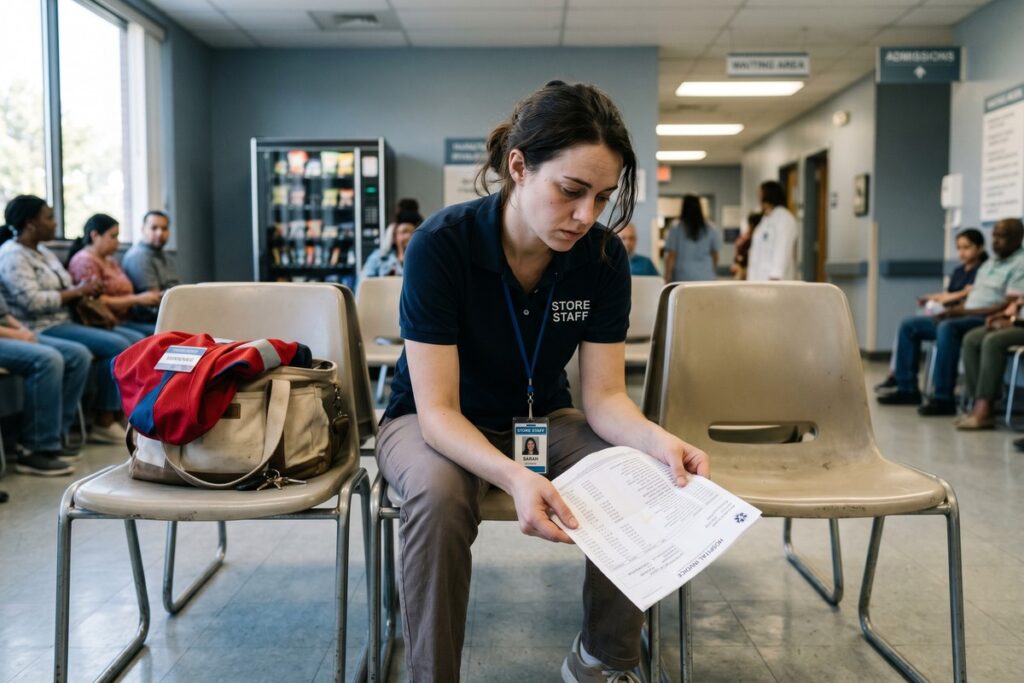
Finding emergency cash as a part-time worker with no savings feels nearly impossible — but it is not. In July 2025, retail associate Danielle T. faced a $2,800 emergency room bill after a severe allergic reaction sidelined her mid-shift. With no savings account, 22 hours of weekly work, and no full-time benefits, she covered the entire bill within three weeks using a layered strategy that combined hospital financial aid, a credit union personal loan, and a cash advance app. This guide walks you through the same process, step by step.
Medical debt is the leading cause of personal bankruptcy in the United States, according to KFF’s Health Care Debt Survey, which found that 41% of adults currently carry some form of health care debt. Part-time workers are especially exposed: they often lack employer-sponsored health coverage and have no financial cushion. The pressure to act fast — before a bill goes to collections — makes having a clear action plan critical.
This guide is written for retail workers, hourly employees, gig workers, and anyone earning a variable or part-time income who needs to cover an urgent medical or personal financial emergency right now. Follow each step in order, and you will understand exactly which options are available to you, how to qualify, and how to avoid the traps that make a bad situation worse.
Key Takeaways
- 41% of U.S. adults carry medical debt, making it the most common form of emergency financial hardship, according to KFF’s 2023 Health Care Debt Survey.
- Hospitals that receive federal funding are legally required to offer charity care or financial assistance programs — you have the right to apply before paying a single dollar, per CMS hospital transparency rules.
- Credit union emergency loans typically carry APRs between 6% and 18%, far lower than payday loans, which average 400% APR, according to the CFPB.
- Cash advance apps like EarnIn, Dave, and Brigit can deliver up to $500 same-day for workers with qualifying direct deposit history — no credit check required.
- Medical bills sent to collections can be disputed and, as of 2025, medical debt under $500 is no longer reported on the three major credit bureau reports, per CFPB’s 2025 medical debt rule.
- Negotiating a hospital bill directly — even after it is issued — can reduce the total owed by 20–50% on average, according to research from the journal Health Affairs.
In This Guide
- Step 1: How Do You Find Out If a Hospital Will Reduce or Forgive Your Medical Bill?
- Step 2: What Emergency Loan Options Are Available to Part-Time Workers With Low or No Credit?
- Step 3: Can You Get Emergency Cash From an App Without a Credit Check or Full-Time Job?
- Step 4: Which Borrowing Option Is Best for Covering a Medical Emergency Under $3,000?
- Step 5: What Community and Government Assistance Programs Can Help an Emergency Cash Part-Time Worker?
- Step 6: How Do You Prevent a Medical Emergency From Destroying Your Credit Score?
- Frequently Asked Questions
Step 1: How Do You Find Out If a Hospital Will Reduce or Forgive Your Medical Bill?
The very first thing you should do before paying or borrowing anything is contact the hospital’s billing department and ask directly about financial assistance programs, also called charity care. Any hospital that receives Medicare or Medicaid funding — which is nearly every hospital in the country — is required by the IRS under Section 501(r) to have a written financial assistance policy and to apply it to uninsured or underinsured patients.
How to Do This
Call the billing department and say: “I would like to apply for financial assistance or charity care before making any payment.” Most hospitals will email or mail you a one-page application. You will typically need to provide proof of income — pay stubs, bank statements, or a letter from your employer confirming your hours and wage. For a part-time retail worker earning $13–$17 per hour at 22 hours per week, your annual income may fall well within the qualifying threshold, which at many hospital systems is 200–400% of the Federal Poverty Level.
What to Watch Out For
Do not ignore bills while waiting for assistance decisions. Send a written request to pause collection activity while your application is under review — most hospitals will honor this. Also, never pay the full bill with a credit card before exploring assistance; once payment is made, hospitals are not required to refund it.
Ask the hospital for an itemized bill before you apply for assistance. Billing errors are common — a 2023 audit found that 80% of hospital bills contain at least one error. Catching overcharges can reduce your balance before assistance is even applied.
Step 2: What Emergency Loan Options Are Available to Part-Time Workers With Low or No Credit?
As an emergency cash part-time worker, you have more legitimate borrowing options than you may realize — credit unions, online personal lenders, and employer advance programs are all accessible even with part-time income and imperfect credit. The key is knowing which lenders evaluate your ability to repay based on income rather than credit score alone.
How to Do This
Credit union personal loans are the best starting point. Credit unions like Navy Federal Credit Union and many regional credit unions offer Payday Alternative Loans (PALs) — federally regulated small loans of $200 to $2,000 with APRs capped at 28% by the National Credit Union Administration (NCUA). You must be a member, but many credit unions allow you to join at the time of application. If you need a larger amount, credit union personal loans for up to $5,000 are available at rates that are typically much lower than online lenders.
Online lenders like Upstart and LendingPoint use alternative underwriting models that weigh employment history, income consistency, and education alongside credit score. This can work in favor of a part-time worker who has held steady employment. Loan amounts from $1,000 to $5,000 with terms of 12 to 36 months are common. If you are unsure which type of loan fits your situation, the comparison in this breakdown of cash advance apps vs. emergency personal loans can help you decide.
What to Watch Out For
Avoid any lender that does not disclose the APR upfront or that charges origination fees exceeding 5% of the loan amount. Before signing with any lender, use the CFPB Complaint Database to check whether the lender has a history of consumer complaints. Also, review our guide on how to compare short-term loan offers without getting fooled by low APR claims before you commit.
Payday Alternative Loans (PALs) from credit unions cap interest at 28% APR, while payday loans average 400% APR nationally. On a $500 loan repaid in 30 days, the difference in fees is roughly $11 vs. $75.
“Credit unions exist to serve their members, not to profit from them. A part-time worker who walks into a credit union and explains their situation honestly will often find more flexibility than they expect — including deferred payment options that banks simply do not offer.”
Step 3: Can You Get Emergency Cash From an App Without a Credit Check or Full-Time Job?
Yes — several cash advance apps provide same-day or next-day funds with no credit check and no requirement for full-time employment, as long as you have a regular direct deposit history. This makes them one of the fastest tools available to an emergency cash part-time worker who needs money within 24 hours.
How to Do This
The most widely used apps include EarnIn, which advances up to $100 per day or $750 per pay period based on hours already worked; Dave, which offers up to $500 with no interest and a small optional tip; and Brigit, which provides up to $250 with a $9.99 monthly subscription. Chime members with direct deposit can access up to $200 in SpotMe overdraft coverage at no extra cost. For larger amounts quickly, MoneyLion offers Instacash advances up to $500 for free and up to $1,000 for premium members.
To qualify for most apps, you need at least two to three recurring direct deposits from an employer to the same bank account. Part-time workers who are paid weekly or biweekly and have that deposit history will generally qualify. If your employer pays by check or cash, you may not be eligible for these apps, but employer payroll advance programs or local community lenders are an alternative.
What to Watch Out For
“Express” or “instant” delivery fees from cash advance apps can add $3 to $15 per transfer. On a $100 advance, a $5 express fee represents an effective APR of over 130% if repaid in two weeks. Use the standard delivery window (1–3 business days) whenever you have time, and only pay for instant delivery in a genuine same-day emergency.
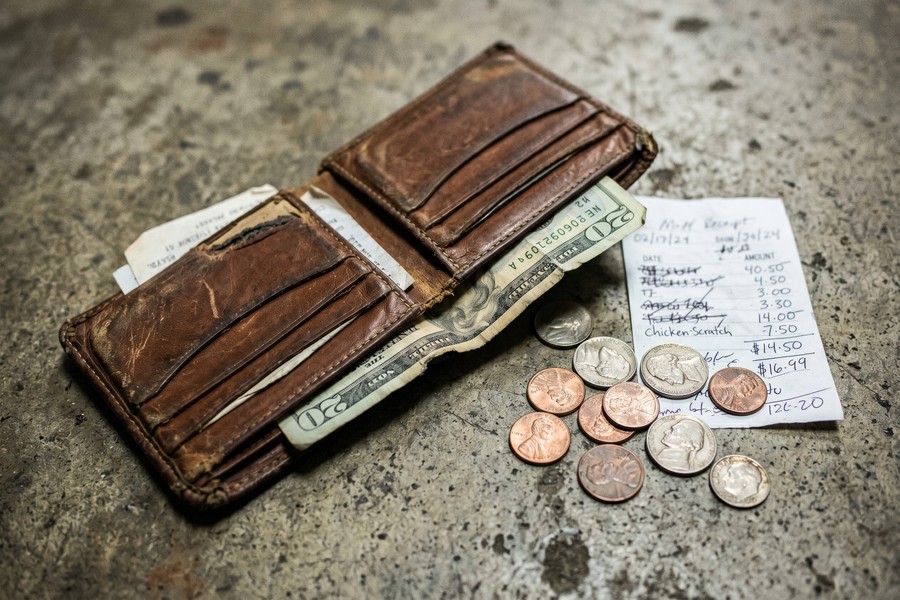
Cash advance apps repay themselves automatically from your next direct deposit. If you advance $400 and your next paycheck is $480, you will have only $80 left after repayment. Plan for the shortfall — taking another advance to cover the gap creates a debt cycle that is difficult to exit.
Step 4: Which Borrowing Option Is Best for Covering a Medical Emergency Under $3,000?
The best borrowing option for a medical emergency under $3,000 depends primarily on your credit score, how quickly you need the funds, and how long you need to repay. For most part-time workers, a credit union installment loan or a combination of a cash advance app plus hospital payment plan will produce the lowest total cost.
How to Do This
Use the table below to compare your core options side by side. The figures assume a $2,800 medical bill, a part-time income of approximately $15,000 per year, and a credit score between 560 and 660 — a common range for workers without full-time credit-building opportunities.
| Option | Typical APR | Max Amount | Time to Funds | Credit Check | Best For |
|---|---|---|---|---|---|
| Credit Union PAL | Up to 28% | $2,000 | 1–3 days | Soft pull | Amounts under $2,000 with membership |
| Credit Union Personal Loan | 8–18% | $5,000 | 24–48 hours | Hard pull | Full $2,800 at lowest rate |
| Online Installment Lender | 18–36% | $5,000 | Same day–24 hrs | Hard pull | No credit union available |
| Cash Advance App | 0% (fees apply) | $750 | Instant–3 days | None | Bridge gap while arranging larger loan |
| Hospital Payment Plan | 0% | Full bill | Immediate | None | Spreading cost over 6–24 months |
| Payday Loan | 300–400% | $500–$1,000 | Same day | None | Avoid — extreme cost for any amount |
For a $2,800 bill, the most cost-effective strategy is: apply for hospital charity care first, accept a 0% payment plan for whatever remains, and use a credit union personal loan to pay any lump-sum portion you cannot defer. Avoid payday loans entirely — for more context on why, see our detailed guide on short-term loans after medical bills for borrowers with existing debt.
Most hospital payment plans carry 0% interest when arranged directly with the billing department — even for balances as large as $10,000. This makes them the cheapest “loan” available for medical expenses, as long as you can make the monthly minimum payments on a part-time income.
Step 5: What Community and Government Assistance Programs Can Help an Emergency Cash Part-Time Worker?
Government and nonprofit assistance programs can cover or reduce a significant portion of an emergency medical bill for part-time workers — and many people miss them entirely because they assume they will not qualify. As an emergency cash part-time worker, you likely fall within the income thresholds for several programs.
How to Do This
Medicaid is the most important program to check first. If you have no employer insurance and earn less than approximately 138% of the Federal Poverty Level ($20,782 for a single adult in 2025), you likely qualify for retroactive Medicaid in most expansion states — meaning it can cover bills already incurred. Apply through your state Medicaid office or at HealthCare.gov immediately, even if the bill is already in front of you.
The Health Resources and Services Administration (HRSA) funds federally qualified health centers (FQHCs) that offer sliding-scale fee services and can sometimes negotiate existing bills on your behalf. Use the HRSA clinic finder to locate one near you. The Patient Advocate Foundation offers case managers who will navigate hospital billing disputes and financial assistance applications at no cost to you. 211.org connects callers with local emergency financial assistance specific to their county — including utility assistance, food support, and emergency medical funds that free up cash for your bill.
What to Watch Out For
Medicaid applications can take two to four weeks to process. During that time, tell the hospital your application is pending — they are required by law to pause collection activity. Do not wait to apply; the retroactive coverage window is usually three months back from the application date, so act as quickly as possible after receiving the bill.
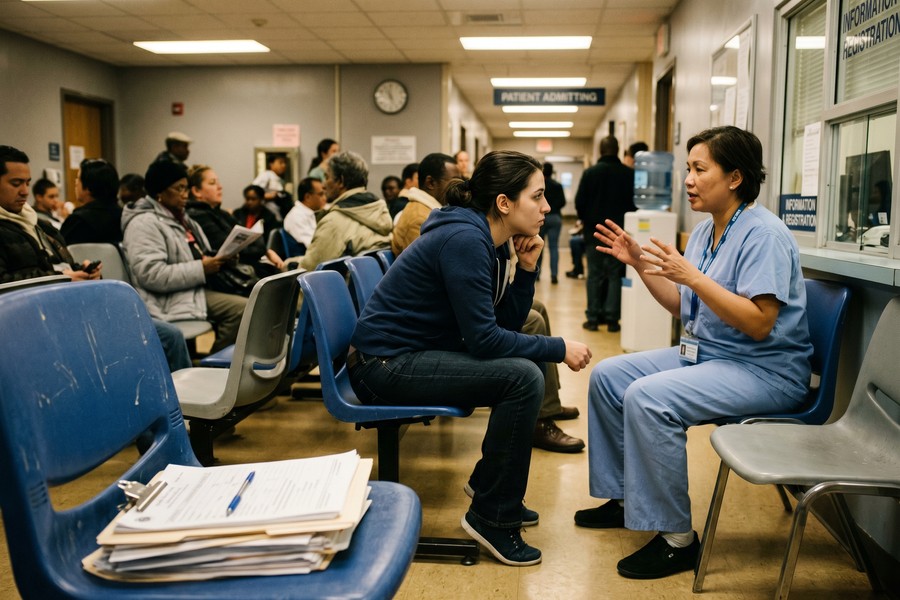
“Part-time and hourly workers are often the most eligible for financial assistance programs, but they are also the least likely to ask. Hospitals and nonprofits have funds specifically set aside for this — but those funds only get used when patients apply. The application itself takes less than 30 minutes.”
Step 6: How Do You Prevent a Medical Emergency From Destroying Your Credit Score?
Protecting your credit during a medical emergency is both urgent and achievable — and as of 2025, federal rule changes have significantly strengthened your position. The CFPB’s 2025 medical debt rule removes medical bills from the three major credit bureau reports entirely for debts under $500, and advocacy is ongoing to extend this to larger amounts.
How to Do This
First, never ignore a medical bill. Ignoring it does not make it disappear — it sends it to a collections agency, which can still report to the credit bureaus for debts over $500 and remain on your report for up to seven years. Contact the billing department and put any payment arrangement in writing before the standard 90–180 day collections window closes.
Second, if a medical bill has already been sent to collections incorrectly or prematurely, you have the right to dispute it. Review the process for disputing collections accounts and understand whether you should pay off the collection or let it age off your credit report — the answer depends on the amount, age of the debt, and whether you plan to apply for credit soon. Also, watch for common pitfalls that harm your credit during financial stress by reviewing the quiet credit score killers most people have never heard of.
What to Watch Out For
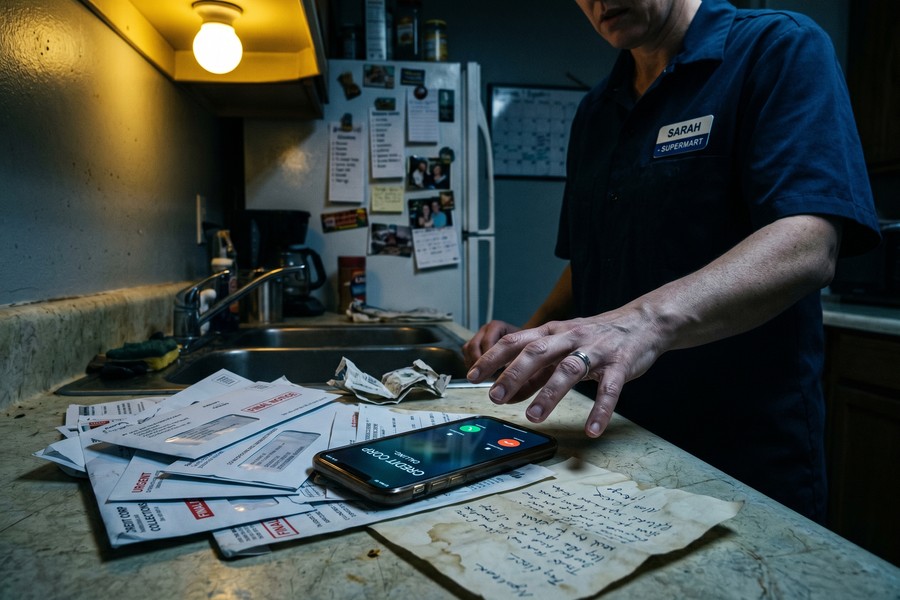
Some medical debt collectors use aggressive tactics that may be illegal under the Fair Debt Collection Practices Act (FDCPA). If a collector is calling repeatedly, threatening legal action without basis, or contacting your employer, document every interaction. You can file a complaint directly with the CFPB and, in some states, be entitled to damages. For guidance on recognizing unlawful tactics, see our article on which debt collection tactics are actually illegal.
If you take out a personal loan to cover a medical bill, make every payment on time. A 12-month installment loan paid perfectly can actually improve your credit score by adding positive payment history — turning a crisis into a credit-building opportunity.
Frequently Asked Questions
Can I get an emergency loan if I only work part-time and have no savings?
Yes — part-time income alone can qualify you for a credit union personal loan, a Payday Alternative Loan (PAL), or an online installment loan from lenders like Upstart or LendingPoint. These lenders look at your total monthly income rather than whether it comes from full-time employment. You will typically need to show at least two to three months of consistent pay stubs or bank deposit records to verify your income.
What is the fastest way to get emergency cash as a part-time retail worker?
The fastest route for an emergency cash part-time worker is a same-day cash advance app like Dave or EarnIn, which can deposit funds within minutes if you pay an express fee. These apps require no credit check and can advance up to $500. For larger amounts, some credit unions and online lenders fund within 24 hours of approval.
Will a hospital payment plan show up on my credit report?
A hospital payment plan arranged directly with the billing department does not appear on your credit report — it is an internal agreement, not a loan. Only if the bill is sold to a third-party debt collector and reported to a credit bureau does it affect your credit. Making consistent payments on a hospital plan keeps the account out of collections entirely.
How do I qualify for hospital charity care if I work part-time?
To apply for hospital charity care, contact the billing department and request a financial assistance application. You will need to provide proof of income such as recent pay stubs, bank statements, or a tax return. Most nonprofit hospitals qualify applicants earning up to 200–400% of the Federal Poverty Level, which for a single adult in 2025 means annual income up to roughly $60,000 for the most generous programs.
Should I use a payday loan to cover a medical bill if I have no other options?
No — a payday loan should be a last resort only, and even then, only if the alternative is an imminent collections action or legal judgment. Payday loans carry an average APR of 400% according to the CFPB, and the repayment structure can trap borrowers in a cycle of rollovers. Exhaust all other options — hospital payment plans, credit union loans, cash advance apps, and community assistance — before considering a payday loan.
What credit score do I need to get an emergency personal loan on part-time income?
Some online lenders like Upstart approve borrowers with credit scores as low as 580, and credit union PALs often have no minimum credit score requirement — they focus on membership status and income. A score between 580 and 620 will limit your options and increase your interest rate, but it will not eliminate them. Scores above 660 open significantly better rates and terms.
Can a cash advance app replace an emergency fund if I’m a part-time worker?
Cash advance apps can serve as a short-term bridge but are not a substitute for an emergency fund. They are capped at $500–$750 per pay period, require direct deposit history to qualify, and auto-repay from your next paycheck — often creating a new shortfall. They work best as a supplement to other strategies, not as a primary financial safety net.
What happens if I can’t afford to repay an emergency loan on part-time hours?
If you cannot make a payment, contact your lender before missing it — most credit unions and many online lenders offer hardship deferment or modified payment plans. Missing a payment without communicating can trigger late fees and credit bureau reporting after 30 days. If you are struggling with an existing loan, our guide on how to negotiate repayment terms on a short-term loan covers your options before and after signing.
Does taking out an emergency loan affect my eligibility for government assistance?
A personal loan is generally not counted as income for Medicaid or SNAP eligibility purposes because it is a liability, not earned income. However, loan proceeds sitting in your bank account could temporarily affect asset-based eligibility thresholds in some state programs. Consult your state’s benefits office before taking a large loan if you are currently receiving assistance.
Are there any emergency financial assistance programs specifically for retail workers?
Yes — several retailers offer employee hardship funds or emergency assistance programs. Walmart operates the Associate in Crisis Fund, and Target has a similar employee assistance initiative. The Retail, Wholesale and Department Store Union (RWDSU) also maintains emergency funds for dues-paying members. Check with your HR department or union representative for availability and application procedures.
Sources
- KFF — Health Care Debt Survey 2023
- Consumer Financial Protection Bureau — What Is a Payday Loan?
- Consumer Financial Protection Bureau — CFPB Rule Removes Medical Debt From Credit Reports (2025)
- Centers for Medicare and Medicaid Services — Hospital Price Transparency
- IRS — Hospital Tax-Exempt Policy (Section 501(r))
- HealthCare.gov — Medicaid and CHIP Coverage
- National Credit Union Administration — Payday Alternative Loans
- Health Resources and Services Administration — Federally Qualified Health Centers
- Health Affairs — Medical Billing and Negotiation Research
- Federal Trade Commission — Debt Collection Rights Under the FDCPA