

Fact-checked by the onlinepaydaynews.com editorial team
You’re staring at a bill due in three days, and your next paycheck is still two weeks away. It’s a situation millions of Americans know all too well — that gut-drop feeling when the math simply doesn’t work out. Finding emergency cash between paychecks can feel impossible, especially when traditional banks seem to move at a glacier’s pace and every option carries some kind of catch.
The stakes are real. According to the Federal Reserve’s Report on the Economic Well-Being of U.S. Households, roughly 37% of American adults would struggle to cover an unexpected $400 expense using cash or its equivalent. That means more than one in three people are one car repair or urgent medical bill away from a financial crisis.
This guide cuts through the noise. You’ll get a clear, ranked breakdown of every realistic option — from free solutions to last-resort borrowing — so you can move fast, avoid costly mistakes, and actually solve the problem in front of you.
Key Takeaways
- 37% of U.S. adults cannot cover a $400 emergency without borrowing or selling something, according to the Federal Reserve.
- Cash advance apps like Earnin and Dave can deliver funds in minutes, often with fees under $5 for standard delivery.
- Credit union emergency loans typically carry APRs of 18% or lower, far cheaper than payday loans averaging 400% APR.
- Employer payroll advances are often completely free and can be arranged in less than 24 hours.
- Payday loans cost an average of $15 per $100 borrowed — equivalent to a 391% APR on a two-week loan.
- Local assistance programs, 211 hotlines, and nonprofit organizations can provide $100–$1,500 in emergency aid with no repayment required.
In This Guide
- Free and Low-Cost Options to Try First
- Cash Advance Apps: Fast Money With Minimal Fees
- Employer Payroll Advances and Earned Wage Access
- Credit Unions and Bank Emergency Loans
- Selling Assets and Quick Gig Income
- Borrowing From Family, Friends, or Community
- Last-Resort Borrowing: What You Need to Know
- Options to Avoid Entirely
Free and Low-Cost Options to Try First
Before spending a single dollar on fees or interest, exhaust every free avenue. This sounds obvious, but most people in a panic skip straight to borrowing — and end up paying far more than necessary.
Call Your Biller Before You Miss a Payment
Utility companies, landlords, medical offices, and even credit card issuers often have hardship programs that don’t show up on their websites. A single phone call asking for a payment extension or deferral can buy you two to four weeks with zero cost. Be direct: explain your situation briefly and ask specifically what options exist for customers facing a short-term financial hardship.
Medical billing departments, in particular, frequently have charity care and financial assistance programs for qualifying patients. If your emergency involves a medical bill, ask to speak with a financial counselor before assuming you owe the full amount.
Dial 2-1-1 for Local Emergency Aid
The 211 helpline connects you to local nonprofits, government programs, and community organizations that provide emergency cash, food, utility assistance, and rent help. This service is free, confidential, and available in most U.S. communities. Many callers receive referrals to programs they had no idea existed — funds that require no repayment.
The 211 network fielded over 14 million calls in 2022 alone. Many programs accessed through 211 offer one-time emergency grants between $100 and $500 — and they never need to be paid back.
Community action agencies, local churches, and mutual aid networks can also provide small emergency grants. A quick Google search for “[your city] emergency financial assistance” will surface organizations in your area that many people don’t think to contact.
Cash Advance Apps: Fast Money With Minimal Fees
If free options can’t fully cover the gap, cash advance apps are often the smartest next step. They’re faster than banks, cheaper than payday loans, and more flexible than asking a relative for money.
How These Apps Work
Apps like Earnin, Dave, Brigit, and MoneyLion let you access a portion of your earned wages before your actual payday. Most connect to your bank account, verify your income pattern, and advance anywhere from $50 to $500. Standard delivery (1-3 business days) is typically free. Express delivery to your account within minutes usually costs between $1.99 and $8.99.
These platforms are not loans in the traditional sense. They don’t run hard credit checks, so they won’t hurt your credit score. Repayment is usually automatic — the app recoups the advance when your paycheck hits your account.
Download and set up a cash advance app before you need it. Account verification and connection to your bank can take 24-48 hours. Having it ready in advance means you can access funds the same day a crisis hits.
Comparing the Top Apps
| App | Max Advance | Express Fee | Subscription Cost |
|---|---|---|---|
| Earnin | Up to $750/pay period | $1.99–$3.99 | Free (tip-based) |
| Dave | Up to $500 | $3.99–$13.99 | $1/month |
| Brigit | Up to $250 | $0.99–$3.99 | $9.99/month |
| MoneyLion | Up to $500 | $0.49–$8.99 | Free tier available |
| Chime SpotMe | Up to $200 | None | Requires Chime account |
For a deeper comparison of these tools against other emergency borrowing options, see our guide on cash advance apps vs. emergency personal loans — it walks through when each option actually makes more financial sense.

Employer Payroll Advances and Earned Wage Access
Many workers don’t realize their employer may be able to release part of their earned wages early. This is one of the most underused solutions for finding emergency cash between paychecks.
Asking Your HR Department
A payroll advance is simply your employer giving you a portion of your upcoming paycheck ahead of schedule. This is often free, carries no interest, and can be arranged in as little as one business day. Many companies have informal policies allowing this — the answer is often yes if you simply ask.
Frame the request professionally. Tell HR or your manager you’re dealing with an unexpected financial emergency and ask if the company offers payroll advances or any employee assistance resources. Many larger employers also offer Employee Assistance Programs (EAPs) that include emergency financial counseling or small interest-free loans.
Employer-Integrated Earned Wage Access
If your employer uses a payroll provider like ADP, Paychex, or Gusto, they may already offer earned wage access (EWA) through platforms like DailyPay or PayActiv. These services let you withdraw your already-earned wages any day of the week, usually for a flat fee of $1 to $3 per transaction.
According to the U.S. Department of Labor, an estimated 56% of employers with 500 or more employees now offer some form of earned wage access or financial wellness benefit — yet fewer than 30% of eligible employees use it.
Credit Unions and Bank Emergency Loans
If you need more than a few hundred dollars, a small personal loan from a credit union or bank is one of the most financially sound options available.
Why Credit Unions Win Here
Credit unions are member-owned nonprofits, which means they typically charge lower interest rates than banks or online lenders. Many credit unions offer Payday Alternative Loans (PALs) — small loans ranging from $200 to $2,000 with APRs capped at 28% by the National Credit Union Administration (NCUA). Compare that to a traditional payday loan at 391% APR.
Approval can happen quickly. Some credit unions can fund a small emergency loan within 24 to 48 hours. You’ll generally need to be a member, but many credit unions allow you to join the same day you apply for a loan. For a detailed look at payout speed, our comparison of credit union emergency loans vs. bank personal loans breaks down the differences.
Online Banks and Personal Loan Lenders
Online lenders like LightStream, Upgrade, and Upstart offer personal loans that can fund in one to three business days. Rates vary widely based on your credit — from around 7% to 36% APR. Even the higher end of that range beats payday loans by a wide margin.
Before you apply anywhere, check your credit score first. Knowing where you stand helps you target lenders who are likely to approve you and prevents unnecessary hard inquiries. If you’re worried about how borrowing might affect your credit, review our guide on the quiet credit score killers most people haven’t heard of.
“When someone needs cash fast, the instinct is often to grab the first available option. But spending 20 minutes comparing two or three lenders — even in a crisis — can save hundreds of dollars in unnecessary fees and interest.”
Selling Assets and Quick Gig Income
Sometimes the fastest money is the money you already own — it’s just sitting in your garage, closet, or skill set.
Sell What You Have
Platforms like Facebook Marketplace, eBay, and OfferUp let you list items within minutes. Electronics, furniture, clothes, tools, and sporting goods sell quickly when priced right. Many sellers generate $50 to $500 within 24 to 48 hours by pricing items 20–30% below typical resale value.
Local buy-sell-trade groups on Facebook are particularly fast because buyers can pick up same-day — no shipping required. Be realistic about what items sell quickly: common electronics, children’s gear, and power tools tend to move fastest.
Earn Cash Today With Gig Work
Gig platforms like DoorDash, Instacart, Uber, Lyft, and TaskRabbit can put money in your account within hours using instant payout features. Most allow same-day or next-day cash-out to a debit card for a small fee (usually under $1).

TaskRabbit and similar platforms pay for skilled tasks like furniture assembly, moving help, and home repairs — often at $25 to $75 per hour. If you have a marketable skill, even a single three-hour job can cover an immediate gap without any borrowing at all.
Instacart and DoorDash both offer “Instant Cashout” features that allow drivers to transfer their earnings to a bank account in under 30 minutes. The fee is typically $0.50 per transfer.
Borrowing From Family, Friends, or Community
Asking for help from people you know feels uncomfortable for most people. But a well-structured request — with clear repayment terms — protects both the relationship and your finances.
How to Make a Personal Loan Work
The biggest mistake people make when borrowing from family or friends is keeping things vague. Instead, treat it like a real loan. Agree on a specific repayment date, whether you’ll pay any interest, and what happens if something delays repayment. Put it in writing — even a text message thread creates a record everyone can reference.
This removes the awkwardness that often damages relationships. Most people are far more willing to help when they feel confident about getting repaid on a clear timeline.
Lending Circles and Community Groups
Many communities have informal lending circles — groups where members pool small amounts of money and take turns receiving a lump sum. These are common in many Latino, African American, and immigrant communities and are often organized through churches or community centers. If you’re already part of one, this is an obvious first stop. If you’re not, organizations like Mission Asset Fund help connect people to formal, credit-building lending circles.
Last-Resort Borrowing: What You Need to Know
When all other options are exhausted, some borrowing products can serve as a bridge — but only if you go in with eyes fully open. Getting emergency cash between paychecks via high-cost loans is sometimes necessary, but it should always be the final option.
Payday Loans: The True Cost
Payday loans are small, short-term loans — typically $100 to $500 — due in full on your next payday. They’re widely available and require minimal qualification, which makes them appealing in a crisis. But their cost is extraordinary. The average fee is $15 per $100 borrowed, which works out to a 391% APR on a two-week loan.
The real danger isn’t the first loan — it’s the rollover trap. The Consumer Financial Protection Bureau (CFPB) found that more than 80% of payday loans are reborrowed within 14 days, often because the borrower can’t repay the full amount and fee on payday. This cycle can trap borrowers for months. Before signing anything, use the CFPB complaint database to research any lender you’re considering.
Credit Card Cash Advances
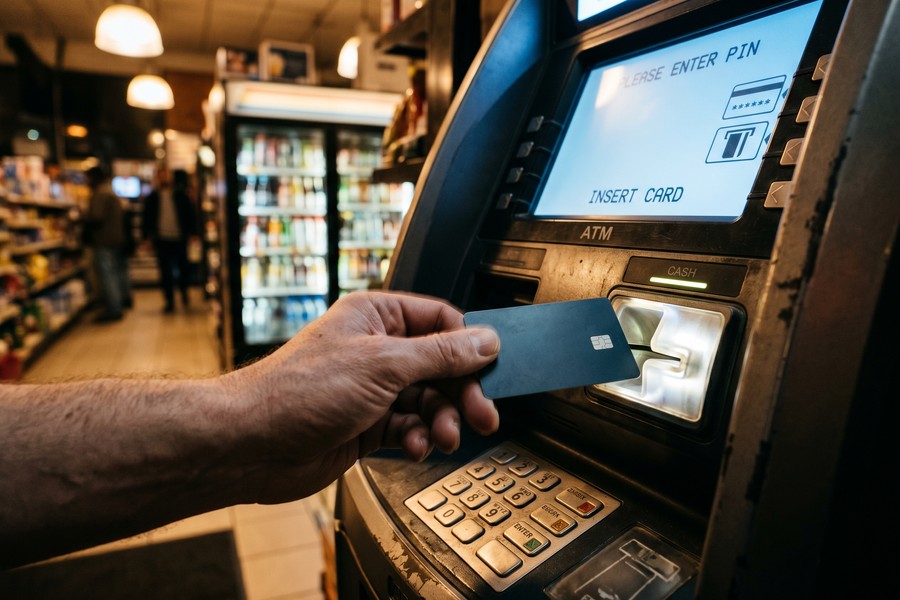
If you have a credit card, a cash advance lets you withdraw cash at an ATM or bank. It’s fast and accessible. However, cash advances typically carry a fee of 3%–5% plus a separate (higher) interest rate that starts accruing immediately — there’s no grace period like with regular purchases. It’s expensive, but still far cheaper than most payday loans.
Some online lenders advertise “no credit check” emergency loans with terms buried in fine print. Loans with auto-renewal clauses, mandatory arbitration agreements, or fees not disclosed upfront are red flags for predatory lending. Always read the full loan agreement before signing. Our guide on spotting predatory vs. fair lending covers exactly what to watch for.
Options to Avoid Entirely
A few “solutions” that appear when you search for fast cash are worth steering clear of entirely. They either solve nothing or create a far larger problem.
Rent-to-Own Stores
Rent-to-own agreements for appliances or electronics are not a source of emergency cash — they’re a way to acquire goods at an astronomically inflated total cost. The effective interest rates on these arrangements can exceed 300%. They belong in the same category as payday loans: a last resort that often isn’t worth the price.
Loan Scams Targeting People in Crisis
Scammers actively target people searching for emergency cash. Common red flags include lenders who contact you unsolicited, require upfront fees before releasing funds, or ask for personal information through unofficial channels. Legitimate lenders do not ask for prepayment to release a loan.
If you’re unsure about a lender’s legitimacy, verify them through your state’s banking regulator or check the CFPB’s database before sharing any financial information. Seniors and people with limited financial experience are disproportionately targeted — if someone you know fits that profile, our article on how seniors are targeted by loan scams is worth sharing with them.
The Federal Trade Commission reported that consumers lost over $10 billion to fraud in 2023 — a record high. Imposter scams (including fake loan offers) accounted for the largest category of losses.
If you’re also dealing with collectors while managing this cash shortfall, know your rights. Collectors have legal limits on when and how they can contact you — our breakdown of which debt collection tactics are actually illegal can help you push back if they cross the line.
Your Action Plan
-
Assess the actual gap
Write down exactly how much you need and when you need it. Separate “essential” from “urgent but flexible.” Sometimes the real number is smaller than the panic suggests — and that changes which solution is right for you.
-
Call your billers first
Contact your utility company, landlord, or medical biller before the due date. Explain the situation and ask specifically about extensions, deferral programs, or hardship assistance. A five-minute phone call can eliminate the need to borrow entirely.
-
Dial 2-1-1 and check local assistance
Call or text 211 to find local emergency aid programs in your area. Many provide grants, not loans — meaning you never have to repay them. Also search for community action agencies and local nonprofits specific to your city or county.
-
Ask your employer about a payroll advance
Contact HR or your direct manager and ask whether the company offers a payroll advance or earned wage access. Do this before business hours end on the same day you realize you have a shortfall — processing can take 24 hours.
-
Try a cash advance app or credit union loan
If you still have a gap, apply to a cash advance app (free standard delivery) or contact a local credit union about a Payday Alternative Loan. Both are dramatically cheaper than payday lenders and can fund within one to two business days.
-
Generate fast income if you can
List items for sale on Facebook Marketplace or sign up for a same-day gig like DoorDash, Instacart, or TaskRabbit. Even a few hours of work or one sold item can cover a meaningful portion of your shortfall without any debt.
-
Compare any loan offers carefully before accepting
If borrowing is unavoidable, get at least two quotes and compare the total repayment amount — not just the monthly payment or the advertised rate. Use our guide on how to compare short-term loan offers without getting fooled to avoid low-APR traps.
-
Build a small emergency buffer once the crisis passes
Even $10 to $20 per paycheck into a dedicated savings account begins building the buffer that prevents this cycle from repeating. After resolving this emergency, that should be your first financial goal — even before paying down debt aggressively.
Frequently Asked Questions
What is the fastest way to get emergency cash between paychecks?
The fastest options — typically delivering funds within minutes — are cash advance apps with instant transfer features (like Earnin or Dave) and credit card cash advances. Cash advance apps charge a small express fee, usually under $10. Both options are far cheaper than payday loans. If your employer offers earned wage access through a platform like DailyPay, that can also move within hours.
Can I get emergency cash with bad credit?
Yes. Several options don’t use traditional credit checks at all. Cash advance apps verify your income through bank account activity, not your credit score. Payday Alternative Loans from credit unions focus primarily on your membership and income. If you do need a personal loan, some online lenders (like Upstart) use alternative credit data and may approve applicants that traditional banks reject.
How much can I borrow through a cash advance app?
Most cash advance apps cap advances between $100 and $750 per pay period, depending on the app and your verified income history. New users often start with lower limits ($50–$100) that increase as the app verifies consistent deposits over time. If you need more than these apps offer, a credit union personal loan or a Payday Alternative Loan may be a better fit.
Is a payday loan ever a good idea?
Only as a genuine last resort when every other option has been exhausted. Payday loans charge an average of $15 per $100 borrowed — equivalent to a 391% APR. They can solve an immediate crisis but frequently create a larger one. If you do use one, have a firm repayment plan ready so you don’t roll the loan over. Even one rollover significantly increases the total cost.
What if I need help with rent specifically?
Emergency rental assistance programs exist at the local, state, and federal level. The 211 helpline will connect you to programs in your area. Many community action agencies and nonprofits also have rental assistance funds. Our step-by-step guide on emergency cash for renters facing eviction covers every option in detail, including timelines and eligibility.
Will using a cash advance app hurt my credit score?
No — legitimate cash advance apps do not perform hard credit inquiries. They verify your identity and income through your bank account connection, which has no impact on your credit score. Repayment is automatic from your next deposit, so there’s also no risk of a late payment being reported. Always verify this with any new app before connecting your account.
What’s the difference between a payday loan and a payroll advance?
A payroll advance comes from your employer — it’s simply your own already-earned wages paid out early. It typically carries no interest and no fees. A payday loan comes from a third-party lender and is technically a new debt, with fees and interest attached. They may seem similar, but the cost difference is enormous. Always exhaust the payroll advance option before considering a payday lender.
Can I get emergency help if I’m self-employed or a freelancer?
Yes, though some options are trickier without a traditional pay stub. Cash advance apps typically require regular direct deposits to a bank account — self-employed people with consistent client payments may qualify. Personal loans from online lenders often accept bank statements as income proof. Some credit unions are also more flexible with freelance income documentation. For more detail, see our guide on short-term loans for freelancers with irregular income.
How do I know if an emergency lender is legitimate?
A legitimate lender will be licensed in your state, disclose all fees and APR upfront in writing, and never ask for a prepayment or upfront fee to release funds. You can verify any lender by checking your state’s financial regulator website or searching the CFPB’s enforcement database. If something feels off — unsolicited contact, pressure to decide immediately, vague fee disclosures — walk away.
What should I do after getting through this financial emergency?
Once the immediate crisis is resolved, focus on two things: repaying any borrowed funds as quickly as possible (especially high-interest options), and starting an emergency savings buffer — even a small one. Automatic transfers of $10–$25 per paycheck into a separate savings account create a cushion over time. Addressing the root cause of the gap (whether income volatility, expenses, or lack of savings) prevents the next emergency from becoming a crisis.
Sources
- Federal Reserve — Report on the Economic Well-Being of U.S. Households (2022): Dealing with Unexpected Expenses
- Consumer Financial Protection Bureau — Payday Loans and Deposit Advance Products
- National Credit Union Administration — Payday Alternative Loans (PALs)
- 211.org — Find Local Help and Emergency Assistance Resources
- U.S. Department of Labor — Wage and Hour Division
- Federal Trade Commission — Consumer Sentinel Network Data Book 2023
- Consumer Financial Protection Bureau — What You Need to Know About Payday Loans
- Bankrate — Emergency Fund Statistics and Research
- Pew Charitable Trusts — Who Borrows, Where They Borrow, and Why (Payday Lending Research)
- Mission Asset Fund — Lending Circles Program