

Fact-checked by the onlinepaydaynews.com editorial team
Quick Answer
To build credit as a rideshare driver, open a secured credit card and a credit-builder loan simultaneously, pay your card balance after each weekly payout to keep utilization below 10%, and add existing bills through Experian Boost. Most drivers starting below 580 can reach the “good” range of 670+ within 12 to 18 months using this stacked approach.
Credit building for rideshare drivers is harder than most financial guides let on, but the path is genuinely clear once you understand where the friction comes from. The core tools, secured cards, credit-builder loans, and alternative bill reporting, work for variable-income earners, but only if you use them in a sequence designed for weekly payouts rather than biweekly paychecks. According to Experian’s 2024 Gig Economy Worker Survey, only 52% of gig workers who depend on gig income for 75% or more of their earnings say it would be easy to obtain credit, compared to 72% of workers for whom gig work is a side income. That gap is real, but it is not insurmountable.
The Federal Reserve’s 2025 Report on the Economic Well-Being of U.S. Households found that 9% of U.S. adults earned money through short-term tasks like rideshare or delivery in 2024, and 61% of app-based gig workers wished their pay were more consistent. That income volatility is not just a personal frustration; it is the structural reason why standard credit-building advice, built around predictable monthly paychecks, consistently fails rideshare drivers.
This guide is written specifically for Uber and Lyft drivers, and for anyone else earning the majority of their income through a platform that pays weekly. By the end, you will know which tools hold up when your income swings, which ones waste your time, and how to sequence them for the fastest realistic score gain.
Key Takeaways
- Only 52% of gig workers who depend on platform income for 75%+ of their earnings say credit access is easy, versus 72% of part-time gig workers, according to Experian’s 2024 Gig Economy Survey.
- Rideshare and delivery driving is the single largest gig occupation: 27% of gig workers identify it as their primary gig income source, per the same Experian survey.
- A CFPB study on credit-builder loans found that borrowers with no existing debt who used these products saw their credit scores rise significantly, making them one of the most effective tools for thin-file drivers.
- Paying your secured card balance after each weekly payout, rather than once a month, can hold reported utilization below 10% even during slow weeks, directly protecting your score from the timing mismatch unique to platform workers.
- Drivers who correctly deduct mileage at the IRS standard rate of $0.67 per mile for 2024 reduce their taxable income, but that lower net income figure is also what mortgage and auto lenders use to size your loan, creating a tradeoff no credit-score article addresses clearly.
- Adding a secured card and a credit-builder loan simultaneously can produce a 30 to 80 point score increase within 6 months, faster than either tool alone, by building both a revolving and an installment tradeline at the same time.
In This Guide
- Why do rideshare drivers start at a disadvantage with lenders?
- What does your credit score actually measure when you have gig income?
- Which credit-building tools actually work for rideshare drivers?
- How do I get credit for bills I already pay?
- How do I manage credit utilization when my income arrives weekly?
- What documents do rideshare drivers need to prove income to lenders?
- A realistic 12-month credit-building plan for rideshare drivers
- Frequently Asked Questions
Step 1: Why do rideshare drivers start at a disadvantage with lenders?
Rideshare drivers face a structural mismatch: the traditional lending system was built around W-2 employees with predictable monthly deposits, and automated underwriting systems often flag gig income as higher risk even when annual earnings exceed a comparable salaried worker’s. The problem is not your credit score itself; it is how lenders verify your income separately from that score.
The Specific Friction Points
Three friction points hit rideshare drivers hardest. First, Uber and Lyft pay weekly rather than biweekly, which means bank statements do not match the deposit cadence lenders expect. Second, car repair expenses can consume an entire week’s earnings in one transaction, creating sudden dips that look alarming on a statement review. Third, there is no sick pay: a slow week or an illness simultaneously cuts income and raises the risk of a missed payment.
According to the Federal Reserve’s 2025 SHED report, 41% of adults who did any gig work reported that their income varied at least occasionally from month to month, compared with only 26% of non-gig workers. That volatility gap is exactly what automated lending systems are trained to penalize.
A common misconception is worth clearing up here: your FICO score does not factor in your employment type or income source at all. Credit scores calculate identically regardless of whether you drive for Lyft or work a salaried office job. The income documentation problem is a separate, parallel challenge that sits alongside your score rather than inside it. Solving your score is achievable; solving the income documentation question requires a different set of strategies covered in Step 6.
What to Watch Out For
Drivers who are just starting out sometimes assume that a higher score alone will unlock any credit product they want. For smaller products like secured cards and credit-builder loans, that is mostly true. For auto loans and mortgages, a good score without legible income documentation will still result in worse terms or a denial. Know which barrier you are solving for before choosing your tools.
In 2024, rideshare and delivery driving was the single most common primary gig occupation, with 27% of gig workers identifying it as how they earn most of their gig income, according to Experian’s Gig Economy Worker Survey. That makes credit-building strategies designed specifically for this group long overdue.
Step 2: What does your credit score actually measure when you have gig income?
Your FICO score measures five factors, and every single one of them is within your control regardless of whether your income is variable. Understanding how each factor behaves under rideshare conditions tells you exactly where to focus your energy first.
The Five FICO Factors With a Rideshare Lens
Payment history at 35% of your score is entirely independent of income swings. A payment is either on time or it is not, and the credit bureaus do not know or care whether you drove six rides or sixty last week. This is the factor you can protect most directly by choosing credit products with payments small enough to survive your slowest week.
Credit utilization at 30% is where rideshare income creates a specific timing problem not covered in most guides. Slow weeks can push a driver to charge gas and car washes on a credit card, and if the bureau captures the balance before the weekly payout lands, the score reflects a temporarily high ratio even if the driver pays it off within 48 hours. This is not a flaw in your financial behavior; it is a timing mismatch between your payout cycle and the bureau’s snapshot date.
Length of credit history at 15% rewards age above all else. Drivers who opened even a single credit card years ago, regardless of how they used it, are ahead here. If your file is thin because you relied on cash or debit cards while driving, the authorized user strategy is one of the fastest remedies available: being added to a family member’s older, low-utilization card can add years of positive history to your report at no cost and with no income verification. This option is frequently mentioned as a generic tip elsewhere, but for a newer driver with a thin file, it is one of the highest-leverage moves on the board.
Credit mix at 10% and new credit inquiries at 10% round out the model. The mix factor is why opening both a secured card and a credit-builder loan simultaneously is more effective than either alone. The inquiry factor is why you should avoid applying for multiple products at once.
The Thin-File Problem and the Alt-Data Shift
Drivers who paid cash for everything, or who are newer to formal credit, may have scores that understate their actual reliability. The system has limited data on them, not because they are risky borrowers, but because they simply have not had tradelines reporting for long. A growing group of fintech lenders now analyze cash-flow patterns in bank accounts rather than static credit scores, which can actually favor a driver with consistent weekly deposits, even when the dollar amounts vary by week.
For a deeper look at how thin-file borrowers have successfully navigated the credit system, the story of how a 45-year-old with no credit history built a lendable score in under a year maps closely to the situation many rideshare drivers face when starting from scratch.
CFPB rules under Regulation Z Section 1026.51 explicitly recognize irregular, part-time, and self-employment income as qualifying income types. Rideshare drivers can use their variable platform earnings when applying for credit cards, and issuers are required to consider them.
Step 3: Which credit-building tools actually work for rideshare drivers?
The two tools that consistently hold up under variable income are secured credit cards and credit-builder loans, and using them together is meaningfully faster than using either one alone. A third category, cash advance apps, does not build credit at all despite being frequently lumped in with credit-building advice.
Secured Credit Cards
Secured cards work for variable-income earners because the deposit sets your credit limit, meaning approval does not depend on income verification the way unsecured cards do. A $200 deposit gets you a $200 limit. The card reports your payment behavior to the credit bureaus exactly like an unsecured card would, building payment history with each on-time payment.
The critical tactic for rideshare drivers is to pay the balance the day after each weekly payout hits your bank account, not once a month. Keeping the reported balance below 10% of your limit at all times requires matching your payment cadence to your deposit cadence. On a $500 limit, that means keeping the reported balance under $50. The easiest way to stay within that range is to use the card for only one predictable, recurring expense such as your phone bill, and pay it immediately when money arrives.
Equifax’s consumer guidance for gig workers specifically recommends secured cards and credit-builder loans as the primary credit-building tools for workers with income variability and limited credit history, alongside a consistent focus on on-time payment habits.
Credit-Builder Loans
Credit-builder loans work differently from other loans: the lender holds the funds in a locked savings account while you make fixed monthly payments, and those payments report to the credit bureaus as they go. At the end of the loan term, you receive the accumulated funds. The fixed payment amount, often as low as $25 to $50 per month, is a feature rather than a limitation because it is small enough to survive a slow week without missing a payment.
A CFPB study on credit-builder loans found that borrowers with no existing debt who used these products saw credit scores rise significantly more than borrowers who carried existing debt at the time. For a thin-file driver with no other outstanding loans, this is a particularly strong match.
There are meaningful differences between providers, and current articles tend to treat credit-builder loans as a single product. Kikoff averages approximately a 58-point score increase over the loan term. Self averages closer to 28 points. CreditStrong falls in between and offers higher loan amounts for drivers who want a larger installment tradeline on their report. Your starting score matters: drivers below 580 tend to see the largest absolute gains from any of these products, while those already above 650 may see more modest improvement.
As Experian’s guidance on choosing between credit-builder products notes, borrowers should confirm that any product they choose reports to all three major credit bureaus, Equifax, Experian, and TransUnion, to ensure the broadest possible credit-building impact.
The Stack Strategy
Opening a credit-builder loan and a secured card in the same month creates both a revolving tradeline and an installment tradeline simultaneously. This combination addresses credit mix while also building payment history on two fronts, which is a significantly faster path than either tool alone. Drivers who use both consistently report a typical 30 to 80 point score increase after six months of on-time payments. That range is wide because starting score makes a large difference; a driver starting at 520 will gain more points than one starting at 640.
What to Watch Out For
Cash advance apps like Earnin, Ualett, and Moves are cash-flow tools, not credit-building tools. None of them report to the three major credit bureaus. A driver who spends 12 months relying on advance apps while skipping a credit-builder product will have the same credit score at the end of that year as they did at the beginning. Payday loans have the same limitation: they do not report positive payment history to the major bureaus. The distinction between managing cash flow and building credit is critical, and conflating the two is one of the most common and costly mistakes rideshare drivers make.
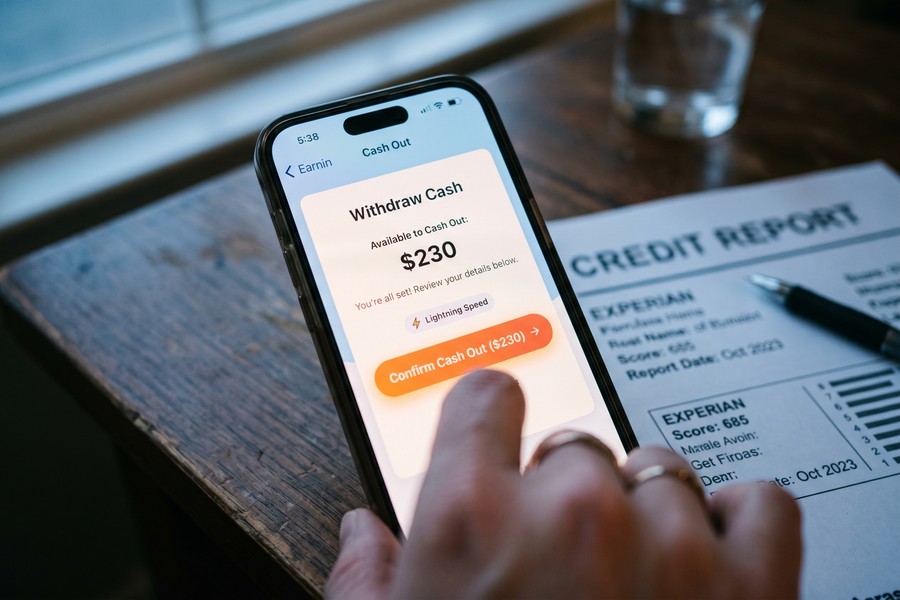
Vehicle title loans are particularly dangerous for rideshare drivers. A missed payment can result in repossession of the car, which simultaneously destroys your credit score and eliminates your income source. This is the single worst-case outcome in gig worker lending, and no short-term cash need justifies that double risk. Before borrowing against your vehicle, read about credit-building mistakes that can set you back after a financial setback.
| Tool | Avg. Score Gain (6 months) | Monthly Cost | Reports to All 3 Bureaus | Income Verification Required |
|---|---|---|---|---|
| Kikoff Credit-Builder Loan | ~58 points | $5–$10/month | Yes | No |
| Self Credit-Builder Loan | ~28 points | $25–$150/month | Yes | No |
| CreditStrong | ~35–45 points | $15–$110/month | Yes | No |
| Secured Credit Card | ~20–40 points | $0–$35 annual fee | Yes (most) | Self-reported only |
| Experian Boost | ~13–19 points | Free | Experian only | No |
| Cash Advance Apps | 0 points | $0–$15/month | No | No |
Step 4: How do I get credit for bills I already pay?
Alternative reporting tools turn payments you are already making, rent, phone, utilities, and subscriptions, into credit-positive tradelines. For rideshare drivers who have been paying these bills reliably for years but have nothing to show for it on a credit report, this is often the fastest available score bump with the least effort.
Experian Boost
Experian Boost is a free service that scans your bank account transaction history for phone, utility, and eligible streaming subscription payments, then adds positive payment history to your Experian credit file. The average FICO Score 8 improvement is roughly 13 to 19 points, which is enough to move some subprime borrowers across important score thresholds. It activates immediately after you connect your bank account and takes about 10 minutes to set up.
The limitation is concrete and worth stating plainly: Experian Boost only affects your Experian file. If a lender pulls your TransUnion or Equifax report, the Boost improvement will not appear. For credit products where you know in advance which bureau the lender pulls, this matters less. For products where you do not know, the gain is still worth capturing on one of the three files.
Rent Reporting Services
Most rideshare drivers rent rather than own, which means the single largest monthly payment they make, rent, does not appear anywhere on their credit report by default. Services like RentReporters and the Bilt Mastercard can change that. RentReporters charges a one-time setup fee and reports rent to TransUnion and Equifax. The Bilt Mastercard allows you to pay rent with the card and earn rewards while reporting to all three bureaus, but it requires an application and approval.
For drivers building credit from a thin file, rent reporting is particularly valuable because it adds an installment-like tradeline with a long history, often years of back rent can be reported in some services, rather than waiting months for a new account to age. This connects directly to the strategies covered in our guide on credit builder loans versus secured cards for thin-file borrowers, where starting-point profile matters significantly for tool selection.
StellarFi and Bill-Reporting Fintechs
StellarFi charges roughly $15 per month and converts existing subscription and utility payments into reported tradelines without triggering a hard credit pull. The key advantage over Experian Boost is three-bureau reporting. For drivers who want their phone bill, streaming services, and utilities to appear on all three bureau files, not just Experian, StellarFi is a viable option. Whether the cost makes sense depends on your starting score: drivers below 600 who have limited tradelines will see a larger benefit than those already above 650 with several accounts reporting.
What to Watch Out For
Some rent reporting services charge ongoing monthly fees that add up to $100 or more annually. Before signing up, confirm exactly which bureaus receive the data, whether historical rent can be reported, and whether the tradeline will continue to report if you stop paying the monthly service fee. An inactive tradeline that disappears from your report can temporarily lower your score.
Enroll in Experian Boost on the same day you open your secured card. The Boost score improvement often kicks in within 24 to 48 hours and gives you a higher starting point before your new card begins reporting. Some drivers move out of the subprime band immediately, which affects which card products and interest rates are available to them from the start.
Step 5: How do I manage credit utilization when my income arrives weekly?
Keeping credit utilization below 10% on a weekly payout schedule requires a different habit than what standard credit advice describes. The standard advice is to pay your full balance by the due date. For rideshare drivers, that advice is incomplete in a way that costs real points.
The Timing Mismatch Problem
Here is the specific problem no competitor article currently addresses: Uber and Lyft pay weekly, often on Thursdays or Fridays, but gas, car washes, and other driving costs hit mid-week. If the credit bureau captures your card balance on a Wednesday before your Thursday payout, it records a high utilization ratio. Even if you pay the card in full the next morning, the snapshot the bureau already took is what appears on your report for that month. Your score reflects the mid-week balance, not the paid-off balance.
The fix is straightforward once you understand the mechanics: pay your card balance the day after each weekly payout lands, not once per month. If you drive Monday through Friday and get paid Thursday, pay your card balance on Friday. This keeps the reported balance low regardless of when the bureau takes its monthly snapshot.
The CFPB’s ability-to-repay framework recognizes irregular and seasonal income for mortgage-level lending. For credit card utilization management, though, the bureau snapshot date is the practical lever you control.
How to Do This
Set a recurring calendar reminder for the day after your Uber or Lyft payout clears your bank account. Log into your credit card account and pay the full statement balance, or at minimum pay it down so the remaining balance is under 10% of your credit limit. On a $500 secured card limit, that means keeping the balance at or below $50 before the payment posts.
Requesting a credit limit increase is a direct, underused lever that improves utilization math without changing spending behavior. On a secured card, you increase the deposit to raise the limit. On an unsecured card after 12 months of on-time payments, you can call and request an increase. The same $150 balance on a $1,500 limit reports as 10% utilization instead of 30%. That difference alone can move a score by 20 to 30 points.
For drivers who want more strategic context on the common errors that undo months of progress, the article on quiet credit score killers most people have never heard of covers several utilization-related mistakes that apply directly to this situation.
What to Watch Out For
Do not close the secured card once you graduate to an unsecured product. Closing a card reduces your total available credit, which raises your utilization ratio across all accounts. It also shortens your average account age. Keep the secured card open with a small recurring charge on it and pay it off each week.

Applying for multiple credit products in a short window triggers multiple hard inquiries, each reducing your score by roughly 5 to 10 points and signaling elevated risk to lenders. Open one or two credit-building products and hold them for at least 12 months before applying for anything new. Sequence matters more than speed when you are building from a thin or damaged file.
Step 6: What documents do rideshare drivers need to prove income to lenders?
For credit cards and credit-builder loans, income documentation is minimal or nonexistent, which removes the biggest barrier for most drivers. For auto loans and mortgages, the documentation requirements are significantly more demanding, and rideshare drivers face a tradeoff that most credit-building guides never mention.
What Actually Works for Each Product Type
For credit cards, issuers ask for self-reported gross annual income, not W-2 income. Gig income counts. You can include all your Uber and Lyft earnings, plus any other 1099 income, in your stated gross income. You are not required to provide documentation at the application stage for most consumer cards.
For auto loans and personal loans, most lenders will want to see 12 months of platform earnings statements (downloadable from the Uber or Lyft driver dashboard), 3 to 6 months of bank statements showing the weekly deposit pattern, and your prior year’s 1099-NEC or Schedule C. These documents tell the same story your pay stubs would tell for a W-2 employee.
CFPB mortgage rules under the ability-to-repay regulation allow creditors to count irregular, seasonal, and self-employment income when assessing repayment ability, provided it is verified through reasonably reliable third-party records. Platform earnings statements from Uber or Lyft qualify as such records.
The Schedule C Tax Deduction Trap
This is the tradeoff almost no credit-building guide addresses, and it is a real one. Rideshare drivers who correctly claim mileage deductions at the IRS standard rate of $0.67 per mile for 2024, along with phone, car maintenance, and other business expenses, reduce their taxable income. That is the right thing to do from a tax perspective.
The problem is that mortgage lenders and auto lenders typically use your net income from Schedule C, after all deductions, to calculate how large a loan payment you can afford. A driver who earned $52,000 in gross platform income but deducted $18,000 in expenses shows $34,000 in net income on their tax return. That $34,000 figure, not the $52,000, is what the lender uses to size your loan. If you plan to apply for a mortgage or a substantial auto loan in the next 12 to 24 months, you and your tax preparer need to have a deliberate conversation about this tradeoff before the tax filing year in question. There is no version of this choice that is purely better.
What to Watch Out For
Do not estimate your platform earnings when applying. Download the official annual earnings summary from your Uber or Lyft driver dashboard, which provides a clean record of gross earnings, and use that figure. Self-reported numbers that cannot be verified by bank deposits create problems during the underwriting review for larger loan products. If you have ever encountered unexpected obstacles with a lender or found fees that seemed out of place, the guide on how a freelancer caught illegal lending fees and got a full refund is worth reading before you sign anything.
If you plan to apply for an auto loan or mortgage within the next two years, talk to a CPA who works with self-employed clients before you file taxes for the income year prior to your application. Some expenses can legitimately be deferred or claimed differently without violating tax rules, preserving a higher net income figure on the return that lenders will use.
Step 7: A realistic 12-month credit-building plan for rideshare drivers
A 12-month plan built around the stacked approach is the fastest realistic path for a rideshare driver starting with no credit or a score below 580. The sequence matters: each phase builds on the one before it, and skipping steps or rushing into new applications will slow the progress rather than accelerate it.
Months 1 and 2: Pull Reports and Add Quick Wins
Start by pulling all three credit reports for free at AnnualCreditReport.com. Roughly 1 in 5 credit reports contains at least one error significant enough to affect a score, and disputes cost nothing. File disputes directly with each bureau for any account, balance, or status that appears incorrect. Resolution typically takes 30 days.
At the same time, enroll in Experian Boost to begin capturing phone, utility, and eligible streaming payments. This costs nothing and adds points within 48 hours. For drivers with a clean bill-payment history and a thin credit file, Experian Boost alone can sometimes push a score across the next credit tier.
For drivers who have previously paid off a collection account but haven’t seen the score movement they expected, reviewing the credit-building mistakes people make after paying off a collection will help avoid common errors during this early phase.
Month 3: Open a Secured Card
Open a secured card with a deposit of $200 to $500. Put one small, fixed recurring expense on it, your phone bill is ideal. Set a weekly calendar reminder to pay the balance the day after your platform payout clears. Do not use the card for anything else during the first three months. Let the payment history build without the noise of variable spending confusing your utilization management.
Months 4 Through 6: Add a Credit-Builder Loan
Open a credit-builder loan with a monthly payment under $50. Kikoff or Self are good starting points for drivers on tighter monthly budgets. Self offers slightly higher loan amounts if you want a larger installment tradeline on your report. Set the payment to auto-draft on the day after your monthly payout lands, not on a fixed calendar date that might fall during a slow week.
At the six-month mark, you should have six months of on-time payment history on both a revolving account and an installment account. The credit mix and payment history factors are both working in your favor simultaneously.
Months 7 Through 12: Request a Limit Increase and Aim for a Gas Rewards Card
At the nine-month mark, request a credit limit increase on your secured card by increasing the deposit, if allowed, or by contacting the issuer directly. Clean payment history combined with low utilization is usually sufficient at this stage. The limit increase immediately improves your utilization ratio without opening a new account, which avoids a new hard inquiry.
By month 12, a driver who started below 580 and followed this sequence consistently can realistically reach the 670 threshold that marks the beginning of the “good” credit tier. At that point, a no-annual-fee gas rewards card becomes accessible. Gas rewards cards that return 3 to 5% on fuel purchases directly address a rideshare driver’s single largest recurring expense, so the credit-building phase begins paying dividends on the thing you are already spending money on.
The honest ceiling: there are no shortcuts that do not come with tradeoffs. Credit-repair companies that promise fast results typically charge fees while doing things you can do yourself for free. For a clear comparison of what you can and cannot gain by paying for help, the analysis of credit repair companies versus DIY covers the full picture.
The authorized user strategy is one of the highest-leverage moves available for a new driver with a thin file and is rarely treated as a primary recommendation. Being added to a family member’s older, low-utilization credit card adds years of positive payment history to your thin file immediately, with no income verification and no hard inquiry. The card does not need to be used; it just needs to report to the bureaus. The primary cardholder takes on no financial obligation for your spending unless you have physical access to the card.
Frequently Asked Questions
Can I build credit as a rideshare driver with no credit history at all?
Yes, and you have some advantages over borrowers with damaged credit. Starting with a clean slate means there are no negative marks to work around. Open a secured credit card and enroll in Experian Boost immediately; both are accessible with no credit history and no income verification. A credit-builder loan from Kikoff or Self is also available without a credit check. Within 6 months of consistent on-time payments, most drivers in this situation establish a scoreable file in the 600 to 640 range.
Do cash advance apps like Earnin or Ualett help build credit?
No. Cash advance apps do not report payment activity to Equifax, Experian, or TransUnion. Using them for 12 months while skipping a credit-building product will leave your score exactly where it started. These apps serve a legitimate purpose for cash flow management between payouts, but they are entirely separate from credit building. Use them if you need a bridge, but never confuse them with a credit-building strategy. The differences between advance apps and credit-building tools are explored in more detail in this comparison of paycheck advance apps versus traditional payday loans.
How do I handle a credit card balance during a slow week when I can’t pay it off?
Pay at least the minimum to protect your payment history, which is the most important factor in your score. Then pay the remaining balance as soon as your next payout arrives. Carrying a balance for one cycle is not catastrophic for your score; missing a payment entirely is. The key is that the minimum payment must arrive by the due date. For this reason, structuring the card so the minimum payment is small, by keeping spending low and the credit limit relative to that spending high, is a direct risk management strategy for slow-week coverage.
Will applying for a secured card hurt my credit score?
Applying for a secured card triggers a hard inquiry, which typically reduces your score by 5 to 10 points temporarily. Most scores recover within 3 to 6 months of on-time payments, and the new account’s contribution to your payment history and credit mix begins offsetting the inquiry impact almost immediately. The net effect of opening a secured card is positive over any 6-month window, assuming on-time payments. The short-term dip is the cost of entry, not a reason to avoid the product.
Should I use a credit-builder loan or a secured card first?
Open both in the same month if your budget allows. The combined effect, a revolving tradeline and an installment tradeline reporting simultaneously, produces faster score gains than either alone. If your budget is tight, open the secured card first because it costs less per month and gives you more flexibility. A Kikoff credit-builder loan at $5 to $10 per month is a low-cost way to add the installment tradeline a few months later. The comparison of credit builder loans versus secured cards for thin files covers the decision factors in more detail by starting score and profile type.
Can my Uber or Lyft earnings count as income when I apply for a credit card?
Yes. Credit card issuers ask for your gross annual income and are required under CFPB rules to accept irregular, part-time, and self-employment income as qualifying. You can include your full platform earnings from Uber, Lyft, or any other gig source in your stated income. You are not required to provide documentation at the application stage for most consumer credit cards; you self-report the figure. For larger credit products, documentation requirements increase substantially, as covered in Step 6 above.
What is the fastest way to raise my credit score by 50 points as a rideshare driver?
The fastest reliable path is to combine Experian Boost, which can add 13 to 19 points immediately, with opening a secured card and managing utilization below 10% from day one. If you have existing accounts, paying down balances to reduce utilization can produce a measurable score jump within the same billing cycle the payment posts. Being added as an authorized user on a family member’s older, low-utilization account can add years of positive history instantly at no cost. No single action produces a 50-point gain reliably, but combining two or three of these steps in the same month can come close.
Does claiming mileage deductions on my taxes hurt my ability to get a loan?
It can, and this tradeoff deserves deliberate planning. Mileage deductions at the IRS standard rate of $0.67 per mile for 2024, along with other business expenses, reduce your Schedule C net income. That lower net income figure is what mortgage lenders and auto lenders use to calculate how large a payment you can qualify for. A driver who earned $52,000 gross but deducted $18,000 in expenses shows $34,000 in net income to a lender. If a major loan application is on your 12- to 24-month horizon, discuss the tradeoff with a CPA before the relevant tax filing year.
How do I know if a lender is treating my gig income fairly?
CFPB regulations require creditors to consider irregular and self-employment income as qualifying when extending credit, and prohibit discrimination based on income source type. If you believe a lender denied you unfairly or did not properly consider your documented gig income, you can file a complaint with the CFPB. For guidance on using that tool, the beginner’s guide to the CFPB complaint database explains the process step by step.
Sources
- Consumer Financial Protection Bureau, CFPB Study on Credit-Builder Loans
- Consumer Financial Protection Bureau, Regulation Z Section 1026.51 (Ability to Pay)
- Consumer Financial Protection Bureau, ATR/QM Rule Section 1026.43 (Ability to Repay)
- Federal Reserve Board, Report on the Economic Well-Being of U.S. Households in 2024: Employment and Gig Work (May 2025)
- Federal Reserve Board, Report on the Economic Well-Being of U.S. Households in 2024: Income and Expenses (May 2025)
- Experian, Gig Economy Worker Survey (September 2024)
- Experian, Should I Get a Credit-Builder Loan or a Secured Credit Card?
- Equifax, Credit Scores and the Gig Economy
- Gridwise, 2024 Gig Driver Earnings Analysis
- Internal Revenue Service, Standard Mileage Rates