

Fact-checked by the onlinepaydaynews.com editorial team
Quick Answer
Auto title loan protections are weaker at the federal level than payday loan protections, yet the consequences of inadequate coverage are far more severe: 1 in 5 single-payment title loan borrowers loses their vehicle to repossession. Payday loans have a dedicated CFPB rule (payment provisions effective March 30, 2025), while title loans have no equivalent federal repossession statute. How much law has your back depends almost entirely on your state.
The Truth in Lending Act requires the same APR and finance charge disclosures from both payday lenders and auto title lenders before any contract is signed. That shared requirement is where equal federal treatment ends. The Federal Trade Commission warns that car title loans often carry monthly finance fees as high as 25%, equivalent to roughly 300% APR according to the FTC, and that lenders may repossess and sell the vehicle if a borrower defaults. One loan is secured by your paycheck. The other is secured by the car you need to get to work.
That single structural difference shapes every rule, exemption, and legal remedy a borrower can invoke. This guide breaks down what federal law actually covers for each product, where state law fills the gaps (and where it doesn’t), what happens when you default, and which loan type leaves you more legally exposed in practice.
Key Takeaways
- 1 in 5 single-payment auto title loan borrowers has their vehicle seized for failure to repay, according to CFPB data on vehicle title loans.
- The CFPB’s Payday Rule payment provisions took effect March 30, 2025, but two days earlier the bureau announced it would not prioritize enforcement, leaving borrowers technically protected and practically on their own (National Consumer Law Center analysis).
- Payday lenders drained more than $2.4 billion in fees from low-income borrowers across the 30 states that permit payday lending in a single year, per a 2025 Center for Responsible Lending report.
- Nearly 64.5% of auto title loan borrowers reported paying late at least once, and a July 2024 survey found title loans being made illegally in 22 states plus DC that prohibit them (Center for Responsible Lending, 2025).
- The Military Lending Act caps the rate on both loan types at 36% MAPR for active-duty servicemembers and their dependents, making it the only federal interest rate ceiling that applies to auto title loans (FTC consumer guidance).
In This Guide
- What You’re Actually Signing Up For: How These Two Loans Work Differently
- The Federal Layer: What Washington Actually Protects
- The Military Exception: One Group With Real Protections on Both Loan Types
- The State Patchwork: Where You Live Determines Your Coverage
- When You Can’t Pay: Default Consequences Are Not Created Equal
- Your Rights Before and After Repossession
- Reading the Regulatory Scoreboard: Which Loan Has More Protections?
- Frequently Asked Questions
What You’re Actually Signing Up For: How These Two Loans Work Differently
The core distinction is collateral. A payday loan is unsecured: the lender’s claim is against your next paycheck, typically enforced through a post-dated check or an automatic ACH debit authorization. A title loan is secured by your vehicle’s title, meaning the lender holds a lien on property you need for daily life. That collateral difference is why every downstream protection, or absence of one, plays out so differently.
Size and Scope of Each Product
Payday loans are generally capped at $500 to $1,500 and carry two-week terms in most states. Title loans can range from $200 to $25,000 depending on the vehicle’s appraised value, often with 30-day balloon payment terms that roll over into multi-month debt cycles. The scale difference matters legally: a $500 payday debt spiraling into overdraft fees is painful, but it does not reach your transportation. A $5,000 title loan defaulting into vehicle repossession can remove someone’s ability to reach their job or a hospital. The Pew Charitable Trusts’ research on auto title loans found that borrowers face the same fundamental problems as payday borrowers, including unaffordable balloon payments and unrealistically short repayment periods, with the added threat of losing transportation.
One caveat worth naming directly: neither product is well-suited to borrowers who lack a concrete, near-term repayment source. Lenders such as SoFi and credit unions often offer personal installment loans at far lower APRs to borrowers with a FICO Score above 580. If that option is available to you, the legal exposure points in this article become someone else’s problem.
Understanding these structural differences before you borrow is one reason our guide on how to compare short-term loan offers without being misled by low APR claims is worth reading before you sign anything.

The Federal Layer: What Washington Actually Protects
Both loan types must disclose their APR and total finance charges in writing before signing, under the Truth in Lending Act (TILA). Payday loans have been the subject of a full CFPB rulemaking. Title loans have received no equivalent federal repossession statute or rollover restriction. The gap between those two positions is where most borrower harm lives.
The CFPB’s Payday Rule: What Survived and What Didn’t
The CFPB finalized its Payday, Vehicle Title, and Certain High-Cost Installment Loans Rule in 2017. The ability-to-repay provisions, which would have required lenders to verify a borrower could actually pay back the loan before issuing it, were rescinded in 2020. What survived was the payment provisions: under 12 CFR Part 1041, after two consecutive failed payment withdrawal attempts, lenders are prohibited from making further debits without new written authorization from the borrower. These provisions cover both payday and vehicle title loans.
Those payment provisions finally took effect on March 30, 2025. Two days before that date, the bureau announced it would not prioritize enforcement of them, per analysis from the National Consumer Law Center. Borrowers are technically protected by law. In practice, the federal enforcement apparatus has stepped back, making complaints filed with state attorneys general far more tactically important right now than any CFPB channel.
The CFPB’s ability-to-repay provisions, which would have required lenders to assess whether a borrower could actually repay before issuing a payday or title loan, were rescinded in 2020. The surviving rule governs only how lenders collect payments, not whether the loan should have been made at all.
What Title Loans Don’t Have: No Federal Repossession Statute
No federal law governs how quickly a title lender can repossess, whether the borrower receives advance notice, or how the repossession agent must conduct the seizure. TILA requires cost disclosure, but it stops there. Those rules, or the absence of them, live entirely at the state level. For borrowers in states with weak repossession laws, the federal floor offers very little.
Congress has not passed a dedicated title loan repossession statute, the Federal Reserve does not supervise standalone title lenders the way it supervises banks, and the FDIC has no jurisdiction over non-depository lenders operating outside the banking system. The regulatory gap is not an oversight, it reflects a deliberate choice not to act.
If you are concerned a lender may not be operating within legal boundaries, the CFPB complaint database guide on this site explains how to use the bureau’s public records before you borrow, not just after a problem arises.
The Military Exception: One Group With Real Protections on Both Loan Types
Active-duty servicemembers and their dependents are the one group of American borrowers who have genuine federal rate protection on title loans. The Military Lending Act (MLA) caps the Military Annual Percentage Rate at 36% on both payday loans and vehicle title loans. This is the only federal interest rate ceiling that applies to title loans. The approximately 2 million civilian Americans who take out title loans each year have no equivalent federal rate ceiling.
The SCRA Layer for Title Loan Borrowers
The Servicemembers Civil Relief Act (SCRA) adds a second layer specific to title loans: lenders cannot repossess a vehicle without a court order for loans that were entered into before the borrower began active military service. Civilian borrowers have no equivalent right. In most states, a civilian with a defaulted title loan can have their vehicle seized without any court involvement whatsoever, through a process called self-help repossession.
| Protection | Payday Loan Borrowers | Auto Title Loan Borrowers |
|---|---|---|
| TILA Disclosure (Federal) | Required: APR + finance charge before signing | Required: APR + finance charge before signing |
| CFPB Two-Strikes Payment Rule | Applies (effective March 30, 2025, enforcement deprioritized) | Applies (effective March 30, 2025, enforcement deprioritized) |
| Federal Rate Cap | None (civilians); 36% MAPR for military | None (civilians); 36% MAPR for military |
| Federal Repossession Statute | N/A (no vehicle collateral) | None for civilians; SCRA court-order requirement for active-duty military |
| Ability-to-Repay Requirement | Rescinded (2020) | Rescinded (2020) |
| State Rate Caps | 15 states + DC ban or cap; 35 states allow triple-digit APR | 16-17 states permit triple-digit APR; several states ban entirely |
| Deficiency Judgment After Default | N/A (unsecured) | Allowed in most states; barred in Virginia |
The State Patchwork: Where You Live Determines Your Coverage
State law is where the real action is for both products, and the variation is wide enough that the same loan can carry radically different legal protections depending on your ZIP code. For payday loans, roughly 15 states plus Washington DC have effectively banned or capped them through usury laws or outright prohibition. The remaining 35 states have created statutory exemptions that permit triple-digit APR lending.
The Title Loan Loophole States
Title loan rules are equally fragmented, and one dynamic most consumer guides ignore entirely is regulatory arbitrage. In states like California, South Carolina, Kansas, Ohio, Florida, and Louisiana, lenders structure title loans under different credit statutes, such as open-end credit law, consumer finance law, or mortgage law, specifically to sidestep small-loan rate caps. The loan uses your car as collateral, but because it is classified under a different legal framework, the small-loan rate ceiling never applies. The California Department of Financial Protection and Innovation has flagged this directly, warning that for loans of $10,000 or more, lenders may charge unlimited interest rates under California law.
Several states, including Delaware, Idaho, Illinois, Missouri, Nevada, and Wisconsin, set no cost cap whatsoever on title loans. Maine bans them outright. California introduced a 36% rate cap on loans between $2,500 and $9,999, but the loophole above means coverage is uneven. Checking your state’s DTI and rate cap rules with Experian’s state-by-state lending guide or your state financial regulator’s website is worth doing before you compare any offers. The survey data reinforces how broken enforcement is: 64.5% of title loan borrowers reported paying late at least once, and a July 2024 survey found evidence that title loans are being made illegally in 22 states plus DC that prohibit them, according to the Center for Responsible Lending’s 2025 “Under the Radar” research brief.
In a single year, payday lenders collected more than $2.4 billion in fees from low-income borrowers across the 30 states that permit payday lending, according to the Center for Responsible Lending’s 2025 “Down the Drain” report. Title loan fee extraction data is harder to aggregate nationally, partly because so many loans are made through regulatory workarounds that avoid standard reporting requirements.
When You Can’t Pay: Default Consequences Are Not Created Equal
Defaulting on a payday loan and defaulting on a title loan produce categorically different consequences. The payday default path leads to repeated failed account debits, overdraft and NSF fees, possible debt collection, and damaged credit. The title loan default path leads to vehicle repossession, possible deficiency debt, and the loss of transportation. These are not equivalent harms.
Payday Default: Costly but Recoverable
The CFPB’s surviving payment rule was designed to address the payday default cycle directly. The bureau identified cases where lenders made repeated debit attempts on a single account, including one lender that debited a borrower’s account 11 times in a single day. Each failed attempt can generate an overdraft fee from a bank like Chase or Wells Fargo on top of the lender’s own NSF charge. Debt cycling is real and damaging, but the borrower’s housing, employment access, and mobility are not directly on the line.
Credit score damage is a real secondary effect here that most guides understate. Failed payment cycles on payday loans can trigger collections referrals that appear on Experian, Equifax, and TransUnion reports, dragging down a FICO Score that may already be marginal. That can narrow future borrowing options and push a borrower deeper into high-cost credit markets.
Title Loan Default: Vehicle Loss and Deficiency Debt
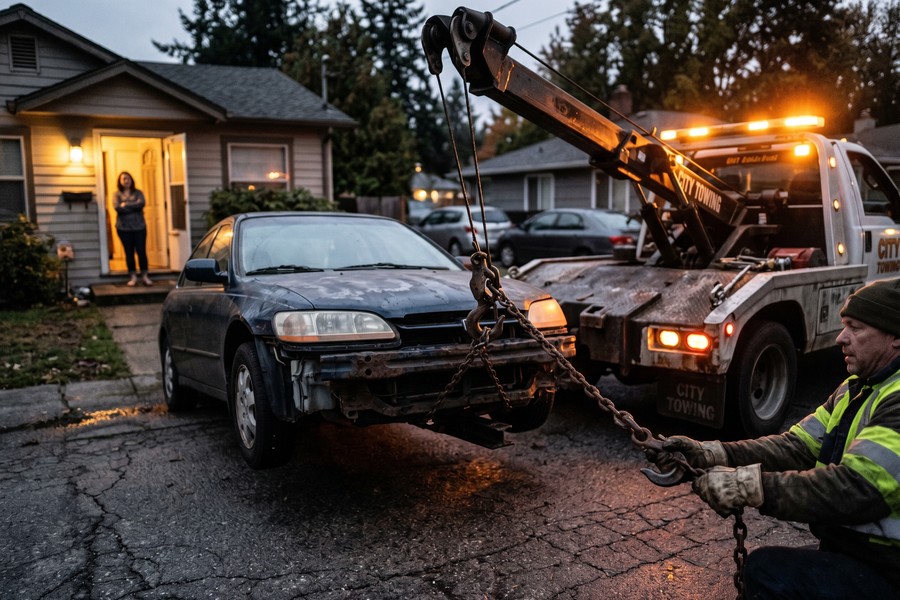
CFPB data found that one in five single-payment title loan borrowers has their vehicle seized. More than four in five of these loans are renewed the day they are due, meaning the typical outcome of a title loan is not repayment but rollover. The rules governing rollovers are therefore more consequential than origination rules for most borrowers.
After repossession, the legal exposure does not necessarily end. In most states, if a repossessed vehicle sells at auction for less than the outstanding loan balance, the borrower still owes the difference, a deficiency balance. Virginia is a notable exception: state law explicitly bars title loan lenders from pursuing deficiency judgments after repossession, a protection civilian borrowers in most other states simply do not have. A borrower in Missouri or Nevada who loses their car may still be chased for thousands of dollars in remaining debt.
If a lender has already taken action against you and you’re unclear on your legal options, the guide on what most borrowers get wrong about their right to dispute a loan covers common procedural errors that cost people their strongest defenses.
Your Rights Before and After Repossession
If you hold a title loan and fall behind, the specific rights you have before a lender seizes your vehicle depend almost entirely on your state. Some states require written notice and a cure window. Others permit self-help repossession with zero prior notice.
Pre-Repossession Notice Requirements
Virginia mandates a 10-day written notice before repossession can proceed. Nevada provides a 15-day cure window. Many states require nothing at all, allowing a repossession agent to take the vehicle from your driveway overnight. Knowing your state’s rule before you miss a payment is not a minor detail; it is the difference between having a legal remedy and not having one.
The Hidden Cost of Redemption
After repossession, borrowers in most states have the right to redeem the vehicle by paying the full outstanding balance plus fees before the lender sells it at auction. In practice, that redemption cost is far higher than most borrowers expect. Towing fees typically run $200 to $500. Storage fees add $25 to $50 per day. Repossession agent fees run $300 to $500 on their own. On a $1,000 title loan, a borrower seeking to redeem their vehicle after just one week in storage can face a total redemption cost exceeding $2,000. Most competing articles list repossession as a risk without quantifying what it actually costs to undo it.
Lenders are required to sell repossessed vehicles in a “commercially reasonable manner” and notify borrowers of the sale. Borrowers also retain the right to retrieve personal property from the vehicle before sale. These are real rights, but they are procedural, not financial. They do not reduce what you owe.
Before signing any title loan, ask the lender in writing: what is the exact cure period in this state, how many days of storage fees accrue before the vehicle is sold, and does the lender pursue deficiency balances? Lenders are not required to volunteer this information, but they cannot refuse to answer it. The answers should change how you evaluate the loan’s actual risk.
Reading the Regulatory Scoreboard: Which Loan Has More Protections?
Payday loan borrowers received more dedicated federal regulatory attention than title loan borrowers did. The CFPB conducted a full rulemaking, developed ability-to-repay standards (later rescinded), and produced the surviving payment provisions rule that applies to both loan types. Title loans received no comparable federal repossession or rollover statute. On federal attention alone, payday edges ahead, even if that advantage is now diminished by enforcement deprioritization.
The Asymmetry Between Federal Attention and Actual Harm
Here is the honest concession: the CFPB’s ability-to-repay rescission in 2020 gutted the most meaningful consumer safeguard for both loan types. What remains is a payment collection rule, not a loan quality standard. Any framing that presents current federal law as strong protection for either payday or title loan borrowers overstates the case significantly.
The more important argument runs the other way. The stakes of inadequate title loan protection are materially higher than the stakes of inadequate payday protection. Losing a vehicle cascades into job loss, missed medical appointments, and childcare failures in a way that overdraft fees and debt cycling do not. The gap in title loan protections arguably matters more precisely because the product is more dangerous and has received less tailored federal coverage.
State geography determines the answer. A title loan borrower in Virginia operates under a state framework that bars deficiency judgments, which is a genuine post-repossession protection. A payday borrower in Texas operates under no meaningful rate cap and can be cycled through rollovers indefinitely. “Which law has your back” is not a federal question. It is a question about which state issued your driver’s license.
Before choosing any short-term borrowing product, reading about how paycheck advance apps compare to traditional payday loans may reveal alternatives that carry fewer legal exposure points than either product discussed here. And if you’ve had a loan application rejected already, the steps to take after an emergency loan denial can help you avoid turning to the highest-risk products by default.
One element competitors consistently miss is the title pawn distinction. In states like Georgia, some lenders operate under pawn shop law rather than lending law. In a title pawn, you surrender the vehicle immediately and pay to redeem it. Because pawn law governs the transaction rather than consumer lending law, standard lending protections, including TILA disclosure requirements and state lending caps, may not apply at all. Borrowers who assume any loan secured by their car title carries standard lending protections may be wrong, depending on how the product is legally classified.
This classification problem is not theoretical. The FDIC and state banking regulators typically have no supervisory authority over pawn operators, which means a borrower in a title pawn dispute may have fewer complaint channels than a borrower dealing with a licensed lender regulated by a state department of financial institutions.
If you are evaluating any lender before signing, the checklist in our article on how to spot a fake loan company before you apply covers the verification steps that protect borrowers from unlicensed operators, including those operating illegally in states that prohibit title lending.
Frequently Asked Questions
Are auto title loans regulated by the federal government?
Partially. The Truth in Lending Act requires title lenders to disclose APR and finance charges in writing before signing. The CFPB’s payment provisions rule, effective March 30, 2025, prohibits repeated account debits after two consecutive failures on both payday and title loans. However, there is no federal statute governing repossession timing, deficiency balances, or rollover limits on title loans.
Can a title lender repossess my car without notice?
In many states, yes. Self-help repossession is legal in most of the United States, meaning a lender can seize a vehicle without advance notice or a court order. A handful of states, including Virginia (10-day notice) and Nevada (15-day cure window), require written notice before repossession can proceed. Check your state’s specific consumer protection laws before signing any title loan.
Do payday loans have stronger protections than auto title loans?
At the federal level, payday loans have received more regulatory attention, including the CFPB’s rulemaking and surviving payment provisions. At the state level, the stakes of weak title loan protections are higher because default can result in vehicle repossession, deficiency debt, and loss of transportation. The better-protected product is genuinely state-dependent.
What is the CFPB’s two-strikes rule and does it apply to title loans?
The two-strikes rule, part of the CFPB’s 12 CFR Part 1041 regulations, prohibits lenders from attempting further payment withdrawals from a consumer’s bank account after two consecutive failed attempts, without new written authorization. It applies to both short-term payday loans and vehicle title loans. It took effect March 30, 2025, but the CFPB announced it would not prioritize enforcement.
Are title loans legal everywhere in the United States?
No. Several states ban title loans outright, and a 2024 survey found evidence that title loans are being made illegally in 22 states plus Washington DC that prohibit them. Even in states where they are technically legal, lenders may operate under different credit statutes to avoid rate caps. Always verify a lender’s license with your state financial regulator before signing.
What happens to my car debt if the repossessed vehicle sells for less than I owe?
In most states, you still owe the difference, known as a deficiency balance, after the vehicle is sold at auction. Virginia is one of the few states that explicitly bars title loan lenders from pursuing deficiency judgments after repossession. Borrowers in most other states can be sued for the remaining amount even after losing their vehicle.
Does the Military Lending Act protect against auto title loans?
Yes, for active-duty servicemembers and their dependents. The Military Lending Act caps the Military APR at 36% on vehicle title loans and payday loans for covered borrowers. The Servicemembers Civil Relief Act adds an additional layer: lenders cannot repossess a vehicle without a court order for loans that pre-date active service. Civilian borrowers have no equivalent federal rate ceiling on title loans.
Sources
- Consumer Financial Protection Bureau, Payday, Vehicle Title, and Certain High-Cost Installment Loans Final Rule
- Federal Trade Commission, What to Know About Payday and Car Title Loans
- The Pew Charitable Trusts, Auto Title Loans: Market Practices and Borrower Experiences
- National Consumer Law Center, Rule on Bounced Payday and High-Cost Loan Payments Now in Effect
- California DFPI, Automobile Title Loans: What Consumers Need to Know
- Center for Responsible Lending, Down the Drain: Payday Lenders Take $2.4 Billion in Fees (2025)
- Center for Responsible Lending, Under the Radar: Evidence of Prohibited Vehicle Title Loans in 22 States and DC (2025)
- Center for Responsible Lending, Under the Radar Research Brief Full Report