

Fact-checked by the onlinepaydaynews.com editorial team
Quick Answer
To handle financial emergency first steps correctly, assess your total cash on hand, pause all non-essential spending, and contact creditors before missing a payment — all within 48 hours. As of July 2025, most households have fewer than 3 weeks of expenses saved, making fast triage essential before taking on any new debt.
Taking the right financial emergency first steps in the opening 48 hours can mean the difference between a manageable setback and a debt spiral that takes years to unwind. As of July 2025, the Federal Reserve’s 2024 Report on the Economic Well-Being of U.S. Households found that 37% of American adults would struggle to cover an unexpected $400 expense with cash alone — meaning most people reach for borrowing before exhausting cheaper options.
The pace of financial stress has accelerated. Inflation-adjusted wages have lagged behind rising living costs for the past two years, and consumer credit card balances hit a record $1.17 trillion in late 2024 according to the Federal Reserve Bank of New York. That environment makes it more important than ever to know exactly what to do — and in what order — before signing anything.
This guide is for anyone facing an urgent money shortfall: a job loss, a medical bill, a car breakdown, or any cash crunch with a hard deadline. By the end, you will know how to stop the bleeding, assess your real position, exhaust free resources, and only then evaluate borrowing — with eyes fully open.
Key Takeaways
- 37% of adults cannot cover a $400 emergency without borrowing or selling something, according to the Federal Reserve’s 2024 household survey.
- Calling a creditor before you miss a payment preserves your credit score and often unlocks hardship programs that are never advertised publicly.
- 211 helplines and local nonprofits distribute billions of dollars in emergency utility, food, and rent assistance annually — most people never call them first.
- Payday loans carry an average APR of 400%, according to the Consumer Financial Protection Bureau, making them among the costliest options available.
- A written 48-hour triage plan reduces the chance of panic borrowing, which the CFPB links to 80% of repeat payday loan cycles.
- Credit union emergency loans can fund in as little as 24 hours at APRs averaging 18% — far below most short-term lenders — for members who have already established a relationship.
In This Guide
- Step 1: How Do I Figure Out Exactly How Much Trouble I Am In?
- Step 2: What Spending Should I Cut or Pause Immediately?
- Step 3: Should I Call My Creditors Before I Miss a Payment?
- Step 4: What Free or Low-Cost Emergency Resources Exist Before I Borrow?
- Step 5: How Do I Compare My Borrowing Options Without Getting Burned?
- Step 6: How Do I Keep This Emergency From Destroying My Credit Score?
- Frequently Asked Questions
Step 1: How Do I Figure Out Exactly How Much Trouble I Am In?
Start by building a precise picture of your cash, obligations, and deadlines — before making a single phone call or payment. You cannot triage what you have not measured, and guessing almost always causes people to either underreact or panic-borrow more than they need.
How to Do This
Open a blank document or spreadsheet and list three columns: money in, money out, and deadline. Under “money in,” record every source of cash you can access within 72 hours — checking accounts, savings, PayPal or Venmo balances, cash on hand, and any pending direct deposits. Under “money out,” list only obligations with hard consequences in the next 30 days: rent, utilities facing shutoff, car payments, and minimum credit card payments. Under “deadline,” note the exact due date for each.
Total both sides. The gap between them is your actual shortfall — not the scary number your anxiety is projecting. Many people find the real number is smaller than they feared, which immediately expands their options.
What to Watch Out For
Do not include speculative income (overtime not yet confirmed, a side gig payment that is not guaranteed) in your “money in” column. Overestimating income is one of the most common errors in emergency planning. Also exclude retirement accounts at this stage — early withdrawal penalties of 10% plus ordinary income tax, flagged by the IRS, make them a last resort, not a first step.
Use your bank’s mobile app transaction history to pull the last 30 days of spending. Most apps categorize spending automatically. This takes under 10 minutes and gives you a fact-based starting point instead of a gut-feel estimate.
Step 2: What Spending Should I Cut or Pause Immediately?
The second of the essential financial emergency first steps is halting discretionary cash outflows the moment a crisis begins — not after you have assessed options, not tomorrow. Every dollar you stop spending is a dollar you do not have to borrow at interest.
How to Do This
Log into every subscription service and cancel or pause anything non-essential: streaming platforms, gym memberships, software subscriptions, meal kit deliveries. Most platforms — including Netflix, Spotify, and Amazon Prime — allow pausing without cancellation. According to Consumer Reports, the average American household carries $219 per month in subscription costs, much of it forgotten or unused.
Next, contact your bank and temporarily freeze or remove any auto-pay authorizations for non-critical services. This prevents surprise charges from draining your buffer during the crisis window. Leave only utilities, insurance, and minimum debt payments active.
What to Watch Out For
Canceling auto-pay on credit cards can trigger late fees and rate increases — only pause subscriptions and discretionary services, not minimum debt payments. Also be aware that some gyms and subscription boxes require written cancellation with advance notice; start that process immediately even if the cutoff is 30 days out.

The average household can free up $219 per month by auditing and pausing forgotten subscriptions — enough to cover many common emergency shortfalls without borrowing a dollar.
Step 3: Should I Call My Creditors Before I Miss a Payment?
Yes — contact your creditors immediately, before a payment is missed. This is one of the most powerful and least-used financial emergency first steps available. Calling proactively unlocks hardship programs that are rarely advertised, and it protects your credit score from a missed-payment notation that stays on your report for seven years.
How to Do This
Call the customer service number on the back of your card or on your statement. Ask specifically: “Do you have a hardship program or financial difficulty assistance program?” Most major issuers — including Chase, Bank of America, and Citibank — have internal programs that can defer payments, waive late fees, or temporarily reduce your interest rate. These programs are not automatically applied; you must ask.
For rent, contact your landlord or property management company in writing (email creates a paper trail) and explain the situation honestly. Many landlords prefer a short payment plan over the cost and time of an eviction proceeding. If eviction is already a risk, read through our step-by-step guide on emergency cash for renters facing eviction before your next conversation with your landlord.
What to Watch Out For
Hardship programs sometimes show up as a notation on your credit report, though they do not directly lower your score. Always ask the creditor: “Will this program be reported to the credit bureaus, and if so, how?” Get the agreement in writing — verbal promises are not enforceable.
“The single biggest mistake people make in a financial crisis is waiting until after they have missed a payment to call their lender. Calling first gives you leverage and access to options that simply disappear the moment you go delinquent.”
| Option | Typical APR / Cost | Speed of Relief | Credit Score Impact | Best For |
|---|---|---|---|---|
| Creditor Hardship Program | 0% – 9.9% temporarily | Same day (phone call) | Minimal / none | Existing accounts, first 48 hours |
| Credit Union Emergency Loan | 18% average APR | 24 – 48 hours | Soft pull (pre-qualify) | Members with established accounts |
| Personal Loan (bank) | 11% – 25% APR | 1 – 5 business days | Hard pull | Good credit, larger amounts |
| Cash Advance App | Effective 120% – 200% APR | Instant – 1 business day | None typically | Small gaps under $500 |
| Payday Loan | 300% – 700% APR | Same day | Varies by lender | Last resort only |
| 211 / Nonprofit Aid | Free / no repayment | 1 – 5 business days | None | Utilities, food, rent assistance |
Step 4: What Free or Low-Cost Emergency Resources Exist Before I Borrow?
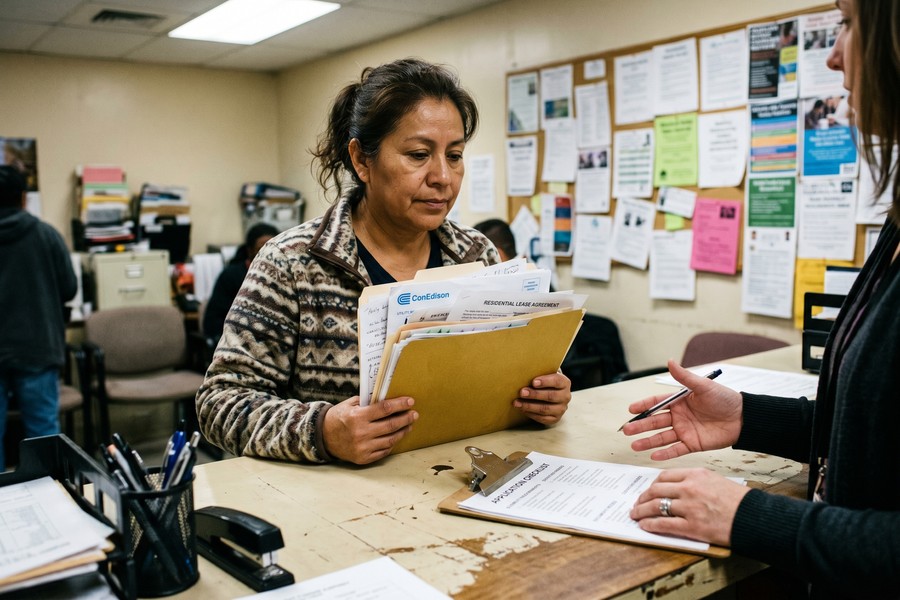
Before borrowing anything, exhaust every source of free or grant-based assistance — these resources exist specifically for moments like the one you are in. Most people skip directly to loans because they do not know where to look.
How to Do This
Dial 211 (available in all 50 states) or visit 211.org to be connected with local emergency assistance programs. Operators can direct you to resources for rent, utilities, food, and even transportation. The United Way’s 211 network handled over 14 million calls in 2023, connecting people with community-specific aid they could not find on their own.
Check whether your employer has an Employee Assistance Program (EAP) or emergency hardship fund. Many large employers offer short-term interest-free advances or grants through their HR department — a benefit that fewer than 20% of eligible employees use, according to the Society for Human Resource Management (SHRM).
If your emergency involves a natural disaster, explore FEMA’s Individuals and Households Program. Our guide on natural disaster emergency funding resources covers every federal and state program available after a crisis hits.
What to Watch Out For
Some nonprofit assistance programs have income caps or documentation requirements. Call ahead and ask what you need to bring — proof of income, a utility bill, or a lease agreement — so you do not make a wasted trip. Processing times vary from same-day to five business days depending on the organization’s funding cycle.
The Low Income Home Energy Assistance Program (LIHEAP), administered by the U.S. Department of Health and Human Services, distributes over $4 billion annually to help households cover heating and cooling costs — and many eligible households never apply.
Step 5: How Do I Compare My Borrowing Options Without Getting Burned?
If you have exhausted free resources and still have a gap, borrowing may be necessary — but the financial emergency first steps framework demands that you compare options by true cost, not by ease of access. The cheapest money is not always the fastest, and the fastest is almost never the cheapest.
How to Do This
Rank your options using annual percentage rate (APR) as your primary metric. Credit union emergency loans average 18% APR. Bank personal loans for qualified borrowers run 11%–25% APR. Cash advance apps — while technically fee-based rather than interest-based — carry effective APRs of 120%–200% once “expedite fees” and tips are included, according to the CFPB. Payday loans average 400% APR nationally.
Before applying anywhere, read our guide on how to compare short-term loan offers without getting fooled by low APR claims — many lenders advertise introductory rates that apply only to specific terms. If a cash advance app is on your radar, compare it against an emergency personal loan using our cash advance app vs emergency personal loan breakdown before deciding.
What to Watch Out For
Watch for lenders who charge origination fees of 1%–8% on top of the stated APR — these are often buried in the fine print. A loan advertised at 12% APR with a 6% origination fee on a $2,000 loan costs significantly more than it appears. Our deeper resource on spotting predatory loan terms covers the advanced red flags to identify before you sign.
“In a financial crisis, your instinct is to fix the problem as fast as possible. But the speed of a loan should never be the primary reason you choose it. A 48-hour credit union loan at 18% APR will cost a fraction of what a same-day payday loan costs over the same repayment period.”
Never borrow from a lender who contacts you unsolicited by text, email, or social media during a known emergency. Disaster-related loan scams spike during crisis periods. Verify any lender through your state’s banking regulator before sharing personal information.
Step 6: How Do I Keep This Emergency From Destroying My Credit Score?
Protecting your credit during a financial emergency is not about vanity — your credit score directly affects the interest rate you will pay on any loan you need now or in the future. Acting strategically in the first 48 hours can preserve your score even when your finances are under serious pressure.
How to Do This
First, pull your free credit reports immediately at AnnualCreditReport.com — you are entitled to free weekly reports from all three bureaus (Equifax, Experian, and TransUnion) under current FTC rules. Knowing your starting score helps you understand which lenders you qualify for and at what rates.
Second, prioritize payments strategically. Your payment history accounts for 35% of your FICO score. If you cannot pay everything, pay at least the minimum on credit cards first, then secured loans (car, mortgage), then unsecured accounts. A single 30-day late payment can drop a good score by 60–110 points, according to FICO’s own published research.
Third, if your credit report already shows problems from a past crisis, understand your options before the situation compounds. Our resource on whether to pay off collections or let them age off your credit report walks through the strategic decision in detail.
What to Watch Out For
Avoid applying to multiple lenders simultaneously. Each hard inquiry can reduce your score by 5–10 points, and multiple inquiries in a short window — outside a mortgage or auto loan shopping period — signal financial distress to future lenders. Use pre-qualification tools that run only a soft pull to narrow your options before committing to a formal application.

If you believe your emergency may drag on for more than 30 days, consider placing a free credit freeze with all three bureaus through each bureau’s website. A freeze prevents new credit from being opened in your name, protecting you from identity theft that often spikes when people share financial documents widely during a crisis.
Frequently Asked Questions
What are the very first things I should do in a financial emergency before calling anyone?
The first financial emergency first steps are to calculate your exact cash position and list every bill with a hard deadline in the next 30 days. This takes under 30 minutes and gives you a factual gap number rather than a fear-based one. Only once you know your real shortfall can you determine whether you need $200 or $2,000 — and that number determines which resources to pursue.
How do I ask my credit card company for a hardship program without hurting my credit?
Call the number on the back of your card and ask directly: “Do you have a financial hardship or payment assistance program?” Simply asking does not affect your credit. The creditor may note the arrangement on your account, but the act of calling and requesting help does not trigger a hard inquiry or negative mark. If you make payments as agreed under the plan, your credit score remains protected.
What free resources can I use for emergency rent or utility help?
Dial 211 or visit 211.org for your state and local programs. Federal programs include LIHEAP for energy assistance, the Emergency Rental Assistance Program administered through local governments, and food assistance through SNAP. Many local community action agencies can also provide one-time emergency grants for rent and utilities that do not require repayment.
Should I take money out of my 401(k) or IRA to cover an emergency?
Withdrawing from a retirement account should be one of your last options, not a first response. The IRS charges a 10% early withdrawal penalty plus ordinary income tax on most pre-tax retirement distributions before age 59.5, meaning a $5,000 withdrawal could net you under $3,500 after taxes. Exhaust creditor hardship programs, nonprofit aid, and low-APR borrowing before touching retirement savings.
How long does it take to get an emergency personal loan approved?
Online personal loan lenders can approve and fund in as little as one business day, while traditional banks typically take three to five business days. Credit unions often fund within 24–48 hours for existing members with good standing. If you need cash faster than that, a cash advance app may bridge a very small gap — but compare effective APRs carefully before using one, as they are rarely as cheap as they appear.
What if I have bad credit and cannot qualify for a personal loan during an emergency?
Bad credit does not eliminate all borrowing options. Credit unions and community development financial institutions (CDFIs) often work with borrowers with scores below 600. Secured loans — using a car title or savings account as collateral — may also be available, though they carry significant risk if you default. For a detailed breakdown of lender criteria when credit is damaged, see our guide on short-term loans after medical bills for borrowers with existing debt.
How do I know if a lender I found online during a crisis is legitimate?
Verify any online lender by looking them up in your state’s banking regulator database and checking the CFPB complaint database before sharing any personal information. Legitimate lenders never guarantee approval before reviewing your application, never ask for an upfront fee, and always provide a written loan agreement before disbursement. Unsolicited lenders who contact you during a known crisis are a major red flag.
Can I negotiate my rent payment directly with my landlord during a financial emergency?
Yes, and doing so in writing — via email — is strongly recommended. Most landlords prefer a written payment plan over the expense of filing for eviction, which in most states costs between $300 and $800 in court fees alone. Propose a specific plan with dates and amounts. If your landlord is unresponsive or threatening, contact your local legal aid office for free tenant advocacy assistance.
What is the safest borrowing option for a small emergency under $500?
For gaps under $500, a cash advance app or an employer payroll advance (if available) is often the least expensive and lowest-risk option — provided you repay it immediately on your next payday. Credit unions also offer small-dollar emergency loans called PALs (Payday Alternative Loans) capped at 28% APR by the National Credit Union Administration (NCUA). Avoid payday lenders for any amount — the fee structure makes even small loans extremely expensive on a per-dollar basis.
How do I prevent this emergency from repeating itself once I get through it?
Once the crisis is resolved, build a starter emergency fund of $1,000 — the threshold that eliminates most one-time emergency borrowing events, according to research by Pew Charitable Trusts. Automate a small weekly transfer to a high-yield savings account immediately after your crisis stabilizes. Understanding what damaged your credit or cash position during the emergency is also critical; our resource on quiet credit score killers can help you identify vulnerabilities before the next unexpected event.
Sources
- Federal Reserve — Report on the Economic Well-Being of U.S. Households, 2024
- Consumer Financial Protection Bureau — What Is a Payday Loan?
- Federal Reserve Bank of New York — Household Debt and Credit Report
- AnnualCreditReport.com — Free Credit Reports from All Three Bureaus
- Internal Revenue Service — Retirement Topics: Tax on Early Distributions
- 211.org — Find Local Emergency Assistance Programs
- U.S. Department of Health and Human Services — LIHEAP Program Overview
- National Credit Union Administration — Payday Alternative Loans (PALs)
- National Foundation for Credit Counseling — Free and Low-Cost Credit Counseling
- National Consumer Law Center — Consumer Financial Protection Resources