

Fact-checked by the onlinepaydaynews.com editorial team
Quick Answer
The credit utilization percentage you should actually target is 1% to 9%, not the commonly cited 30%. The 30% figure is a floor for “acceptable,” not a goal. People with FICO scores of 795 or higher average just 7% utilization. To reach that range: pay before your statement closes, keep individual card balances low, and never let any single card exceed 30% even if your overall ratio looks fine.
Your credit utilization percentage is the ratio of your revolving credit balances to your total available credit limits, and it accounts for roughly 30% of your FICO score according to Experian’s credit education data. That makes it the second most heavily weighted factor in the FICO model, just behind payment history. Despite that weight, the standard advice most people receive is dangerously incomplete: “keep it under 30%” is not a target. It is barely the starting line.
Two newer scoring models are reshaping what utilization actually means for mortgage applicants. FICO 10T and VantageScore 4.0, now adopted by Fannie Mae, Freddie Mac, and the FHA, examine 24 months of utilization history rather than a single snapshot. That structural change means the old one-time management tricks matter less than consistent, sustained balance reductions over time. The personal finance content world has been slow to catch up to this shift.
This guide is for anyone who wants to move from “acceptable” credit to genuinely excellent credit, or who has a major loan application coming up in the next six months and needs to understand which levers actually move scores quickly. By the end, you will know the right target, the tactical steps to reach it, and the common mistakes that cost people points without them realizing it.
Key Takeaways
- The widely repeated 30% guideline was never published by FICO or VantageScore as a threshold. Both agencies treat utilization as a continuous variable, meaning every percentage point lower helps your score.
- U.S. consumers averaged 29% overall credit utilization in Q3 2024, according to Experian. People with FICO scores of 795 or higher average just 7%, a 22-point gap that shows where the real target lives.
- Credit utilization accounts for approximately 30% of a FICO score, making it the second most important scoring factor and the fastest one to change, since it carries no scoring memory under most standard models.
- Scoring models evaluate utilization two separate ways: your aggregate ratio across all cards and the ratio on each individual card. A single maxed card can damage your score even when your overall number looks healthy.
- A 0% reported balance is not optimal. According to FICO’s own analysis, reporting a zero balance is slightly more risky to your score than reporting a small balance, because the model interprets zero use as potential account inactivity.
- Under FICO 10T and VantageScore 4.0, now adopted by Fannie Mae and Freddie Mac, 24 months of utilization history now affects mortgage applicants’ scores, not just the current month’s snapshot.
In This Guide
- Step 1: Where Did the 30% Rule Come From (and Why Is It Wrong)?
- Step 2: What Should Your Credit Utilization Percentage Actually Be?
- Step 3: The Two-Number Problem Most People Miss: Per-Card vs. Overall Utilization
- Step 4: How Does the Statement Closing Date Affect My Reported Utilization?
- Step 5: How Much Does Utilization Actually Affect My Credit Score?
- Step 6: What Do FICO 10T and VantageScore 4.0 Mean for My Credit Utilization?
- Step 7: How Do I Lower My Credit Utilization Without Opening New Cards?
- Frequently Asked Questions
Step 1: Where Did the 30% Rule Come From (and Why Is It Wrong)?
The 30% utilization rule was never published by FICO, VantageScore, or any credit bureau. It emerged as a shorthand observation among personal finance writers in the early 2000s, based on the fact that scores tended to decline more noticeably once balances crossed that threshold. Through repetition across websites and financial advice columns, the observation hardened into gospel. The original context, that 30% was where things got noticeably worse, got stripped away. What remained was a number that sounded official and specific, which is exactly why it spread.
What FICO and VantageScore Actually Say
Both scoring models treat credit utilization as a continuous risk variable, not a cliff. There is no floor at which your score suddenly becomes immune to further improvement, and no hard edge where a single percentage point triggers a dramatic drop. FICO’s own credit education materials confirm that lower is always better, with below 10% generally helping build and maintain a good FICO Score.
“There is nothing ‘optimal or significant’ about 30% credit card utilization.”
What to Watch Out For
The danger in believing the 30% rule is not just theoretical. A person who keeps their utilization at 28% might feel proud of themselves for “staying under 30%,” while someone with excellent credit is likely sitting at 7%. Those two people look nearly identical by the old rule but are very different in the eyes of the scoring model. Treating 30% as a target rather than a floor keeps millions of consumers stuck at “acceptable” when they could achieve “excellent.”
According to Experian’s 2024 State of Credit Cards report, Gen Z, millennials, and Gen X each use more than 30% of their available credit on average, while baby boomers and the Silent Generation use less. Younger consumers are the most likely to be held back by this misconception.
Step 2: What Should Your Credit Utilization Percentage Actually Be?
The data-backed answer is 1% to 9% for aggregate utilization. People with FICO scores of 795 or higher use an average of just 7% of their available credit, according to FICO’s own analysis. The U.S. average sat at 29% in Q3 2024 per Experian’s data. That 22-percentage-point gap between average Americans and high scorers is the clearest available evidence that staying “under 30%” is not where excellent credit lives.
The Three-Tier Framework
A practical way to think about this is in three distinct tiers:
- Acceptable (20–29%): You are avoiding the worst penalties, but your score is not being optimized. This is where most Americans currently sit.
- Good (10–19%): Meaningfully better than average. You will see better rates and terms than someone in the “acceptable” zone on most loan types.
- Optimal (1–9%): Where top scores live. This is the range that correlates with 800+ FICO scores. Experian confirms that consumers seeking excellent credit must target single-digit utilization.
Why Zero Is Not the Goal
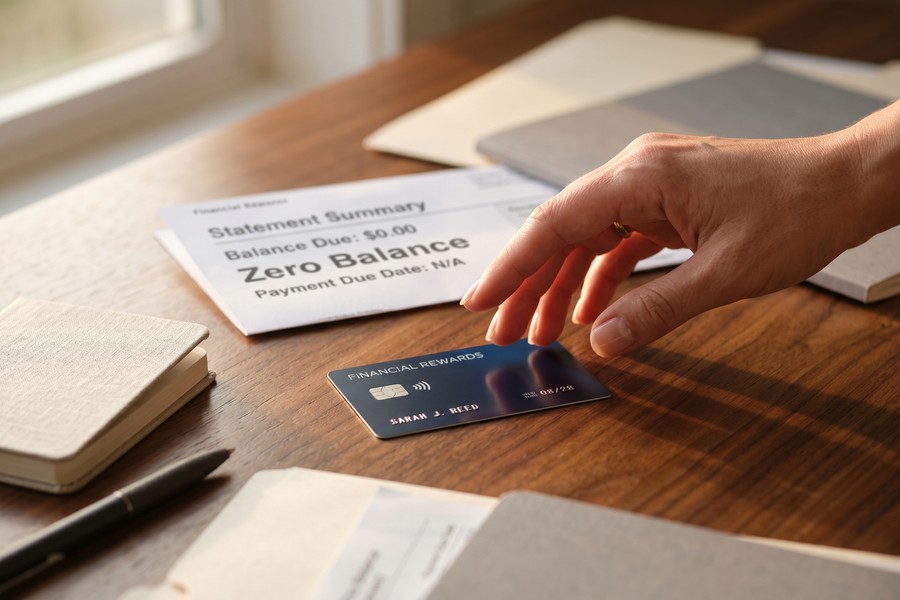
Counterintuitively, a 0% reported balance is slightly worse than 1–9%. Scoring models interpret a zero balance as evidence that a revolving account may not be actively used. FICO’s revolving accounts FAQ states directly that having no revolving balance reported is slightly more risky than having a small balance. The sweet spot is a small, visible balance, not a scrubbed-clean zero.
Can Arkali, FICO’s Senior Director of Scores and Predictive Analytics, has stated publicly that there are no hard and fast rules for an ideal credit card utilization rate, as reported by The Points Guy. That said, the evidence strongly points toward single-digit utilization as the practical target for anyone seeking genuinely excellent credit.
The average credit card utilization rate for all American cardholders was 20.7%, according to TransUnion data cited by CardRates. Even this “average” sits far above the 7% that correlates with top-tier FICO scores.
Step 3: The Two-Number Problem Most People Miss: Per-Card vs. Overall Utilization
Credit scoring models do not evaluate only your aggregate utilization ratio. They also examine the utilization ratio on each individual card, and a single high-utilization account can damage your score even when your overall percentage looks fine. This is one of the most consequential gaps in mainstream credit advice, typically dismissed in a single sentence if mentioned at all.
How to Do This: The Math That Matters
Consider this scenario: you have two credit cards. Card A has a $5,000 limit and carries a $4,150 balance, which is 83% utilization. Card B has a $10,000 limit and a $1,000 balance, sitting at 10%. Your overall utilization is $5,150 divided by $15,000, or about 34%. That looks close to the “safe zone” at first glance. But the scoring model sees Card A at 83% and penalizes you for it independently, regardless of what your aggregate number shows.
Paying down the highest-utilization card first, rather than splitting extra payments evenly across all cards, is the more score-efficient strategy. This is especially true if any single card is above 50%, where the per-card penalty tends to become more pronounced.
What to Watch Out For
The common mistake is monitoring only the overall ratio while ignoring individual cards. Someone who carries balances across five cards, each at a modest level overall, may still be holding one card at 60% or 70% without realizing the specific drag it creates. Check each card’s utilization individually, not just the blended figure your credit monitoring app shows at the top of the dashboard.
For more on the kinds of score-damaging patterns that fly under the radar, our breakdown of quiet credit score killers most people overlook covers several related issues worth reviewing.
| Utilization Level (Per Card) | Score Impact | What to Do |
|---|---|---|
| 1–9% | Optimal, matches the profile of 795+ FICO scorers | Maintain this range; pay before statement closes |
| 10–29% | Acceptable, no severe penalty, but not maximized | Reduce balance before next statement date |
| 30–49% | Moderate negative impact, score starts declining more noticeably | Prioritize this card in paydown strategy |
| 50–74% | Significant negative impact, strong per-card penalty applies | Pay down aggressively before next statement |
| 75–100% | Severe penalty, per-card and aggregate both damaged | Highest priority; even partial paydown helps immediately |
If you carry balances on multiple cards, list each card’s current balance and credit limit in a simple spreadsheet and calculate per-card utilization separately. You may find one card is pulling your score down far more than the others, making the paydown target obvious.
Step 4: How Does the Statement Closing Date Affect My Reported Utilization?
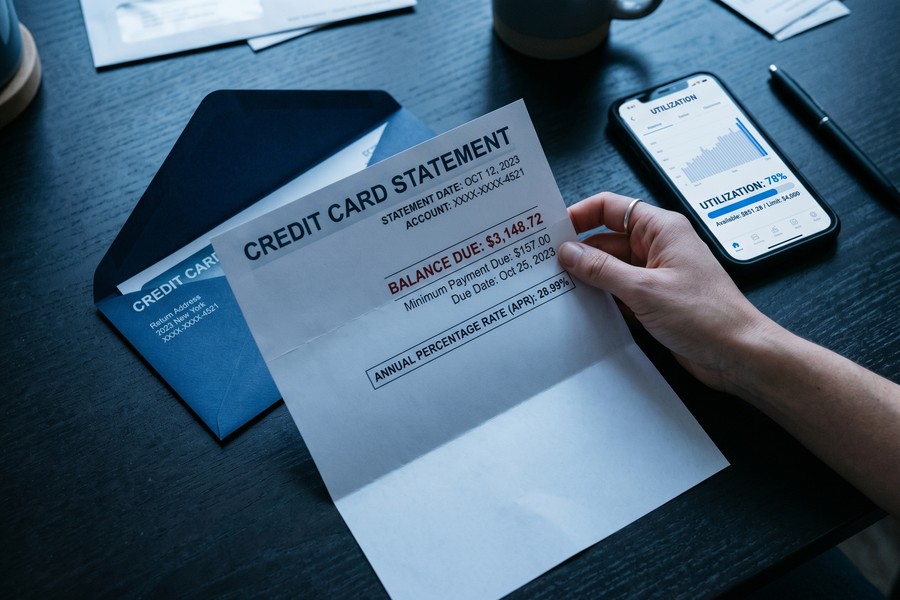
The single most actionable tactical piece of information about credit utilization is this: your card issuer reports your balance to the credit bureaus on your statement closing date, not your payment due date. Those two dates are typically 21 to 25 days apart. Paying your bill in full by the due date is essential for avoiding interest, but it does nothing to lower the balance that appears on your credit report if the statement has already closed with a high balance.
How to Do This
To lower your reported utilization, pay your balance down three to five days before your statement closing date, not by the due date. Your statement closing date is listed on your paper statement or your online account summary. If you cannot find it, call your card issuer directly and ask them to confirm it.
Once you know your closing date, set a calendar reminder one week before it. Make a payment that brings your balance to your target range, ideally below 9% of your credit limit. Whatever balance remains on the closing date is what gets reported to the bureaus and, therefore, what determines your utilization ratio for that month.
The AZEO Method
A tactical extension of this concept is the AZEO method, which stands for All Zero Except One. The strategy involves bringing all credit cards to a $0 reported balance except one, which reports a small balance under 9%. This is the reported balance profile that correlates most closely with 800+ credit scores. It requires no change in actual spending habits, only a change in when payments are submitted relative to statement dates.
What to Watch Out For
The AZEO method works best as a short-term tactic in the one to three months before a major credit application. Maintaining it long-term requires careful calendar management that is not practical for everyone. There is also the 0% floor issue: if every single card reports a zero balance in a given month, that can score slightly lower than having at least one card show a small, active balance.

Do not confuse your statement closing date with your due date. Many online banking dashboards prominently display the due date while showing the closing date in smaller print or a separate section. Using the wrong date means paying after the balance has already been reported, which does not improve your utilization for that cycle.
Step 5: How Much Does Utilization Actually Affect My Credit Score?
Credit utilization accounts for approximately 30% of your FICO score and roughly 20% of a VantageScore, making it the second most influential factor in both models. The precise point impact of changing your utilization depends on where you start, but the ranges are substantial enough that utilization is consistently the fastest lever most people can pull to move their score.
How to Do This: Understanding the Score Impact
Scoring models do not apply utilization penalties uniformly. The impact is asymmetric: consumers who already have high scores have more to lose from high utilization, while lower-score consumers see a smaller drop from the same behavior. A person starting with a very good FICO score of approximately 790 who maxes out all credit cards could expect a drop of roughly 110 to 130 points based on score simulations. Someone starting from a fair score around 600 under the same conditions might drop only 30 to 50 points. The people with the most to protect face the biggest risk.
The reverse is also true: moving from 25–30% utilization down to single digits tends to produce a meaningful score gain, particularly for consumers in the 700–780 range who are trying to cross into excellent credit territory.
Utilization Has No Scoring Memory
This is one of the most important and underappreciated facts about credit utilization: under standard FICO scoring models, utilization has no memory. A 70% reported balance one month becomes 3% the next if you pay it down before the statement closes. Unlike a late payment, which stays on your credit report for seven years, a high utilization month resets completely as soon as a new, lower balance is reported. This makes utilization the single fastest-reversing factor in a credit score, and the most practical one to target in the weeks before a major loan application.
According to CNBC Select, Jim Droske, President of Illinois Credit Services and holder of a perfect 850 credit score, has said that being in the single digits is better and is the best place to be, but that anything greater than zero is preferable to a reported zero balance. That framing captures the practical target precisely.
For consumers who have recently paid off a collection account and are now working to rebuild their score, understanding how utilization interacts with other factors is critical. Our guide on credit building mistakes people make after paying off a collection covers this interaction in detail.
The average credit card utilization rate in August 2024 was 21.3%, according to Equifax data cited by Bankrate, described as in line with a historic norm of 20–22% since 2011. That historical norm is notably far from the 7% that characterizes top-tier scorers.
Step 6: What Do FICO 10T and VantageScore 4.0 Mean for My Credit Utilization?
The newest scoring models change the rules in one important way: they examine 24 months of utilization history, not just the current month’s snapshot. FICO 10T and VantageScore 4.0 are now the required models for mortgage applications processed through Fannie Mae, Freddie Mac, and the FHA. If you are planning to apply for a home loan, a single month of careful balance management before application day is no longer sufficient.
How to Do This: What Trended Data Rewards
Under classic FICO 8, two borrowers with identical current balances look identical to the scoring model regardless of how they got there. Under FICO 10T, the borrower who has been steadily paying down debt over 18 months scores better than the one whose balances have been drifting upward, even when their current snapshot is the same. The model now distinguishes between “transactors” (people who consistently pay balances in full) and “revolvers” (people who carry balances month to month), and it rewards the former.
The practical implication is that sustainable, consistent reduction of balances over many months now matters for mortgage applicants in a way it did not under older models. A rapid paydown in the 30 days before application still helps, but two years of low and declining utilization helps more.
What to Watch Out For
Most credit card and auto loan decisions still use older FICO models. FICO 8 remains the most common model in everyday lending decisions. The trended data advantage is primarily relevant for mortgage applications in 2025, not for an everyday credit card approval or auto loan. Focusing intensely on 24-month history management when you are not pursuing a mortgage is a case of optimizing for a test you are not taking.
It is also worth noting that if your utilization history has been rising over the past two years, a fast paydown can still help your snapshot score, but the trended component of FICO 10T will reflect that rising trajectory until enough months of lower utilization accumulate to offset it.
VantageScore’s guidance recommends keeping balances at or below 30% as a general guideline but states clearly that consumers seeking excellent scores must push into single-digit territory. VantageScore 4.0 now reinforces this with its trended data component, rewarding sustained low utilization over time.
Step 7: How Do I Lower My Credit Utilization Without Opening New Cards?
There are four main levers for lowering your credit utilization percentage without taking on new credit, and they work at different speeds. The fastest changes come from timing and payment behavior. The slower ones come from structural adjustments to your available credit.
How to Do This: The Four Levers
- Pay before the statement closing date. As covered in Step 4, this is the single most impactful action. Paying your balance down three to five days before the closing date is what determines what gets reported. For most people, this one change produces a noticeable score improvement within a single billing cycle, typically 30 to 60 days.
- Make multiple intra-cycle payments. If you use your card regularly throughout the month and find your running balance climbing, make a mid-cycle payment to keep it below your target utilization threshold before the statement closes. This is especially useful if you spend heavily on one card for rewards points or cash back.
- Request a credit limit increase on existing cards. A higher limit on a card you already have lowers your utilization ratio by expanding the denominator without requiring any change in your balance. This can produce a meaningful improvement in a single reporting cycle. Be aware that some issuers run a hard inquiry for limit increase requests, which causes a small, temporary score dip. Avoid doing this immediately before a loan application.
- Leave old zero-balance cards open. Closing a card that carries no balance removes its available credit from your total, which raises your utilization ratio overnight on the balances you are still carrying. Old cards with no annual fee are almost always better left open, even if unused.
The Installment Loan Strategy
One underused tactic for people with large revolving balances is consolidating credit card debt into a personal installment loan. When credit card balances are paid off with a personal loan, those revolving balances drop to zero and are removed from the revolving utilization calculation entirely. Installment loans are not counted in the credit utilization ratio. This can produce a significant improvement in utilization even when the total debt amount stays the same. There is a tradeoff: the personal loan adds a new account and a hard inquiry, and the interest rate on the loan needs to be genuinely lower than what you are paying on the cards for it to make financial sense.
If you are considering that route, our comparison of credit builder loans versus secured cards covers how different debt instruments affect scoring for people working to rebuild credit. And for a broader look at when borrowing to address existing debt is worth the cost, the analysis of medical debt versus personal loan debt protections addresses the legal and financial tradeoffs in useful detail.
When Chasing Low Utilization Is the Wrong Priority
This deserves an honest acknowledgment: obsessing over utilization while carrying a balance at 20–29% APR is financially backward. Every point of score improvement you gain from a slightly lower utilization ratio is worth far less than the interest you are paying to carry the balance in the first place. If you have high-interest revolving debt, the primary goal should be paying it off, not gaming the reported percentage. Utilization management tactics matter most in the three to six months before a major credit application, when the marginal score improvement translates into a lower interest rate on a large loan.
For anyone who suspects they may have been charged fees they should not have, or who wants to understand their rights before taking on new debt to consolidate old balances, the guide on what most borrowers get wrong about their right to dispute a loan is a useful companion resource.
If you are applying for a mortgage within 90 days, focus entirely on levers 1 and 2 (paying before statement close and mid-cycle payments). Avoid requesting credit limit increases or opening new accounts during this window, as both actions can affect your score in ways that complicate underwriting decisions.
Frequently Asked Questions
Is 30% credit utilization really that bad for my credit score?
Thirty percent is not as bad as 50%, but it is far from good. FICO and VantageScore both treat utilization as a continuous variable, so the difference between 30% and 7% represents a meaningful score gap. The CFPB notes that 30% is where utilization starts to have a more pronounced negative effect, meaning 30% is the point where things get clearly worse, not the point where things are fine. People who want excellent credit need to be considerably lower.
What credit utilization percentage do I need for an 800 credit score?
People with FICO scores of 795 or higher average approximately 7% utilization according to FICO’s own data. That does not mean 7% guarantees an 800+ score, since payment history and account age matter too, but it is the utilization range that consistently correlates with the highest scores. Single-digit utilization, specifically 1% to 9%, is the practical target for anyone pursuing excellent credit.
Does closing a credit card hurt my credit utilization?
Yes, closing a credit card removes that card’s available credit limit from your total, which raises your utilization ratio if you still carry balances on other cards. For example, if you have $10,000 in total available credit and carry a $2,500 balance, closing a $4,000-limit card drops your available credit to $6,000, instantly raising your utilization from 25% to 41.7%. The CFPB specifically warns that closing credit cards while holding balances raises utilization and can lower scores.
Should I pay my credit card twice a month to improve my utilization?
Making two payments per month can help if it keeps your running balance below your target level on the statement closing date. The key is not the frequency itself but whether your balance is low when the issuer reports it to the bureaus. If your statement closes on the 15th and you spend heavily in the first two weeks, a mid-cycle payment before the 15th is effective. If your spending is lower and your balance is already in the acceptable range at closing, a second payment matters less.
Does paying off my full balance each month mean my utilization shows as zero?
Not necessarily. If you carry a large balance during the billing cycle and pay it in full after the statement closes, the closing balance, not your end-of-month balance, is what gets reported. A card with a $3,000 balance on the closing date reports $3,000 to the bureaus even if you pay it to $0 on the due date three weeks later. To report a low balance, you need to pay before the statement closes, not just before the due date.
Can I use a balance transfer to lower my credit utilization?
Transferring a balance from one card to another does not lower your overall utilization by itself, since the balance still exists on a revolving account. However, consolidating multiple high-balance cards onto one card with a higher limit can sometimes improve individual card utilization ratios, and transferring to a personal loan does remove the balance from revolving utilization entirely. If you are considering a balance transfer to reduce interest costs while also managing utilization, our piece on true cost comparisons for short-term borrowing strategies covers how different product structures affect both cost and credit profile.
How long does it take to see a credit score improvement after lowering my utilization?
Because utilization has no scoring memory under most standard models, you can see a score change within a single billing cycle, typically 30 to 60 days, once the lower balance is reported. Pay the balance down before your next statement closing date, and the improved ratio is reported to the bureaus within days. Your credit score is then updated when the bureaus share that new information with the scoring models, which usually happens within one to two weeks of the report update.
What happens to my credit utilization if I get a credit limit increase?
A credit limit increase lowers your utilization ratio immediately by expanding your total available credit without changing your balance. If you carry $2,000 on a card with a $5,000 limit (40% utilization) and the limit increases to $10,000, your utilization on that card drops to 20%. The caveat is that some issuers perform a hard inquiry when processing a limit increase request, which can cause a small, temporary score dip. This is generally worth it over the long term but should be avoided in the 30 to 90 days before a mortgage or major loan application.
Is credit utilization calculated the same way in FICO and VantageScore?
Both models evaluate revolving utilization and weigh it as the second most important credit scoring factor, but there are differences. FICO weights amounts owed, which includes utilization, at approximately 30% of the total score. VantageScore weights utilization at approximately 20% of the score. Under newer versions, FICO 10T and VantageScore 4.0, both models also incorporate 24 months of utilization trend data, which means consistent paydown behavior is now rewarded beyond just the current month’s snapshot. For most everyday credit decisions in 2025, FICO 8 remains the most commonly used model by lenders.
Sources
- FICO (myFICO), Credit Utilization: What It Means and Why It Matters
- FICO (myFICO), Revolving Accounts FAQ
- Experian, What Is Credit Utilization Rate and How Does It Affect Credit Scores?
- Experian, 2024 State of Credit Cards Report
- VantageScore, Credit Utilization Ratio: The Lesser-Known Key to Your Credit Health
- Consumer Financial Protection Bureau (CFPB), Credit Score Myths That Might Be Holding You Back
- Bankrate, Credit Utilization Survey (Equifax data, 2024)
- CardRates, Credit Card Usage Statistics (TransUnion data, 2025)
- The Points Guy, The Magic Credit Card Utilization Number (Can Arkali, FICO)
- CNBC Select, How to Keep Credit Utilization Low (Jim Droske, Illinois Credit Services)