
Fact-checked by the onlinepaydaynews.com editorial team
The Verdict
Home appliance emergency repair funding makes sense when repair costs stay below 50% of the replacement price and the unit is under 10 years old. Exhaust free coverage first: credit card protections, equipment breakdown endorsements, and government programs. If borrowing is unavoidable, a 0% APR card or personal loan beats BNPL or rent-to-own for anyone with a credit score above 670.
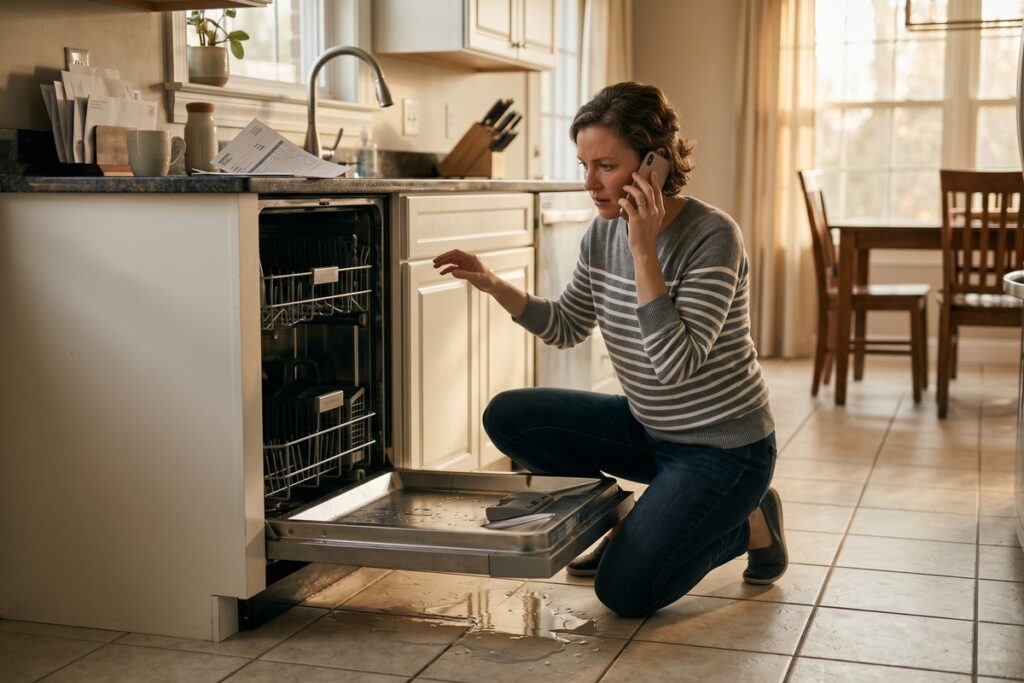
The single factor that determines whether a broken appliance becomes a manageable inconvenience or a months-long debt spiral is whether you spend money you did not need to spend. Too many households reach immediately for a loan or a retailer financing plan without first checking the coverage they already hold. According to the Federal Reserve’s 2024 Survey of Household Economics and Decisionmaking, 37% of U.S. adults would cover an unexpected $400 expense by borrowing or selling something rather than using savings. An appliance repair rarely costs only $400, which is why home appliance emergency repair funding decisions deserve a structured approach before anyone signs anything.
This matters right now because the rules around financing have shifted. FICO began incorporating Buy Now Pay Later data into credit scores in late 2025, and appliance prices remain elevated relative to pre-2022 levels. The funding option that seemed harmless two years ago may carry real credit consequences today.
| Factor | Reasons to Borrow or Finance | Reasons to Pause or Avoid |
|---|---|---|
| Urgency | No heat or refrigeration is a health risk; delay has real costs | If the unit still limps along, a few days of research saves money |
| Repair cost vs. replacement | Repair under 50% of replacement value on a unit under 10 years old | Repair exceeds 50% of replacement cost, or appliance is 12+ years old |
| Free coverage available | No existing warranty, insurance endorsement, or card benefit applies | Credit card purchase protection, extended warranty, or LIHEAP may cover it for free |
| Credit score | Score above 670 qualifies for 0% intro APR cards or sub-12% personal loans | Score below 600 pushes you toward high-APR loans or rent-to-own with 2-3x total cost |
| Existing debt load | Debt-to-income ratio below 36%; adding one payment is manageable | DTI already above 43%; new debt risks default on existing obligations |
| Timeline | Need the unit operational within 24-48 hours; personal loans fund in 1-2 days | Can wait 2-4 weeks; a HELOC or government program may be cheaper |
Key Takeaways
- The repair makes financial sense if the cost is under 50% of what a comparable new unit costs and the appliance is under 10 years old.
- Check your credit card benefits before spending anything. Cards from American Express, Chase, Visa, and Mastercard often include purchase protection for 90-120 days and extended warranty coverage for 1-2 years after the manufacturer warranty expires.
- A 0% APR introductory card is viable if your credit score is at least 690 and you can pay the balance in full before the promotional period (typically 15-18 months) ends.
- BNPL options through Affirm, Klarna, or Sezzle are faster than a personal loan, but as of late 2025 missed BNPL payments can now appear on your credit report with all three bureaus.
- If your household income qualifies, LIHEAP covers heating and cooling appliance repairs and replacements at no cost. Call 211 to find local programs that national search results never surface.
- 32% of homeowners have zero savings set aside for appliance failure, according to American Home Shield, which means the funding decision is a real one for most people, not a hypothetical.
- Rent-to-own stores (Aaron’s, Rent-A-Center) offer same-day availability for poor-credit situations, but total ownership cost routinely runs 2-3 times the retail price over a standard contract term.
What Does a Broken Appliance Actually Cost in 2026?
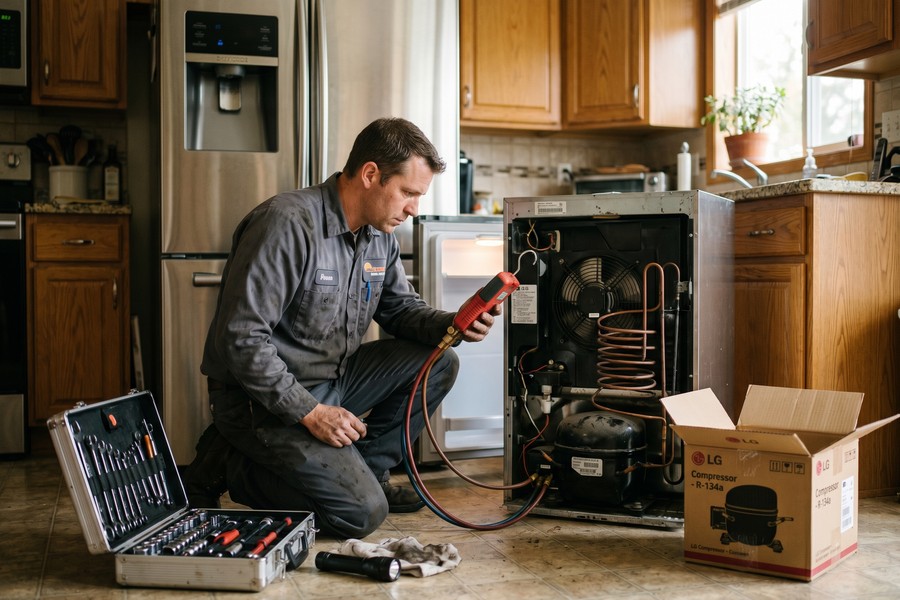
Repair costs vary sharply by appliance type and failure mode, which matters before you call a lender. Refrigerator compressor replacements run $700-$1,250; washer motor or pump failures typically land at $100-$400; dryer heating element repairs cost $100-$300; oven control board replacements range $100-$600. Knowing that range tells you whether you are dealing with a $150 problem you can absorb or a $1,200 problem that requires a real funding plan.
Those figures do not include emergency service surcharges, which add $50-$100 for after-hours calls, or delivery and installation fees for replacement units, which typically run $75-$200. When a refrigerator fails entirely, the food loss alone can add hundreds of dollars to the real cost. According to a January 2025 American Home Shield survey, homeowners who delayed replacing a failing appliance incurred an average of $1,330 in related damage costs from food spoilage, loss of heat or air conditioning, and flooding.
The 50% rule is the most practical threshold in appliance finance: if fixing the unit costs more than half the price of buying a comparable replacement, replace it. This cutoff gets sharper when the appliance is already 10-15 years old, because you are financing borrowed time. A 14-year-old refrigerator that needs a $900 compressor repair is not a $900 problem; it is a $900 problem that is likely to be followed by more repairs within two years.
Coverage You May Already Have and Do Not Know About
Before spending a dollar on repairs or financing, check three separate benefits that may cover all or part of the cost for free. Most homeowners skip this step and pay out of pocket unnecessarily.
Credit Card Purchase Protection and Extended Warranties
Credit card purchase protection covers accidental damage, theft, or loss for 90-120 days after purchase, with per-claim limits that range from $500 to $10,000 depending on the card. This is separate from extended warranty coverage, which adds 1-2 years to the manufacturer’s original warranty after it expires. Both benefits are automatic on many cards from American Express, Chase, Visa, and Mastercard. Most cardholders never check these before paying out of pocket.
One critical limitation: purchase protection does not cover normal mechanical breakdown due to wear. An appliance that simply stops working after years of use typically does not qualify. Accidental damage or theft does. Read the card’s benefit guide or call the benefit administrator before assuming you are covered or that you are not.
Consumer Reports has found that the median retailer extended service plan for a large appliance costs around $126, most covered appliances never break during the contract period, and even those that do claim rarely recover more than they paid. A credit card extended warranty provides equivalent coverage for free, which is almost always the better choice.
Equipment Breakdown Endorsements and Homeowners Insurance
Standard homeowners and renters insurance covers appliance damage caused by fire, theft, vandalism, or burst pipes. It does not cover mechanical failure. However, an equipment breakdown endorsement (sometimes called a mechanical breakdown endorsement) is an add-on that most insurers offer for roughly $25-$50 per year that does cover sudden mechanical or electrical failure. Most homeowners do not know it exists. If you have not added it yet, it will not help you today, but it is worth adding before the next emergency.
Immediate Cash Options When You Need It Fixed Today
If free coverage does not apply, your fastest practical options are a credit card, a personal loan, or a cash advance app. Each carries different speed, cost, and credit-score requirements.
Credit Cards
A 0% APR introductory card is the lowest-cost borrowing option available for this type of emergency if you qualify. Most offers run 15-18 months interest-free and require a credit score of at least 690. Pay the balance in full before the promotional period ends and you pay no interest at all. Miss that window and the deferred interest kicks in, often at 20-29% APR. If you are unsure how to evaluate a short-term loan offer against a card offer, the breakdown in this guide on how to compare short-term loan offers without getting misled by APR claims is worth reading before you commit.
A regular card at 20-30% APR is a worse tool for anything beyond 30-60 days, but it is still faster than most alternatives. If you already have available credit, it is the path of least resistance for same-day coverage.
Personal Loans and HELOCs
Unsecured personal loans from lenders like LightStream, Marcus by Goldman Sachs, or SoFi typically fund in 1-2 business days and carry rates from approximately 7-36% APR depending on credit profile. For someone with a score above 720, a personal loan is often cheaper than carrying a balance on a regular credit card.
A Home Equity Line of Credit (HELOC) carries lower rates but requires weeks to open from scratch and an equity position in your home. An already-open HELOC is the only home equity tool fast enough for a genuine emergency. If you do not have one open before the refrigerator dies, it is not a practical option right now. For a broader look at how quickly different funding sources actually move, this comparison of emergency money timelines by funding source gives specific benchmarks by option type.
Should You Use BNPL or Retailer Financing?
Buy Now Pay Later options from Affirm, Klarna, and Sezzle are embedded at Home Depot, Lowe’s, Best Buy, Whirlpool, Maytag, and GE Appliances. Splitting a $1,000 refrigerator into 4-12 payments is genuinely faster and simpler than applying for a personal loan, and for zero-interest short-term BNPL offers, the cost can be near zero.
The calculation changed in late 2025. FICO now incorporates BNPL data into credit scores, and Affirm already reports payment history to Experian, Equifax, and TransUnion. A single missed payment is no longer a minor inconvenience. It is a credit event. Before you click “pay in 4” at checkout, make sure every payment date is calendared and the money to cover each installment is already set aside.
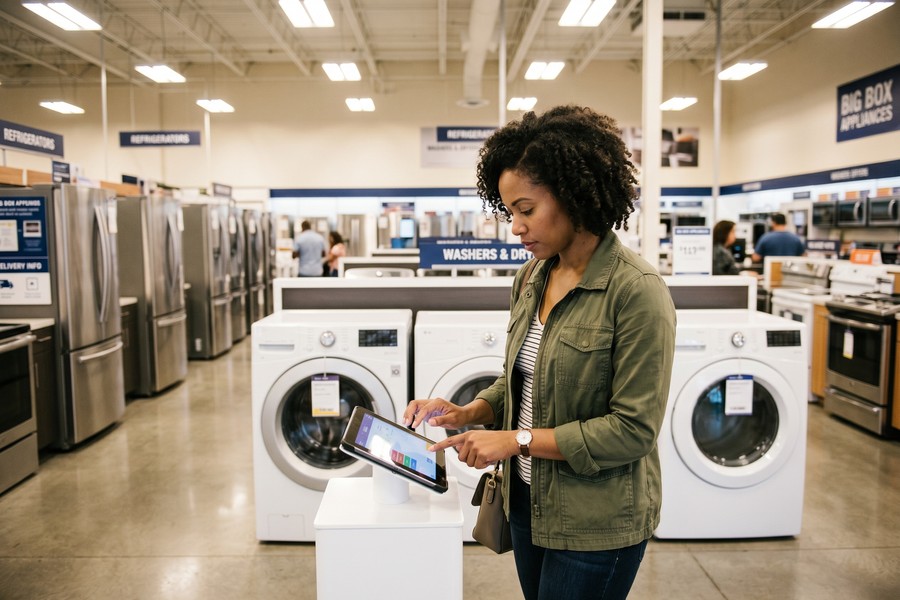
Rent-to-own stores like Aaron’s and Rent-A-Center offer same-day availability with minimal credit requirements, which makes them tempting when options are limited. The math is brutal, though. A washing machine that retails for $700 can cost $1,400-$2,100 over a standard rent-to-own contract. That is 2-3 times the retail price for the convenience of skipping a credit check. This option should be a genuine last resort, not a first call. If your credit has been damaged in the past and you are rebuilding, the approach in this guide on credit builder loans versus secured cards for thin files may help you qualify for better terms before the next emergency arrives.
Government and Nonprofit Programs Most People Never Find
Two federal programs specifically cover appliance repair and replacement, and most people searching for emergency funding never encounter them because national search results rarely surface them.
The Low Income Home Energy Assistance Program (LIHEAP), administered by the U.S. Department of Health and Human Services through state agencies, is commonly associated with utility bill help. Many states also allow LIHEAP funds to cover the repair or replacement of heating and cooling units for qualifying low-income households. Eligibility and available services vary by state. Check your state’s LIHEAP contact through the HHS Office of Community Services LIHEAP page.
The USDA Section 504 Home Repair Program provides loans and grants to very-low-income rural homeowners. Grants are available specifically for homeowners age 62 or older and do not need to be repaid if qualifications are met. HUD Title I loans and state-level emergency repair programs (including Tennessee’s Emergency Repair Program and North Carolina’s Urgent Repair Program) operate similarly, with income restrictions and priority given to elderly or disabled applicants.
For anyone who does not clearly qualify for a federal program, call 211. The 211 network connects callers to local social service agencies, church funds, utility company assistance programs, and city-level emergency appliance replacement assistance that never appear in national search results. This is often the fastest route for low-income households in a genuine crisis, and it is free to call.
If your application for emergency funding is denied regardless of the path, this walkthrough of every step to take after an emergency loan denial covers the specific next moves available.
Who Should and Who Should Not Use Each Approach
Good candidates
Most people can find a reasonable path if they match their situation to the right option.
- Homeowner with a credit score of 690 or above and a repair under $2,000: a 0% APR introductory card is the lowest-cost solution, provided the balance is paid before the promotional period ends.
- Low-to-moderate income household with a failing heating or cooling unit: LIHEAP may cover part or all of the replacement cost at no charge, especially in northern states during winter months.
- Homeowner with an open HELOC and equity above 20%: draw from the HELOC before considering any unsecured loan; the rate difference is meaningful over even 6-12 months.
- Rural homeowner age 62 or older with income below the USDA very-low threshold: USDA Section 504 grants do not require repayment and are the most favorable funding available in qualifying cases.
- Someone who bought the appliance within the past 90-120 days: check credit card purchase protection first; accidental damage may be covered with no borrowing required.
Who should skip it
Some situations call for a different approach entirely before adding debt.
- Anyone facing a repair quote exceeding 50% of replacement cost on an appliance over 10 years old: fund a replacement, not a repair on borrowed time.
- Borrowers with a debt-to-income ratio already above 43%: adding another monthly payment at any rate is a risk to existing obligations that should be weighed against the appliance urgency.
- Households without a plan to pay off BNPL installments on schedule: since late 2025, BNPL delinquencies report to all three major bureaus, making a missed payment a genuine credit risk rather than a minor inconvenience.
- Anyone considering rent-to-own as a first option rather than a last one: the total cost premium of 2-3 times retail is a significant financial setback for households already in a cash crunch.
Frequently Asked Questions
What is the cheapest way to pay for an emergency appliance repair?
The cheapest option is coverage you already have: credit card purchase protection, an extended warranty benefit, or an equipment breakdown endorsement on your homeowners policy. If none apply, a 0% APR introductory credit card is the next best option for borrowers with a score above 690, because the interest cost can be zero if you pay before the promotional period ends.
Does BNPL affect your credit score if you use it for appliance financing?
As of late 2025, yes. FICO now includes BNPL payment data in credit score calculations, and Affirm reports to Experian, Equifax, and TransUnion. A missed payment is now a reportable delinquency. BNPL is no longer a credit-invisible financing tool, which changes the risk calculation for anyone whose score is borderline.
Can I get free help paying for a broken furnace or air conditioner?
Potentially, yes. LIHEAP is a federal program administered by states that can cover heating and cooling appliance repair or replacement for qualifying low-income households, not just utility bills. Call 211 or visit your state’s energy assistance office to check eligibility. Availability and funding levels vary by state and time of year.
Is a personal loan or a credit card better for a $1,500 appliance replacement?
A 0% APR card beats a personal loan if you qualify and can pay the balance within the promotional window (typically 15-18 months). A personal loan at 8-12% APR is better than carrying a regular card balance at 22-28% APR long-term. The right answer depends on your credit score, how fast you can repay, and which option you can actually qualify for. Before applying, it is worth reviewing common borrower rights mistakes so you know what protections apply to your loan agreement.
Should I buy a home warranty to protect against future appliance emergencies?
A home warranty at $47-$82 per month (plus per-claim service fees) makes financial sense mainly for owners of older homes with multiple aging appliances where covered repair costs are likely to exceed $600-$1,000 per year. Most households will not hit that threshold in a given year. For a newer home or a single appliance concern, a credit card extended warranty is almost always a better free alternative to a paid retailer service plan.
What is the 50% rule for appliance repair vs. replacement?
The 50% rule states that if the repair cost exceeds half the price of a comparable new unit, replacement is the more cost-efficient choice. The rule tightens for appliances over 10-15 years old because aging units tend to require additional repairs within 1-2 years after the first fix. Apply it before deciding how much to borrow, not after.
Sources
- Federal Reserve Board of Governors, Report on the Economic Well-Being of U.S. Households in 2024: Savings and Investments
- American Home Shield, Appliance Purchase Statistics Survey (January 2025)
- U.S. Department of Health and Human Services, LIHEAP Program Overview
- Consumer Financial Protection Bureau, Credit Cards Consumer Resource