

Reviewed by the onlinepaydaynews.com Editorial Team
Our Take
For nursing home residents and their families, the single most protective move is reading every line of the admission agreement before signing and physically crossing out any language that assigns personal financial liability to a non-resident. Federal law under OBRA ’87 (42 CFR § 483.15) prohibits third-party guarantees at Medicare/Medicaid-certified facilities, and a November 2024 CMS guidance update extended that prohibition even to agreements that avoid the word “guarantee.” The case against this recommendation is straightforward: it does not protect families placing a loved one in an assisted living facility, where the federal rule does not apply, and it does not stop outside loan scammers who reach residents directly by phone or mail.
Nursing home loan scams are accelerating at a pace that most families do not appreciate until someone they love has already been targeted. According to the FBI’s 2025 elder fraud data, Americans over 60 reported losses of $4.885 billion to fraud in 2024 alone, a 43% jump from the prior year, with the average victim losing roughly $38,500 per incident. That number keeps climbing, and nursing home residents, who are isolated, often cognitively impaired, and financially dependent on fixed incomes, sit at the center of the target.
This article is for adult children, legal representatives, and residents themselves who want to understand both the scams coming from outside the facility and the exploitative financial practices that can originate inside it. What makes the recommendation work is knowing exactly which laws protect you and where those laws stop, because the gap between a Medicare-certified nursing home and an assisted living facility is where families get hurt most.
Key Takeaways
- Older Americans lost $4.885 billion to fraud in 2024, a 43% increase over 2023, according to FBI elder fraud data, nursing home residents are among the highest-risk subgroup due to isolation and fixed incomes.
- Federal law explicitly prohibits Medicare/Medicaid-certified nursing homes from requiring a third-party financial guarantee as a condition of admission, and a November 2024 CMS guidance update (effective March 2025) makes clear this applies even when the word “guarantee” is absent from the paperwork, per CFPB nursing home debt collection guidance.
- Adults 60 and older reported $2.4 billion in fraud losses to the FTC in 2024, up fourfold from approximately $600 million in 2020, according to the FTC’s 2025 Report to Congress on Protecting Older Consumers.
- The federal third-party guarantee prohibition does not cover assisted living facilities, families placing loved ones in ALFs have no comparable federal protection and can be legally bound to personal guarantees, a gap almost universally missed in consumer-facing guidance on this topic.
- In my reading of elder law advocates’ survey findings, the rule against guarantee clauses is routinely violated in practice: 72% of advocates had seen noncompliant admission agreements, meaning the law’s existence is not sufficient protection on its own.
What Is a Nursing Home Loan Scam, and Why Are Residents Such Easy Targets?
The term “nursing home loan scams” covers two distinct threats that most families conflate: predatory solicitations from outside fraudsters, and exploitative financial obligations embedded in the facility’s own paperwork. Both are real, both cause serious harm, and the defenses against each are different.
Outside scammers deploy classic advance-fee mechanics: a caller informs the resident they are prequalified for a cash loan, guaranteed regardless of credit history, and simply need to pay a processing fee upfront to unlock the funds. The loan never arrives. The FTC warns consumers explicitly to ignore any unsolicited call claiming preapproval for a loan they never applied for, and to report such contacts at ReportFraud.ftc.gov rather than engaging.
Why Residents Are Disproportionately Vulnerable
Nursing home residents occupy a position that is almost purpose-built for financial exploitation. They have reduced mobility and social contact, which means scammers can operate without interference. Many receive predictable monthly income through Social Security or pension deposits, making them financially legible targets. Cognitive decline, present in a significant share of the long-term care population, limits the ability to evaluate suspicious offers critically.
The facility setting creates an additional layer of vulnerability: residents may rely on staff for communication, which means a bad actor inside the facility has unusual access. What we tell readers in this situation is that physical presence from family members is one of the most underrated protective factors available.
What I see in practice: The families most caught off guard are not negligent, they are often the ones who visited regularly and still missed financial changes because they assumed the facility’s billing was legitimate and never reviewed the resident’s personal bank statements separately. A monthly account review is not paranoia; it is basic oversight.
“Fraud affects people of all ages, but when older adults are victimized, the impact is often catastrophic.”
The Admission Agreement Trap: How Loan-Like Guarantees Get Slipped In at the Door
The most dangerous financial document a family member signs at a nursing home is the admission agreement, and most families sign it in a crisis, under time pressure, without reading every page. That is exactly when noncompliant guarantee language does its work.
Terms like “responsible party,” “financial agent,” and “authorized representative” appear in these agreements with varying degrees of specificity. Some are legitimate designations for someone managing the resident’s own funds. Others cross the legal line by creating personal liability for the signer. The distinction is fact-specific: signing as an agent for the resident’s money is lawful; signing in a way that exposes your personal assets is not, and federal law has prohibited this at Medicare/Medicaid-certified nursing homes since the Nursing Home Reform Act of 1987 (OBRA ’87, codified at 42 CFR § 483.15(a)(3)).
The November 2024 CMS Update Most Articles Have Not Covered
Here is the development that most guidance on this topic misses entirely. In November 2024, the Centers for Medicare and Medicaid Services (CMS) issued updated guidance that expanded enforcement of the guarantee prohibition. The prior guidance left some ambiguity about whether a facility could use non-guarantee language to achieve the same outcome. The 2024 update, effective March 2025, makes explicit that agreements are noncompliant even when they avoid the word “guarantee”, if the practical effect is to assign personal financial liability to a non-resident signer, the clause is prohibited. Families reviewing admission paperwork right now should apply that standard, not the older, narrower interpretation.
Before signing anything, read for these specific patterns and cross them out if present:
- Any clause stating you “agree to pay” or “will be responsible for” the resident’s charges from your own funds
- Language conditioning admission or continued stay on the signer’s financial commitment
- Any provision allowing the facility to pursue the signer personally in collections
- The phrase “responsible party” tied to personal payment rather than to managing the resident’s existing assets
A resident who is already admitted cannot be discharged for refusing to sign a guarantee. If a facility threatens discharge to coerce a signature, that itself is a reportable violation. If you are already navigating a disputed debt situation with a lender or facility, the guidance in our piece on what most borrowers get wrong about their right to dispute a loan covers the procedural steps worth knowing.
Outside Loan Solicitation Scams That Target Residents Directly
Beyond the admission agreement, residents face a separate category of nursing home loan scams that arrive from the outside. Three types are especially active in the nursing home environment.
Advance-fee loan scams are the most common: a resident receives a call, letter, or visit from someone claiming they can arrange a personal loan for a fee paid upfront. No legitimate lender charges a fee before disbursing funds. If any upfront payment is requested before receiving a loan, the offer is fraudulent, full stop.
Pension advance schemes are more sophisticated and significantly underreported. These products are marketed as lump-sum advances against a Social Security benefit or pension payment, structured to look like a loan. In practice, the resident signs over a portion of their monthly income stream in exchange for a lump sum at an effective interest rate that can exceed 100%. The CFPB’s Office for Older Americans has specifically flagged these arrangements as high-risk for fixed-income seniors. For nursing home residents whose Social Security deposit may represent their only discretionary income, losing a share of it to a pension advance scheme can be financially devastating.
Fake government-grant loan offers round out the common external scam types. These typically claim to offer a “government grant” or “federal assistance loan” tied to the resident’s age, veteran status, or Medicare enrollment. No government agency offers loans or grants through unsolicited contact.
Where this gets tricky: Pension advance pitches in particular are hard for families to spot because the documentation looks professional and the math is buried in a multi-page contract. The tell is the monthly deduction from the resident’s income, it keeps running long after the lump sum was spent.

Red Flags: How to Recognize a Nursing Home Loan Scam in Real Time
The universal warning signs of predatory loan solicitation are well-established, and they apply equally inside and outside a nursing home setting. Any offer requiring upfront payment before loan disbursement is illegal under federal law, the FTC’s Telemarketing Sales Rule prohibits advance fees on loan products marketed by phone. That alone disqualifies most scam offers without any further analysis.
The warning signs specific to the nursing home environment are less widely known:
- A new “visitor,” “volunteer,” or contractor who takes a sudden and specific interest in the resident’s financial situation
- Unexplained documents appearing for signature, particularly outside of normal business hours or without a family member present
- Staff offering to “help” a resident manage, redirect, or consolidate funds, any financial involvement by non-administrative staff is outside scope
- Sudden changes in the resident’s bank account balance or new payees appearing on the account
- High-pressure deadlines: “You must decide today” or “This offer expires in 24 hours” designed to prevent consultation with family or an attorney
Families should also know how to distinguish a facility’s legitimate billing process from a coercive scheme. Legitimate nursing homes send itemized monthly statements consistent with the CMS billing standards, allow time for review and dispute, and do not threaten immediate discharge or credit damage to coerce payment. If a billing communication looks more like a collection threat than an invoice, that is worth documenting and reporting. Our overview of the CFPB complaint database explains how to use that tool to research a facility’s complaint history before committing.
| Scam Type | How It Reaches the Resident | Key Red Flag | Reporting Channel |
|---|---|---|---|
| Advance-Fee Loan | Phone call, mailed flyer | Upfront fee required before any funds disbursed | FTC ReportFraud.ftc.gov |
| Pension Advance Scheme | Phone, in-person, mailed offer | Monthly income deducted indefinitely; effective APR above 100% | CFPB, state AG |
| Fake Government Grant/Loan | Phone, letter, email | Claims government affiliation with no official contact channel | FTC, FBI IC3 |
| Admission Agreement Guarantee | Facility admission paperwork | Personal liability language for non-resident signer | CFPB, state Ombudsman |
| Staff-Facilitated Exploitation | Internal, via trusted staff contact | Unexplained account changes; documents signed without family notice | HHS OIG, Medicaid Fraud Control Unit |
Who Is Legally Liable, and Who Definitely Is Not
Federal law is unambiguous on this point: a nursing home cannot require or even request a third party to personally guarantee a resident’s debt as a condition of admission or continued stay. That prohibition is not limited to formal guaranty contracts; the November 2024 CMS update makes clear it covers any agreement that has the practical effect of making a non-resident personally liable.
There is an important and commonly misunderstood carve-out. A person who holds a durable Power of Attorney or is otherwise the resident’s legal financial representative can be asked to sign a payment agreement, but only in their capacity as the resident’s agent, using the resident’s own funds. They do not become personally liable. The moment an agreement reaches beyond the resident’s own assets to the signer’s personal finances, it crosses the legal line.
The Assisted Living Gap
This is the protection failure that almost no consumer-facing article addresses directly. The federal third-party guarantee prohibition applies exclusively to facilities that participate in Medicare and Medicaid. Assisted living facilities (ALFs) typically do not hold that certification. A family placing a loved one in an assisted living facility has no equivalent federal protection and can, in fact, be legally bound to a personal guarantee they sign at admission. State laws vary significantly, some states have enacted their own protections, many have not. Anyone signing ALF admission paperwork should review it with an elder law attorney before committing.
If you want to understand how to check whether a facility has a complaint history before signing anything, spotting red flags before you apply or sign covers the research process in practical terms.
“The FTC’s latest report details the agency’s commitment to protecting older Americans from scams that rob them of their hard-earned money.”
What Families Should Do the Moment They Suspect a Scam
Speed is the most important variable after a scam is discovered. Most financial losses from elder fraud are never recovered, which means the goal shifts immediately from “fix this” to “stop further damage.”
The action sequence, in order:
- Contact the resident’s bank immediately. Under the Senior Safe Act, financial institutions are permitted to place a temporary hold on suspicious transactions and report suspected exploitation without liability. This is the fastest financial lever available. Ask the bank specifically about placing an elder financial exploitation flag on the account.
- Document everything before it disappears. Photograph or copy any documents the resident signed, note dates and names, and write down everything the resident recalls about the contact. Memories fade and documents get removed.
- Contact the facility administrator in writing. Email creates a timestamped record. If the scheme involves facility staff or paperwork, written notice to administration starts the formal complaint clock.
- Report to the right channels. The National Elder Fraud Hotline (833-FRAUD-11) connects callers to case managers. The state Long-Term Care Ombudsman advocates for residents’ rights and investigates complaints against facilities. For facility-level Medicaid fraud, the state Medicaid Fraud Control Unit is the correct agency. For advance-fee loans or predatory lending, file with the FTC and the CFPB’s Office for Older Americans. The HHS OIG’s Operation CARE accepts tips about fraud targeting nursing home residents and Medicare beneficiaries.
Recovering money is genuinely difficult. What families can often accomplish is stopping the ongoing loss and creating a documented record that supports a legal claim or regulatory action.
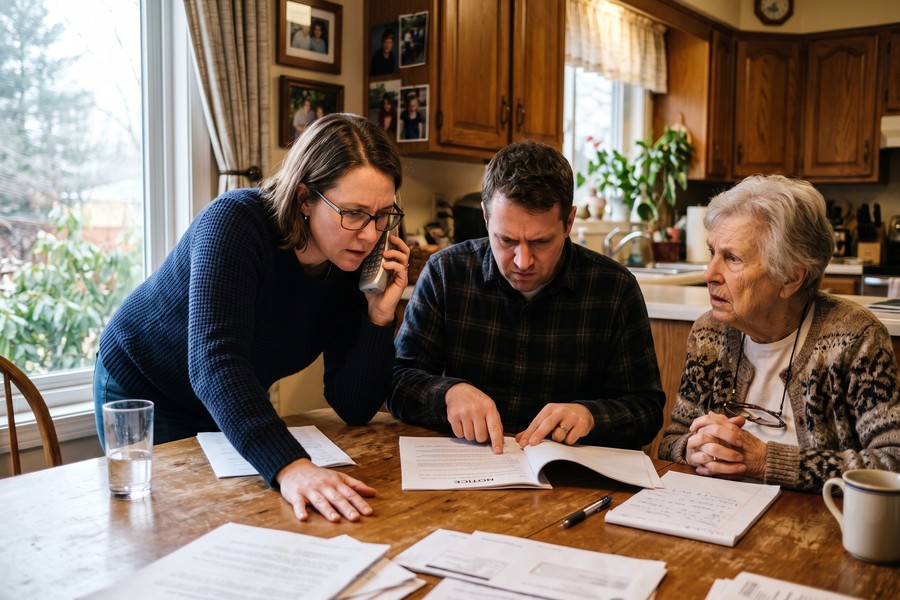
Practical Safeguards: How to Protect a Resident Before a Scam Happens
Prevention is more effective than recovery in every elder fraud case, and the highest-leverage protective actions happen before a resident is even admitted.
Read the full admission agreement. Not a summary, every page. Strike out any third-party liability language before signing. Ask the admissions coordinator to explain what “responsible party” means in their specific agreement. If they cannot answer clearly, that itself tells you something. Verify the facility’s complaint history at Medicare’s Care Compare tool before making a placement decision.
Establish a durable financial Power of Attorney for the resident if one is not already in place, this is the clearest legal structure for managing a resident’s own funds legitimately. Be aware, though, that a POA holder becomes a point of contact for any bad actor who knows the resident has a designated financial representative. The POA holder can be targeted for manipulation or, in cases involving family conflict, for false accusations. Having a second trusted contact named with the resident’s financial institution adds a check on that risk.
Communication habits matter more than most families realize. Regular visits disrupt the isolation that scammers depend on. A standing monthly review of the resident’s bank and benefit statements catches unauthorized transactions before they compound. If the resident has capacity for it, a direct and repeated conversation about the rule that no legitimate lender, government agency, or facility will ever ask for upfront payment is worth having more than once. If you need to understand what emergency options look like for a family member managing a resident’s finances under pressure, our breakdown of how fast emergency money actually moves by funding source is a useful reference.
What clients often miss: Designating a trusted contact with the bank under the Senior Safe Act framework is a five-minute conversation with a branch manager that most families have never had. It costs nothing and gives the institution a person to call when something looks wrong, before the money moves.
Where This Recommendation Falls Short
The core recommendation in this article is straightforward: read admission paperwork carefully, cross out noncompliant guarantee language, and use the Senior Safe Act to build a financial tripwire at the resident’s bank. That recommendation is sound for families dealing with Medicare/Medicaid-certified nursing homes. The drawback is that it covers only part of the problem.
The most significant tradeoff is the assisted living gap. If the facility is an assisted living facility rather than a licensed nursing home, the federal third-party guarantee prohibition does not apply. Families who read this article, take the recommended steps, and then place a loved one in an ALF will have incomplete protection. State law may fill some of that gap depending on where you live, but the patchwork is inconsistent and not reliably protective.
The catch in the legal framework is also real. Courts have ruled differently in cases with nearly identical facts about what constitutes an “agency” signature versus a “guarantee.” A family member who signs a document they believe is an agency designation may still face a collections action, and whether they win depends on the specific language, the state’s contract law, and how aggressively they litigate. This article cannot substitute for an elder law attorney reviewing the actual document. The legal standard is specific enough that getting it right matters.
There is also an honest concession about debt disputes: not every aggressive billing letter from a nursing home is a scam. Residents and families sometimes do owe valid debts for care that was genuinely rendered. The line between an unenforceable guarantee and a legitimate agency obligation is fact-specific. Walking away from every billing demand without legal review is not the right response, some of those demands are valid, and ignoring them creates additional legal exposure. The goal is to assess each situation on its actual terms, not to treat every facility billing as fraudulent.
Finally, most reported financial losses from elder fraud are never recovered. Speed of response limits additional damage; it rarely undoes the loss already suffered. Families should not enter a reporting process expecting restitution. The emotional harm from these scams, anxiety, depression, loss of trust in caregivers, is as real as the financial loss and warrants its own attention through the facility’s social work staff or an outside counselor. For readers navigating the aftermath of a fraudulent loan or denied financial remedy, the steps in our guide to what to do after an emergency loan is denied address some of the financial recovery process.
How We Sourced This
This article draws from federal regulatory sources including the Consumer Financial Protection Bureau’s Issue Spotlight on nursing home debt collection, the FTC’s 2025 Report to Congress on Protecting Older Consumers, the FBI’s Internet Crime Complaint Center elder fraud data for 2024 (published 2025), and the HHS OIG’s Operation CARE enforcement framework. Statistics cited reflect data published through November 2025; any figures predating that window are identified with their original publication year. Information about the November 2024 CMS third-party guarantee guidance was sourced from CMS’s official enforcement updates effective March 2025 and cross-referenced against the CFPB’s nursing home debt collection analysis. Sources were selected based on government or regulatory authority; no data was drawn from promotional materials or commercially affiliated publications. All hyperlinks were verified as active as of November 2025.
Frequently Asked Questions
Can a nursing home legally require my family member to sign a personal guarantee?
No. Federal law under OBRA ’87 (42 CFR § 483.15(a)(3)) prohibits Medicare/Medicaid-certified nursing homes from requiring a third-party financial guarantee as a condition of admission or continued stay. A November 2024 CMS guidance update reinforced that even agreements using non-guarantee language are noncompliant if they functionally assign personal liability to a non-resident signer.
What is a pension advance scam and how does it target nursing home residents?
A pension advance scheme offers a lump-sum cash payment in exchange for assigning a portion of the resident’s monthly Social Security or pension income to the scammer, structured to look like a loan. Effective interest rates on these products frequently exceed 100%. Nursing home residents on fixed incomes are targeted specifically because their monthly benefit deposits are predictable and automatic.
What should I do if I receive an unsolicited call offering a loan for a nursing home resident?
Do not call back and do not provide any personal or financial information. The FTC advises consumers to hang up on unsolicited preapproval calls and report them at ReportFraud.ftc.gov. No legitimate lender contacts borrowers this way, and no legitimate loan requires an upfront payment before funds are disbursed.
Does the federal no-guarantee rule apply to assisted living facilities?
No. The federal prohibition applies only to facilities certified under Medicare or Medicaid. Assisted living facilities are typically not covered, which means families can be legally bound to personal guarantees they sign in ALF admission agreements. State laws vary on this point, and consulting an elder law attorney before signing ALF paperwork is advisable.
How does the Senior Safe Act help protect nursing home residents?
The Senior Safe Act allows banks and credit unions to report suspected elder financial exploitation and place temporary holds on suspicious transactions without incurring legal liability. Families can proactively name a trusted contact at the resident’s financial institution, giving the bank a person to notify if unusual activity appears on the account before money is transferred.
Where do I report a nursing home loan scam?
Report outside loan solicitation scams to the FTC at ReportFraud.ftc.gov and to the CFPB at consumerfinance.gov. For facility-level fraud involving Medicaid, contact your state’s Medicaid Fraud Control Unit. For complaints about residents’ rights violations, contact the state Long-Term Care Ombudsman. The National Elder Fraud Hotline at 833-FRAUD-11 connects callers with case managers who can direct them to the right agency.
Can a family member who holds Power of Attorney be personally liable for a resident’s nursing home debt?
A POA holder who signs a payment agreement strictly in their capacity as the resident’s agent, using the resident’s funds only, does not incur personal liability. Personal liability arises only when the agreement, by its terms, reaches the signer’s own assets. The distinction is specific to the document’s language, which is why legal review before signing matters.
Sources
- Federal Bureau of Investigation, Elder Fraud Resources and 2024 Loss Data
- Federal Trade Commission, Protecting Older Consumers 2024-2025 Report to Congress
- Consumer Financial Protection Bureau, Issue Spotlight: Nursing Home Debt Collection
- FTC Consumer Advice, Ignore Unexpected Calls About Loans You Didn’t Apply For
- HHS Office of Inspector General, Operation CARE: Protecting Nursing Home Residents
- FBI, Elder Fraud Cases Ahead of World Elder Abuse Awareness Day (2025)
- AARP, FBI Report on Elder Fraud 2024: Kathy Stokes Analysis
- Medicare.gov, Care Compare: Nursing Home Quality and Complaint Data