
Fact-checked by the onlinepaydaynews.com editorial team
Quick Answer
Emergency loans for hourly workers are available in July 2025, even with irregular schedules, but approval depends on proving consistent income through bank statements, pay stubs, or employer letters. Most lenders require at least 3 months of income history and a minimum monthly income of $800–$1,000. Online lenders and credit unions tend to be the most flexible options for shift workers.
Getting emergency loans for hourly workers is absolutely possible in July 2025 — but the process requires more preparation than it does for salaried employees. Because hourly workers often have fluctuating paychecks, lenders scrutinize income documentation more carefully. According to the U.S. Bureau of Labor Statistics, roughly 55% of all American workers are paid on an hourly basis, meaning this challenge affects tens of millions of people navigating financial emergencies every year.
The rise of gig platforms, on-call scheduling, and part-time shift work has made income verification a moving target for traditional lenders. Many conventional banks still use algorithms built for W-2 salaried borrowers, which automatically flags hourly income as “unstable” — even when a worker clocks consistent hours week after week. That disconnect leaves a large gap between available loan products and the workers who need them most.
This guide is for retail associates, warehouse staff, restaurant workers, healthcare aides, and anyone else earning hourly wages who needs fast access to emergency funds. By the end, you will know exactly which loan types accept irregular income, how to document your earnings effectively, and how to avoid the high-cost traps that prey on shift workers in financial distress.
Key Takeaways
- 55% of U.S. workers are hourly employees, according to Bureau of Labor Statistics data, making income flexibility a widespread lending issue.
- Online personal loan lenders like Upstart and LendingClub use alternative data models that weigh employment history alongside credit score, improving approval odds for shift workers.
- Payday loans carry APRs averaging 400% or higher, according to the Consumer Financial Protection Bureau, making them one of the costliest emergency options available.
- Credit union payday alternative loans (PALs) cap interest at 28% APR under National Credit Union Administration rules, offering a safer borrowing path for hourly workers.
- Lenders typically want to see at least 3 months of consistent income history when evaluating non-traditional pay patterns, per standard underwriting guidelines.
- Borrowers who provide bank statements covering 90 days of deposits alongside pay stubs report faster approvals with online lenders than those submitting pay stubs alone.
In This Guide
- Step 1: Why Does Irregular Income Make Loan Approval Harder?
- Step 2: Which Emergency Loan Types Work Best for Hourly Workers?
- Step 3: What Documents Do You Need to Apply With Irregular Income?
- Step 4: How Do You Compare Emergency Loan Lenders Without Getting Misled?
- Step 5: How Do You Apply and Get Funded as Quickly as Possible?
- Step 6: What If Your Emergency Loan Application Gets Denied?
- Frequently Asked Questions
Step 1: Why Does Irregular Income Make Loan Approval Harder?
Lenders flag irregular income because their automated underwriting systems are built to calculate a predictable monthly debt-to-income (DTI) ratio. When your paycheck amount changes week to week due to varying hours, overtime, or shift cancellations, the system struggles to establish a reliable baseline income figure.
How Lenders Evaluate Hourly Income
Most traditional banks use your gross monthly income as the foundation of the approval decision. For a salaried worker, this number is constant. For an hourly worker, lenders typically average your last 2–3 months of earnings or use your year-to-date (YTD) figure divided by the number of months worked. This averaging approach can hurt workers who had a slow month recently, even if their long-term income is strong.
Some lenders also use a concept called income stability scoring, which penalizes high variance between pay periods. A worker who earns $800 one week and $1,400 the next may score lower than a worker consistently earning $1,100 — even though their average is identical.
What to Watch Out For
Avoid lenders that require you to project future income, especially for on-call positions. If you cannot guarantee future hours, projecting income you may not receive can create repayment problems. Stick to lenders who evaluate actual historical earnings rather than anticipated wages.
Many lenders use an automated system called an Automated Underwriting System (AUS) developed by Fannie Mae or Freddie Mac. These systems were designed primarily for mortgage lending and can systematically undervalue non-traditional income patterns common among shift workers.
Step 2: Which Emergency Loan Types Work Best for Hourly Workers?
The best emergency loan options for hourly workers are online personal loans, credit union payday alternative loans (PALs), and cash advance apps — in that order of cost-effectiveness. Each handles irregular income differently, and choosing the right one can save you hundreds of dollars.
Online Personal Loans
Online lenders such as Upstart, LendingClub, and Avant use broader underwriting criteria than traditional banks. Upstart, for example, factors in employment history and education level alongside credit score, which benefits long-tenured hourly workers even with variable pay. Loan amounts typically range from $1,000 to $50,000, with APRs between 6% and 36% for qualified borrowers.
If you want a side-by-side view of how funding timelines compare across different emergency sources, the guide on how fast emergency funding actually arrives breaks down every major option by speed and cost.
Credit Union Payday Alternative Loans (PALs)
The National Credit Union Administration (NCUA) created PALs specifically as a safer alternative to payday loans. PAL I loans offer $200–$1,000 with a maximum 28% APR. PAL II loans go up to $2,000 and do not require a waiting period. Credit unions are known for manual underwriting, meaning a human reviews your file and can consider context that an algorithm would miss.
Cash Advance Apps
Apps like Earnin, Dave, and Brigit advance a portion of your earned wages before payday. Most require a connected bank account showing regular direct deposits. Advances are typically capped at $100–$750 per pay period, making them useful for small emergencies but insufficient for larger crises. Fees are low — often $1–$9.99 per month as a subscription — but tips on Earnin can add up if used frequently.
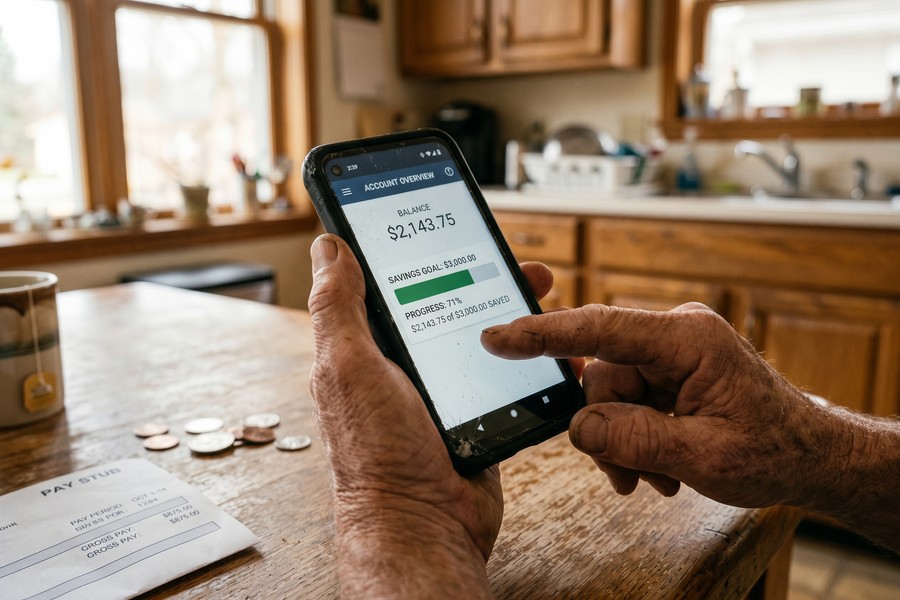
Payday loans remain the most accessible but also the most dangerous option for emergency loans for hourly workers. The CFPB reports average payday loan APRs of 400% or more. A $300 loan due in two weeks can easily spiral into a debt cycle that takes months to escape.
| Loan Type | Typical Amount | APR Range | Funding Speed | Income Flexibility |
|---|---|---|---|---|
| Online Personal Loan | $1,000–$50,000 | 6%–36% | 1–3 business days | Moderate — averages last 2–3 months |
| Credit Union PAL | $200–$2,000 | Up to 28% | 1–5 business days | High — manual underwriting |
| Cash Advance App | $100–$750 | 0% (subscription fee) | Same day–1 day | High — requires direct deposit history |
| Payday Loan | $100–$1,000 | 300%–400%+ | Same day | Very high — minimal verification |
| Employer Paycheck Advance | $100–$500 | 0% | 1–3 days | Very high — no credit check |
The comparison above makes clear that PALs and cash advance apps offer the best combination of low cost and income flexibility for most hourly workers. Online personal loans are the right choice when you need more than $2,000 and have at least a fair credit score.
According to the NCUA, credit unions issued over $250 million in payday alternative loans in a recent reporting year, demonstrating that this option is both widely available and actively used by working Americans.
Step 3: What Documents Do You Need to Apply With Irregular Income?
The single most important thing an hourly worker can do before applying for an emergency loan is assemble a complete income documentation package. Lenders cannot approve what they cannot verify, and your ability to prove stable earning patterns — even if amounts vary — is what separates an approval from a denial.
How to Do This
Gather the following documents before starting any application:
- Bank statements: At least 90 days showing all direct deposit transactions. This is often more persuasive than pay stubs alone because it reflects actual cash flow.
- Pay stubs: The most recent 2–4 stubs. If your employer uses a payroll platform like ADP or Paychex, you can usually download digital stubs within minutes.
- Employer verification letter: A letter on company letterhead stating your position, hourly rate, and average scheduled hours per week. Many employers will provide this through HR on request.
- Tax returns: Your most recent W-2 or 1040 if you have been in the same job for at least a year. YTD earnings reported on W-2 forms carry strong credibility with underwriters.
- Government-issued ID and Social Security number: Required by all lenders under federal identity verification rules.
For a detailed walkthrough tailored specifically to retail and shift workers, the guide on how retail workers can qualify for a short-term loan on hourly pay covers the documentation process step by step.
What to Watch Out For
Do not round up or overstate your average hours when filling out applications. Lenders cross-reference stated income against bank deposit history during underwriting. A significant gap between what you report and what your bank shows can trigger a fraud flag and result in immediate denial — or worse, an investigation.
“Hourly workers are often their own worst enemies in the application process — they either undersell their income or overstate it out of desperation. The most successful applicants are the ones who bring in 90 days of bank statements and let the actual numbers do the talking.”
If your hours vary significantly but your employer guarantees a minimum number of hours per week, get that guarantee in writing from your supervisor or HR department. Lenders treat guaranteed minimums as more reliable than averaged historical income, which can raise your qualifying loan amount.
Step 4: How Do You Compare Emergency Loan Lenders Without Getting Misled?
Comparing emergency loan lenders requires looking beyond the advertised interest rate to the total cost of borrowing, including fees, prepayment penalties, and how lenders handle missed payments. For hourly workers with variable income, repayment flexibility matters just as much as the initial APR.
How to Do This
Use the Annual Percentage Rate (APR) — not just the interest rate — as your primary comparison metric. APR includes fees and reflects the true yearly cost. The CFPB’s loan comparison resources explain how to read loan disclosures so you can spot hidden costs before you sign.
Check whether the lender reports to all three major credit bureaus: Equifax, Experian, and TransUnion. A lender that reports on-time payments can help you build credit while managing the emergency. One that does not report offers no long-term benefit beyond the immediate cash.
Before committing to any lender you have not used before, it is worth reading the guide on spotting fake loan companies before you apply. Predatory lenders disproportionately target hourly workers searching for fast cash online.
You can also use the CFPB Complaint Database to look up any lender by name and review complaints filed by real borrowers. A pattern of unresolved complaints about hidden fees or aggressive collection is a major red flag.
What to Watch Out For
Watch for lenders advertising “no credit check” emergency loans with unusually fast approvals. These are almost always payday or installment loan products with triple-digit APRs. The absence of a credit check usually means the lender is compensating for risk with extremely high interest rates rather than responsible underwriting.

Step 5: How Do You Apply and Get Funded as Quickly as Possible?
Most online lenders can fund emergency loans for hourly workers within 1 to 2 business days if you submit a complete application with all required documents. Same-day funding is available from some lenders if you apply before noon and have an account at a participating bank.
How to Do This
Follow this sequence for the fastest possible approval and funding:
- Pre-qualify with multiple lenders first. Use soft-pull pre-qualification tools on sites like NerdWallet or Bankrate to compare offers without affecting your credit score. Most major online lenders offer this feature.
- Choose the lender with the best APR that accepts your income type. Confirm they accept bank statements as proof of income rather than requiring only pay stubs.
- Upload all documents at once. Incomplete applications are the single biggest cause of funding delays. Have your bank statements, pay stubs, ID, and employer letter ready before you start.
- Request direct deposit to a checking account. Paper checks and debit card transfers take longer. ACH direct deposit is typically the fastest disbursement method.
- Respond to verification requests within the hour. Many lenders send follow-up document requests during underwriting. A fast response can move your file to the front of the queue.
For a more detailed breakdown of how funding timelines differ by lender type, the post on how fast emergency money actually arrives by funding source provides realistic timelines you can plan around.
What to Watch Out For
Avoid applying to multiple lenders simultaneously using hard-pull applications. Each hard inquiry can lower your credit score by 5–10 points temporarily, according to FICO. Multiple hard pulls in a short window may signal financial distress to future lenders.
If you work for a large employer — retailers like Walmart, Amazon, or hospital networks — check whether your company offers an earned wage access (EWA) program. EWA platforms like DailyPay or Even let you withdraw earned wages before payday at zero or near-zero cost, often faster than any external lender.
Step 6: What If Your Emergency Loan Application Gets Denied?
A denial for an emergency loan is not a dead end. Lenders are required by the Equal Credit Opportunity Act (ECOA) to send you an adverse action notice explaining why you were denied. That notice is your roadmap for fixing the problem and applying again successfully.
How to Do This
When you receive the denial letter, take these steps immediately:
- Read the stated reason for denial carefully. Common reasons for hourly workers include insufficient income history, high debt-to-income ratio, or insufficient credit history.
- Pull your free credit reports from AnnualCreditReport.com and check for errors. A 2021 Federal Trade Commission study found that 1 in 5 consumers had an error on at least one credit report that could affect their score.
- Consider adding a co-signer with stable income or applying for a secured loan using a savings account as collateral. Both options reduce lender risk and improve approval odds significantly.
- Apply to a credit union instead. Credit unions deny fewer applicants than banks for income-related reasons because they use manual underwriting.
The detailed guide on what to do after an emergency loan is denied walks through every recovery option available, including nonprofit emergency assistance programs and community lending alternatives.
What to Watch Out For
Do not apply to a payday lender the moment an online personal loan is denied. The temporary frustration of a denial should not push you into a 400% APR product. Take a breath, review the denial reason, and pursue a lower-cost alternative before resorting to high-cost short-term loans.
“The most common mistake I see after a loan denial is the panic application — people just start clicking through any lender that will say yes, without reading the terms. That’s how a $500 emergency turns into a $2,000 debt spiral.”
Under the Fair Credit Reporting Act (FCRA), if a lender denies your application based on information in your credit report, you are entitled to a free copy of that report within 60 days of the denial. This is separate from your annual free report from AnnualCreditReport.com.

Frequently Asked Questions
Can I get an emergency loan if my hours change every week?
Yes, you can get an emergency loan with variable hours, but you will need to document your income through bank statements rather than relying on pay stubs alone. Lenders that use manual underwriting — such as credit unions and some online lenders — are most likely to approve borrowers with inconsistent weekly hours. Providing 90 days of bank statements that show regular deposits strengthens your application significantly.
What is the minimum income needed to qualify for an emergency personal loan as an hourly worker?
Most online personal loan lenders require a minimum monthly income of $800 to $1,200, though this varies by lender and loan amount. Lenders like Avant and Upstart do not publicly list a hard income minimum, but their internal underwriting typically filters out applicants earning below that threshold. Your debt-to-income ratio matters just as much as the raw income figure — keeping monthly debt payments below 40% of income improves your odds.
Do I need a good credit score to get emergency loans as an hourly worker?
No, a good credit score is not required for all emergency loan types. Credit union PALs, cash advance apps, and some online lenders like Avant or OneMain Financial specialize in borrowers with fair or poor credit scores — generally defined as below 670 by FICO. However, a lower score means a higher APR, so improving your score even slightly before applying can reduce your total cost. If you need to build credit first, the comparison of credit builder loans versus secured cards for thin files outlines your fastest options.
How do cash advance apps work differently from emergency personal loans for hourly workers?
Cash advance apps advance a portion of wages you have already earned, while emergency personal loans are new credit extended based on your projected ability to repay. Apps like Earnin and Dave are faster (often same-day) and have lower fees, but they cap advances at $100–$750, making them unsuitable for large emergencies. Personal loans can cover $1,000–$50,000 but take 1–3 business days and require a formal credit check. The breakdown of cash advance apps versus emergency personal loans helps you decide which fits your specific situation.
Should I use a co-signer on an emergency loan if my income is too irregular?
Adding a co-signer can significantly improve your approval odds and lower your interest rate if your income history is short or inconsistent. A co-signer with steady, verifiable income essentially “backstops” your application in the lender’s eyes. However, co-signing is a serious commitment — if you miss payments, the co-signer’s credit is damaged too. Read the full breakdown on when a co-signer helps and when it backfires before asking someone to take on that risk.
What if my employer offers a paycheck advance — is that better than an emergency loan?
An employer paycheck advance is almost always the best first option for small emergencies because it typically carries 0% interest and no credit check. Many large employers — especially retailers and warehouse operators — offer paycheck advances through HR or through embedded apps like DailyPay. The limitation is that most advance programs cap at one paycheck’s worth of earnings, so they only work for emergencies under roughly $500–$800. For larger amounts, an online personal loan or credit union PAL is a better fit.
How do emergency loans for hourly workers affect my credit score?
A standard personal loan application creates a hard inquiry that temporarily lowers your credit score by 5–10 points, per FICO guidelines. Once the loan is active, on-time monthly payments improve your payment history — the largest factor in your score, accounting for 35% of your FICO calculation. Missing payments, however, can cause significant long-term damage. Cash advance apps and employer advances typically do not affect your credit score at all because they do not involve formal credit checks or reporting.
Are there emergency loan scams that specifically target hourly workers?
Yes. Hourly workers in financial distress are specifically targeted by advance-fee loan scams, fake lender websites, and predatory installment loan companies with deceptive APR advertising. Common red flags include lenders that ask for upfront fees before funding, contact you unsolicited by text, or cannot provide a physical address. The guide on how to spot fake loan companies before you apply covers every major warning sign with real examples.
What is the fastest way to get emergency money if I am an hourly worker with no credit history?
The fastest options with no credit history are cash advance apps (same-day, no credit check), employer paycheck advances (1–3 days, no credit check), and credit union PALs (1–5 days, manual underwriting). Cash advance apps require only an active bank account with at least two months of direct deposit history — no credit score at all. For a case study of how a warehouse worker with no credit history covered a $3,500 emergency, read the real-world example at this guide on emergency cash with no credit history.
Sources
- U.S. Bureau of Labor Statistics — Employed persons by occupation, sex, and class of worker
- Consumer Financial Protection Bureau — What is a payday loan?
- National Credit Union Administration — Payday Alternative Loans
- Federal Trade Commission — Credit Report Accuracy Study
- Consumer Financial Protection Bureau — Understanding Loan Estimates
- AnnualCreditReport.com — Free Credit Reports from Equifax, Experian, and TransUnion
- FICO — Understanding Your Credit Score
- Consumer Financial Protection Bureau — Payday Loans and High-Cost Installment Loans
- National Consumer Law Center — High-Cost Payday and Installment Loans
- Federal Reserve — Economic Well-Being of U.S. Households: Dealing with Unexpected Expenses