
Fact-checked by the onlinepaydaynews.com editorial team
You already know the sinking feeling — a bill hits that you can’t cover, your bank account is nearly empty, and payday is still two weeks away. According to the Federal Reserve’s 2023 Report on the Economic Well-Being of U.S. Households, 37% of Americans couldn’t cover a $400 emergency expense without borrowing or selling something. When that moment hits, two options often rise to the top: the pawn shop down the street or an installment loan. The debate around pawn shop vs installment loans isn’t just academic — it’s a decision that directly affects how quickly you can stabilize your finances and what you’ll pay for that speed.
The stakes are higher than most people realize. The Consumer Financial Protection Bureau reports that the average short-term borrower pays $520 in fees for a $375 loan. Pawn loans carry average monthly interest rates between 10% and 25%, translating to annual percentage rates of 120% to 300%. Millions of households cycle through both products repeatedly, not because they’re foolish, but because they’re underserved by traditional banking. Understanding the true cost structure of each option is the difference between a temporary setback and a multi-month debt spiral.
This guide cuts through the noise. You’ll get a side-by-side breakdown of costs, approval speed, repayment mechanics, and credit impact for both loan types. You’ll see real numbers, not vague estimates, so you can make a decision rooted in data rather than desperation. Whether you need cash in the next hour or the next 48 hours, what follows gives you the analytical framework to choose the option that genuinely gets you back on track faster.
Key Takeaways
- Pawn loans typically fund in under 10 minutes but cap out at 25%–60% of an item’s resale value, meaning a $500 item nets you $125–$300 in cash.
- Installment loans can range from $500 to $10,000+, with APRs from 6% at credit unions to over 300% at predatory online lenders.
- The average pawn loan term is 30 days, with most states allowing 1–3 renewal periods before the item is sold — forfeiture risk is real.
- Online installment lenders approved 68% of applicants within 24 hours in a 2023 TransUnion study, making speed competitive with pawn shops.
- Pawn loans do NOT affect your credit score — neither positively nor negatively — while installment loans can build or damage credit depending on repayment behavior.
- The total cost of a 30-day $300 pawn loan at 20% monthly interest is $60 in fees; a $300 installment loan at 36% APR for 6 months costs approximately $35 in interest — making installment potentially cheaper for larger amounts over longer terms.
In This Guide
- How Pawn Loans Work: The Mechanics Behind the Counter
- How Installment Loans Work: Structure, Terms, and Lender Types
- True Cost Comparison: APR, Fees, and Total Repayment
- Speed and Approval: Which Gets You Cash Faster
- Credit Score Impact: Building vs. Neutral vs. Damaging
- Collateral and Risk: What You Stand to Lose
- Loan Amount Limits: Matching the Product to Your Need
- Who Qualifies: Eligibility Requirements Side by Side
- When to Choose Each Option: Specific Scenarios Analyzed
How Pawn Loans Work: The Mechanics Behind the Counter
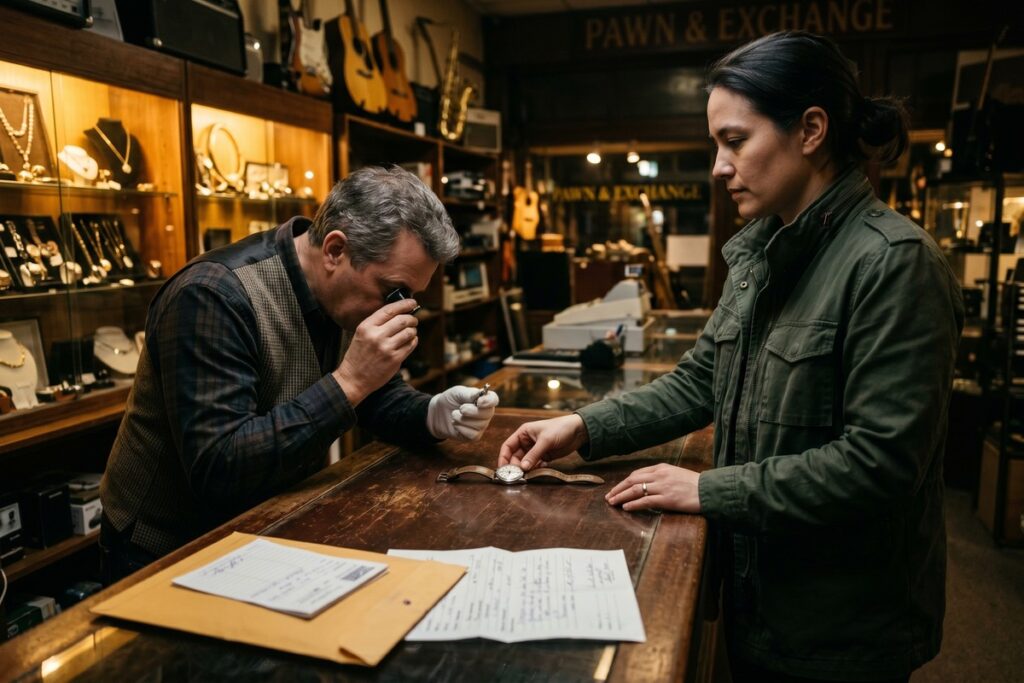
A pawn loan is a secured, short-term loan where you hand over a physical item as collateral. The pawnbroker assesses the item’s resale value and offers you a fraction of it — typically 25% to 60% — in immediate cash. You leave with money; the shop keeps your item until you repay the principal plus interest and fees.
The Valuation Process
Pawnbrokers are professional appraisers operating on thin margins. They must account for storage, insurance, potential depreciation, and the cost of selling the item if you default. That’s why a gold necklace appraised at $800 by a jeweler might earn you only $200 at a pawn shop. The National Pawnbrokers Association reports that approximately 85% of customers do return to reclaim their items, which means most transactions are resolved without forfeiture.
Common acceptable collateral includes jewelry, electronics, musical instruments, firearms, power tools, and luxury goods. Seasonal demand affects offers — a snowblower pawned in July earns less than one pawned in November. Your negotiating power is limited, but knowing the item’s current resale value on platforms like eBay gives you a realistic baseline.
Loan Terms and Renewal Structure
Most pawn loans run for 30 days, though state regulations vary significantly. Many states allow 2–3 automatic renewals if you pay the monthly interest. In California, the redemption period is 4 months. In Texas, it’s typically 30 days with one automatic extension. Failure to pay within the allowed window means the pawnbroker owns your item outright — you receive no additional compensation even if its value exceeds your loan amount.
This forfeiture structure creates a hard deadline that some borrowers actually find motivating. There’s no lingering debt; if you walk away, the debt is resolved. However, losing a $1,200 guitar because you couldn’t come up with $300 is a painful form of resolution.
The U.S. pawn industry serves approximately 30 million customers annually, processing over $6 billion in loans each year, according to the National Pawnbrokers Association.
Regulation at the State Level
Pawn shops are regulated by state law, meaning interest rate caps vary dramatically. New York caps pawn interest at 4% per month (48% APR). Mississippi allows up to 25% per month (300% APR). Before pawning, check your state’s maximum allowable rate — it can mean the difference between a manageable fee and a predatory charge. The item you bring to the counter and the state you’re in will determine more of your actual cost than anything else.
How Installment Loans Work: Structure, Terms, and Lender Types
An installment loan is an unsecured or secured loan repaid in fixed, scheduled payments over a set term. Unlike payday loans, which require full repayment on your next paycheck, installment loans spread the burden across weeks or months. The predictability of equal payments makes budgeting significantly easier.
Types of Installment Loan Lenders
Not all installment lenders are created equal. The type of lender you approach determines your APR, approval odds, and funding speed more than almost any other factor. Credit unions are the gold standard for low-cost installment loans — NCUA-regulated Payday Alternative Loans (PALs) cap interest at 28% APR with fees no higher than $20. Online fintech lenders like Upgrade, LendingClub, and Avant offer rapid decisions but charge 9.99%–35.99% APR depending on creditworthiness. Predatory online lenders operating in permissive states can legally charge 200%–400% APR on installment products that look respectable on the surface.
If you’re uncertain how to evaluate a lender’s reputation before signing, the CFPB Complaint Database guide on this site walks through exactly how to screen lenders using public complaint records before you commit to any loan product.
Repayment Mechanics and Amortization
Installment loans are front-loaded with interest in most simple-interest structures. Early payments cover more interest than principal. This matters if you plan to pay off the loan early — check for prepayment penalties before signing. A $1,000 loan at 36% APR over 12 months carries a monthly payment of approximately $101, with total interest paid around $209. That same loan from a predatory lender at 200% APR would cost $343 per month for 6 months — total repayment of $2,058 on a $1,000 principal.
For a thorough breakdown of how to evaluate loan offer structures without being misled by low-rate marketing, see this guide on comparing short-term loan offers without getting fooled by low APR claims.
The average APR for a 24-month personal installment loan from a commercial bank was 11.43% in Q4 2023, per Federal Reserve data — compared to 240%+ at many online-only installment lenders targeting subprime borrowers.
True Cost Comparison: APR, Fees, and Total Repayment
The pawn shop vs installment loans cost debate is more nuanced than a simple APR comparison. Total cost depends on loan size, term length, renewal behavior, and the lender category. The table below makes the contrast concrete.
| Loan Type | Typical APR Range | $300 / 30 Days Total Cost | $1,000 / 6 Months Total Cost |
|---|---|---|---|
| Pawn Loan | 60% – 300% APR | $315 – $375 | N/A (usually 30-day terms) |
| Credit Union PAL | Up to 28% APR | ~$307 | ~$1,088 |
| Online Installment (Good Credit) | 9.99% – 36% APR | ~$303 – $309 | ~$1,050 – $1,209 |
| Online Installment (Subprime) | 100% – 400% APR | ~$325 – $600 | ~$1,500 – $3,000+ |
| Bank Personal Loan | 6% – 24% APR | ~$305 | ~$1,070 – $1,165 |
Hidden Fees That Change the Equation
Pawn shops frequently charge separate fees beyond the stated interest: storage fees ($5–$15/month), insurance fees (1%–5% of item value), and ticket reissue fees if you lose the pawn ticket. These additions can push effective APR significantly above the stated rate. Always ask the pawnbroker for the total amount due on the repayment date — not just the monthly interest percentage.
Installment lenders add origination fees (1%–8% of the loan amount), late payment fees ($15–$35 per incident), and sometimes “loan protection” insurance that’s largely unnecessary. A $1,000 loan with a 5% origination fee starts with only $950 reaching your account — but you repay $1,000 plus interest.
Some online installment lenders bundle mandatory “membership fees” or “processing subscriptions” into their loan structure. These are not always reflected in the advertised APR. Always request the full schedule of payments in writing before signing — this is your legal right under the Truth in Lending Act (TILA).
The Renewal Trap in Pawn Loans
One renewal of a pawn loan effectively doubles your interest cost for that item. Two renewals triples it. A borrower who pawns jewelry for $200 at 20% monthly interest and renews twice has paid $120 in interest before reclaiming a $200 loan — a 60% total fee. This is how pawn shops generate the majority of their revenue, and it’s why disciplined use with a firm redemption plan is essential.

Speed and Approval: Which Gets You Cash Faster
Speed is often the deciding factor in a financial emergency. Both loan types can deliver fast cash, but the mechanics differ significantly. Here’s an honest breakdown of the timeline for each.
| Stage | Pawn Loan | Online Installment Loan | Credit Union Installment |
|---|---|---|---|
| Application | 5–10 minutes in-person | 10–20 minutes online | 20–40 minutes online/in-branch |
| Approval Decision | Immediate | Minutes to 24 hours | Same day to 3 business days |
| Funding | Immediate (cash in hand) | Same day to 48 hours | 1–5 business days |
| Credit Check Required | No | Usually yes (soft or hard pull) | Yes (hard pull in most cases) |
When Every Hour Counts
If you need cash within the next two hours — for a car repair to get to work, an urgent utility payment to avoid shutoff, or an unavoidable same-day expense — a pawn shop is functionally unbeatable on speed. You walk in, hand over an item, walk out with cash. No bank account required. No credit check. No waiting period.
Online installment lenders have dramatically compressed their timelines. Many now offer same-day ACH funding if you apply before noon on a business day. But “same-day” can still mean 6–8 hours from application to account deposit, and some lenders take up to 48 hours for first-time borrowers while verifying identity and banking information.
If you have an account at a credit union, check whether they offer emergency loan products before going to a pawn shop. Some credit unions fund small emergency loans within 2–4 hours for existing members. The credit union vs bank personal loan payout speed comparison on this site breaks down specific timelines by institution type.
Credit Score Impact: Building vs. Neutral vs. Damaging
One of the most overlooked dimensions of the pawn shop vs installment loans comparison is what each does — or doesn’t do — to your credit profile. This difference can have multi-year consequences on your ability to access better financial products.
Pawn Loans and Credit Neutrality
Pawn loans are credit invisible. They don’t appear on your credit report, regardless of whether you repay or forfeit. Experian, Equifax, and TransUnion receive no data from pawnbrokers. This is a double-edged reality: you can use a pawn loan repeatedly without any credit damage, but you also gain zero positive credit history from responsible repayment. For borrowers trying to rebuild credit, pawn loans are a financial dead end in that specific respect.
Installment Loans and Credit Building
A properly managed installment loan from a lender that reports to all three bureaus is one of the most efficient credit-building tools available for thin-file borrowers. Payment history accounts for 35% of your FICO score. A 6-month installment loan with 6 on-time payments creates a solid positive tradeline that can lift a 580 score into the 620–650 range — enough to qualify for significantly better rates on future borrowing.
Conversely, a missed installment loan payment reported 30 days late can drop a 680 score by 60–110 points. The credit-building upside is real, but so is the downside risk. If your financial situation is unstable enough that repayment is uncertain, the credit neutrality of a pawn loan might actually protect your longer-term financial profile. For more on this dynamic, the guide on quiet credit score killers most people haven’t heard of covers how installment loan misuse silently damages borrowers’ scores.
“For consumers in the subprime range, an installment loan that reports positive payment history is genuinely one of the fastest credit rehabilitation tools available — but only if the terms are manageable enough that the borrower can actually sustain payments. A loan that defaults is far worse than no loan at all.”
Collateral and Risk: What You Stand to Lose
Risk takes different forms in these two loan types. In a pawn loan, the risk is tangible and physical — you can lose a meaningful possession. In an installment loan, the risk is financial and potentially systemic, affecting your credit, your bank account, and your borrowing future.
The Psychology of Collateral
Research in behavioral economics consistently shows that secured debt creates stronger repayment motivation than unsecured debt. When your grandmother’s ring or your only laptop is sitting in a pawn shop, you are highly motivated to reclaim it. This isn’t just anecdotal — it’s one reason the NPA reports that 85% of pawn loans are redeemed. The emotional stakes accelerate repayment in a way that an abstract debt number on an app often doesn’t.
However, not everyone has meaningful collateral available. Someone renting a furnished apartment with a basic smartphone and no jewelry or tools has limited pawn shop options. The installment loan becomes the only viable path regardless of preference.
Installment Loan Risk: Debt Traps and Rollovers
The structural risk of installment loans is less visible but potentially more damaging. High-APR installment lenders — particularly in the 100%–400% range — are designed to be difficult to pay off quickly. Front-loaded interest structures mean that if you only make minimum payments, you’re mostly paying fees in the early months. Some lenders offer loan renewals or “top-up” products that reset the loan and add more fees, trapping borrowers in cycles that compound over 12–24 months.
Identifying predatory terms before signing is critical. The detailed guide on spotting predatory loan terms provides a checklist of specific red flags — including balloon payments, mandatory arbitration clauses, and prepayment penalties — that separate exploitative products from legitimate ones.
The CFPB found that 80% of payday-style installment loans are rolled over or renewed at least once, with borrowers paying more in fees than the original loan principal on average.
Loan Amount Limits: Matching the Product to Your Need
Loan size is a fundamental filter in the pawn shop vs installment loans decision. Each product has practical ceilings that are non-negotiable.
| Loan Type | Typical Minimum | Typical Maximum | Best For |
|---|---|---|---|
| Pawn Loan | $5 | $1,000 – $5,000 (item-dependent) | Small emergencies under $500 |
| Credit Union PAL | $200 | $2,000 | $500 – $2,000 needs |
| Online Installment (Subprime) | $300 | $5,000 | $300 – $2,000 emergencies |
| Bank/Prime Installment | $1,000 | $50,000+ | Large planned expenses |
The Collateral Ceiling Problem
Your pawn loan maximum is entirely determined by what you own and what the pawnbroker will accept. If you need $800 but your only pawnable item is a smartphone worth $150 at resale, you’ll get $40–$90 — a significant shortfall. This is the structural constraint that makes pawn loans unreliable for larger emergencies.
Installment loans can theoretically cover needs from $300 to $50,000, making them far more scalable. For borrowers facing medical bills, unexpected car repairs over $2,000, or other large urgent expenses, installment loans are often the only short-term option that can fully fund the need. For situations involving large unexpected bills, the resource on short-term loans after medical bills details how to navigate borrowing when you already carry existing debt.
Who Qualifies: Eligibility Requirements Side by Side
Qualification barriers significantly shape which option is realistically available to you. The contrast here is stark and worth examining carefully.
Pawn Shop Eligibility: Minimal Requirements
To get a pawn loan, you need three things: a government-issued photo ID (required by law in all states for anti-theft tracking), a physical item with resale value, and the legal right to sell that item. No credit check. No income verification. No bank account. No Social Security number in most states. This makes pawn loans accessible to undocumented individuals, people with no credit history, those recently released from incarceration, and anyone who has been rejected by every traditional lending channel.
“Pawn shops serve as a genuine financial safety net for populations that are completely excluded from the formal banking system. For many customers, it’s not a first resort — it’s a lifeline when every other door has closed.”
Installment Loan Eligibility: Sliding Scale
Installment loan eligibility spans a wide spectrum depending on the lender. Prime bank loans require credit scores of 660+, stable employment, and a debt-to-income ratio below 40%. Credit union PALs require membership but often work with scores as low as 500. Subprime online lenders accept scores in the 500s but compensate with APRs in the triple digits. Some online lenders use income verification and bank statement analysis rather than credit scores — a growing segment that helps gig workers and self-employed borrowers qualify.
For borrowers with no credit history who want to understand how to build a qualifying credit profile before seeking installment loans, the guide on building a lendable credit score with no history outlines a specific 12-month pathway.
Approximately 45 million Americans are “credit invisible” — they have no credit file or an insufficient file to generate a score — according to the CFPB. For this population, pawn loans may be one of the only immediate cash options available.
When to Choose Each Option: Specific Scenarios Analyzed
The pawn shop vs installment loans decision isn’t universal — it’s situational. The right answer depends on your specific combination of urgency, loan size, credit profile, and what you own. The following framework helps you map your situation to the optimal product.
Choose a Pawn Loan When…
- You need cash within the next 1–3 hours and cannot wait for ACH processing.
- The amount you need is $500 or less and you have a suitable item to pledge.
- You have bad credit or no credit and cannot qualify for a reasonable-rate installment loan.
- You want to avoid any credit inquiry or credit reporting entirely.
- You have high confidence in repaying within 30 days (e.g., a paycheck is arriving in 2 weeks).
- The item you’re pledging is replaceable or not sentimental — reducing forfeiture risk’s emotional cost.
Choose an Installment Loan When…
- You need more than $600 and don’t have sufficient collateral.
- You need 3+ months to repay comfortably — pawn loans aren’t designed for that timeline.
- You want to actively build credit history through on-time payments.
- You qualify for a credit union PAL or a prime-rate online lender (under 36% APR).
- The emergency involves a recurring expense like rent, medical payments, or car repairs that benefit from structured repayment.
Some states, including California, Nevada, and Florida, allow pawn shops to also offer short-term installment-style loans, blurring the line between categories. Always read the loan contract to understand whether you’re getting a pawn loan, a title loan, or an installment product — the terms differ significantly.
“The borrower’s time horizon is the most important variable. If the gap is 2 weeks, a pawn loan is often cleaner and cheaper than the alternatives. If the gap is 3–6 months, even a moderately priced installment loan becomes far more economical than renewing a pawn loan multiple times.”
Real-World Example: Marcus’s $650 Car Repair Emergency
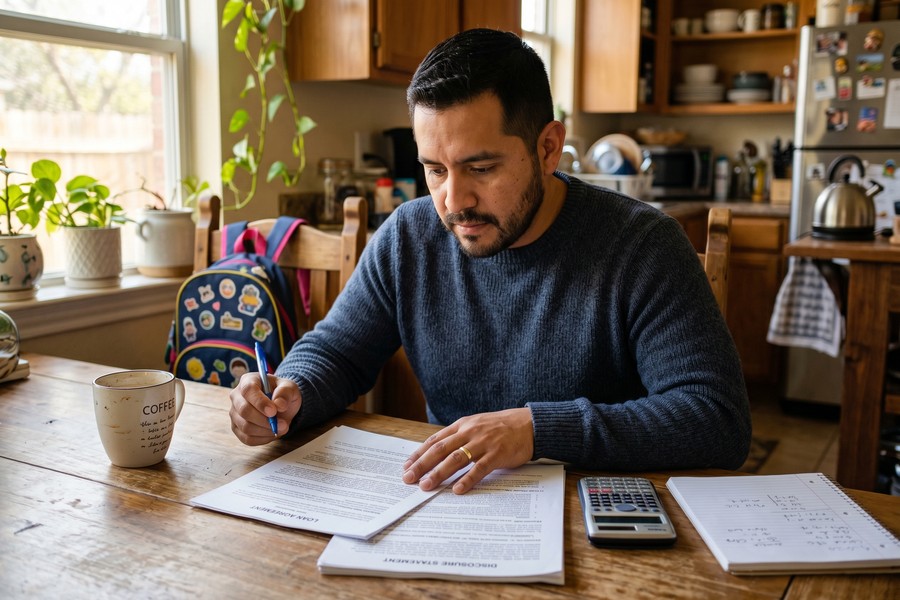
Marcus, a 34-year-old warehouse worker in Memphis, Tennessee, faced a cracked radiator that would cost $650 to fix — enough to keep him from getting to work. He had a 541 credit score, $47 in his checking account, and no savings. His immediate options were a pawn loan, a subprime online installment loan, or a credit union PAL if he could join one quickly.
Marcus first visited a pawn shop with his gaming console (retail value: $499) and was offered $120 — not enough to cover the repair. He also had a gold chain his mother had given him, appraised at $800, for which the shop offered $260. Total possible pawn proceeds: $380 — still $270 short. He considered two separate pawn loans but would face two 20% monthly fees, totaling $76 in interest after one month.
He then applied to a credit union that a coworker recommended. The credit union offered a $650 PAL at 28% APR over 6 months, with a $20 application fee. His monthly payment was $119. Total interest: $64. He kept his chain, preserved his credit-neutral pawn option as a backup, and had his car fixed within 24 hours of applying. Six months later, his on-time payments had pushed his credit score to 589 — enough to qualify for a secured credit card.
The key decision point was recognizing that his pawn items couldn’t fully fund the need, and that the 28-hour delay for credit union approval was acceptable given the repair shop’s 48-hour turnaround time anyway. Marcus’s outcome demonstrates that the best emergency loan isn’t the fastest available — it’s the fastest one that actually solves the problem at a cost you can sustain.
Your Action Plan
-
Calculate exactly how much you need — not an estimate, an exact number
Get the actual invoice, utility bill, or repair quote before approaching any lender. Borrowing $50 more than you need costs money. Borrowing $200 less than you need means a second loan application and potentially double fees. Precision at this stage saves money at every stage that follows.
-
Inventory your pawnable assets and their realistic resale values
Search your potential items on eBay’s “Sold Listings” filter to see what they actually sell for — not what sellers ask. Pawn offers are typically 25%–60% of that sold price. If your total pawnable value can’t cover your need, eliminate pawn as a primary option and focus on installment loans.
-
Check your credit score before applying for any installment loan
Use a free service like Credit Karma or your bank’s built-in credit monitoring. Your score band determines which lenders to target. Scores above 660 qualify for prime-rate lenders (6%–24% APR). Scores of 580–659 target credit unions and select online lenders (24%–36% APR). Scores below 580 focus on credit union PALs or pawn loans rather than high-APR online installment products.
-
Contact your credit union first — before any online lender
If you’re a credit union member, call them directly and ask about emergency loan products or PALs. If you’re not a member, check whether you’re eligible to join one — many are open by employer, geography, or professional association. Joining often takes 24 hours or less. The savings versus a subprime online lender can be hundreds of dollars.
-
Compare at least two installment loan offers before accepting
Use a pre-qualification tool that runs a soft credit pull, not a hard pull — this lets you compare rates without damaging your score. Look at the APR, origination fee, total repayment amount, and monthly payment simultaneously. Never accept the first offer without checking at least one alternative. Use the CFPB’s personal loan comparison guidance to structure your evaluation.
-
If choosing a pawn loan, negotiate and get all fees in writing before handing over the item
Ask the pawnbroker to state the total amount due on the due date — not just the monthly interest rate. Confirm whether storage, insurance, or ticket fees are additional. Ask what the renewal terms are and get the maximum date by which you must redeem the item to avoid forfeiture. These terms are negotiable at many shops, particularly for high-value items or repeat customers.
-
Create a repayment plan on day one — before the money hits your account
Write down the exact due date and payment amount. Set a calendar reminder 5 days early. If you’re using an installment loan, set up autopay immediately to avoid late fees and credit damage. If using a pawn loan, identify the specific paycheck or income source that will fund the redemption — don’t rely on “figuring it out” later.
-
After resolution, build a small emergency buffer to avoid the next crisis
Even $500 in a dedicated emergency savings account eliminates the need for most small emergency loans. Set up a $25–$50 automatic weekly transfer to a high-yield savings account the day after you resolve the current emergency. At $50/week, you have $600 saved in 12 weeks — enough to handle most of what drives people into pawn shops or short-term loan offices in the first place.
Frequently Asked Questions
Can I get a pawn loan without a credit check?
Yes. Pawn loans require no credit check of any kind. The loan is secured entirely by the physical item you pledge as collateral. Your credit score, bankruptcy history, or prior loan defaults are completely irrelevant to the pawnbroker’s decision. The only factors that matter are the item’s resale value, its authenticity, and your government-issued ID.
Do installment loans hurt your credit score when you apply?
Most formal installment loan applications trigger a hard credit inquiry, which can reduce your score by 5–10 points temporarily. However, pre-qualification checks use soft pulls that don’t affect your score. When shopping for rates, stick to lenders offering pre-qualification before you make a formal application decision. Multiple hard inquiries within a 14–45 day window for the same loan type are typically treated as a single inquiry by FICO scoring models.
What happens if I can’t repay a pawn loan on time?
If you don’t redeem the item or pay the renewal interest by the due date, the pawnbroker gains legal ownership of the item. They can then sell it freely, and you have no legal claim to the proceeds — even if the item sells for more than your loan amount. Your credit is unaffected, and you owe nothing further. The debt is fully extinguished. This is simultaneously the protection and the cost of pawn lending.
Are online installment loans safe to use?
Legitimate online installment lenders are regulated by state lending authorities and must comply with federal Truth in Lending Act disclosures. Safety depends on choosing a licensed lender — verify state licensing through your state’s financial regulatory agency. Warning signs of unsafe lenders include no physical address, no state license disclosure, upfront fee requirements before loan disbursement, and pressure to decide immediately. The resource on spotting predatory loan terms provides a detailed red flag checklist.
Is a pawn loan cheaper than a payday loan?
It depends on the state’s rate caps, but in many markets, pawn loans are marginally cheaper than payday loans for small, short-term amounts. A 20% monthly pawn interest rate equals 240% APR. A typical payday loan runs 300%–400% APR. However, payday loans are unsecured — you don’t risk losing property. For borrowers who can confidently repay within 30 days, payday loans carry higher financial cost but no asset forfeiture risk. For those uncertain about timely repayment, the pawn loan’s natural debt extinguishment (item forfeiture) prevents compounding debt escalation.
Can I pay off an installment loan early without a penalty?
Many installment lenders allow early payoff without penalty, but not all. Review the loan agreement for a “prepayment penalty” clause before signing. If present, calculate whether the penalty exceeds the interest you’d save by paying early — in most cases, even a modest prepayment penalty is worth accepting if you can pay off significantly ahead of schedule. Credit unions rarely charge prepayment penalties.
Can I pawn and take an installment loan simultaneously?
Yes — there is no legal restriction on using both simultaneously. Some borrowers use a pawn loan for immediate cash while a credit union or online installment loan processes, then repay the pawn loan upon receiving the installment loan. This bridge strategy makes sense only if the installment loan’s cost over its full term is lower than the pawn loan’s fees would be over multiple renewal periods. Run the actual numbers before pursuing this approach.
Do pawn shops sell my information to credit bureaus or marketers?
Pawn shops are required by law to share transaction data with local law enforcement to help track stolen goods — this is standard in all 50 states. However, they do not share customer data with credit bureaus, marketing firms, or financial data aggregators. Your pawn transaction is private in the financial sense, though it is logged in law enforcement databases associated with your government ID.
What credit score do I need for an installment loan under 36% APR?
Generally, a credit score of 580 or higher opens access to installment loans below 36% APR, though the most competitive rates (under 15%) typically require scores of 700+. Credit unions are the most forgiving, often approving PALs for members with scores as low as 500. Online lenders like Avant and Upgrade target the 580–680 range with rates typically between 9.99% and 35.99%. Below 580, you’re largely limited to high-APR subprime lenders or pawn loans.
How does the pawn shop vs installment loans comparison change for large amounts?
For amounts over $1,000, the comparison heavily favors installment loans for most borrowers. Pawn loans at that level require extremely high-value collateral (fine jewelry, luxury watches, firearms), and a single renewal can cost $200+ in fees. An installment loan at 28% APR for $1,500 over 6 months costs approximately $135 in total interest — far less than multiple pawn renewals on the same amount. Scale amplifies the cost gap significantly in favor of structured installment lending.
Sources
- Federal Reserve — 2023 Report on the Economic Well-Being of U.S. Households
- Consumer Financial Protection Bureau — CFPB Finds Payday Loans Costly for Borrowers
- National Pawnbrokers Association — Industry Statistics
- National Credit Union Administration — Payday Alternative Loans (PALs)
- Consumer Financial Protection Bureau — What Is a Personal Loan?
- Federal Reserve — Consumer Credit Statistical Release (G.19)
- Consumer Financial Protection Bureau — Consumer Use of Payday, Installment, and Pawn Loans
- Federal Trade Commission — Consumer Finance Topics and Resources
- National Consumer Law Center — High-Cost Small Loans
- Experian — What Is an Installment Loan?
- MyFICO — Understanding Credit Scores and Scoring Factors
- Consumer Financial Protection Bureau — FinTech Lending Report
- Urban Institute — Unbanked and Underbanked Research
- TransUnion — Installment Loans and Consumer Credit Data
- FDIC — 2023 National Survey of Unbanked and Underbanked Households